Cyclorhis flavipectus
Cyclorhis flavipectus
Order: Passeriformes / Family: Vireonidae
About the Cyclorhis flavipectus
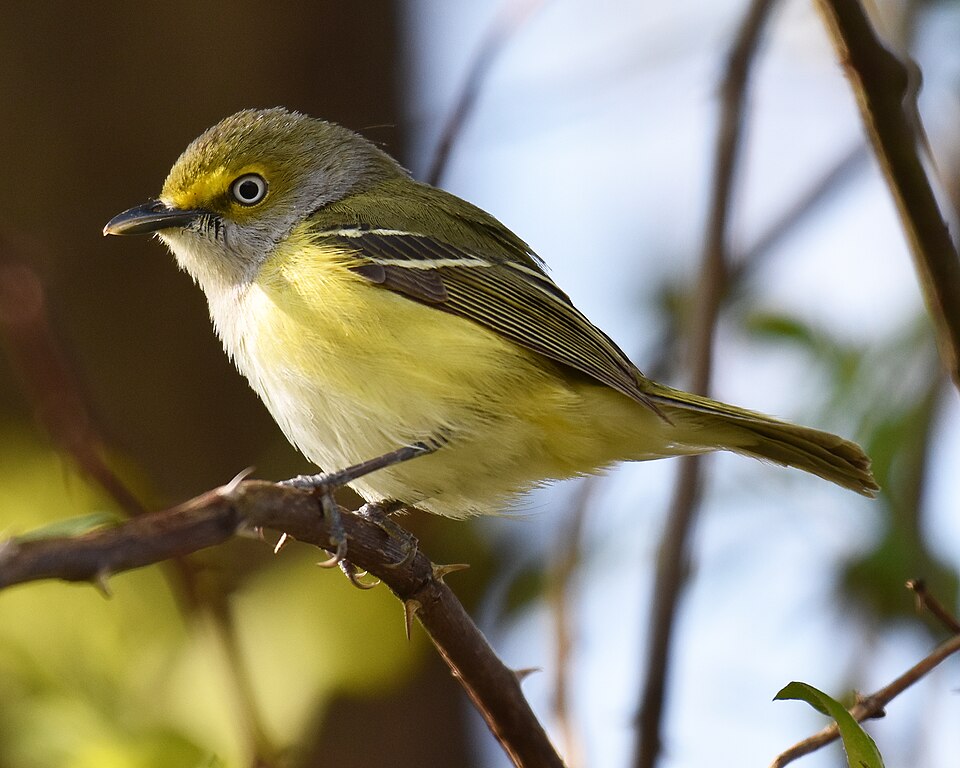
The Cyclorhis flavipectus, commonly known as the Yellow-breasted Shrike-Vireo, is a vibrant songbird in the Vireonidae family. This species is notable for its striking yellow breast, which contrasts beautifully with its olive-green back and wings. The bird is primarily found in the subtropical and tropical regions of South America, ranging from eastern Brazil to northern Argentina. It inhabits diverse habitats, including montane forests, lowland rainforests, and secondary growth areas. This adaptability allows it to thrive in both pristine and disturbed environments, making it a relatively common sight within its range. The ecological role of the Yellow-breasted Shrike-Vireo is significant due to its insectivorous diet, which helps control insect populations in its habitat. During the breeding season, which occurs from September to February, the bird engages in complex vocal displays that are integral to territory establishment and mate attraction. Its song, a series of melodious notes, resonates through the forest canopy, often serving as a hallmark of its presence. Outside the breeding season, the Cyclorhis flavipectus may form small mixed-species flocks, which aids in foraging efficiency and predator detection. This species contributes to the ecological balance by participating in seed dispersal through its fruit consumption. As a member of the Vireonidae family, Cyclorhis flavipectus shares characteristics with its relatives, such as a robust bill and agile foraging behavior. Its presence across various South American ecosystems underscores its role as both a predator and a prey species within the food web. Observations indicate that the bird maintains a stable population trend, yet habitat loss due to agriculture and deforestation poses potential threats. Conservation efforts focus on habitat preservation, emphasizing the need for sustainable land-use practices to ensure the long-term survival of the Yellow-breasted Shrike-Vireo.
The Cyclorhis flavipectus belongs to the family Vireonidae, within the order Passeriformes. These birds typically live average 5 years; max recorded 8 years.
How to Identify a Cyclorhis flavipectus
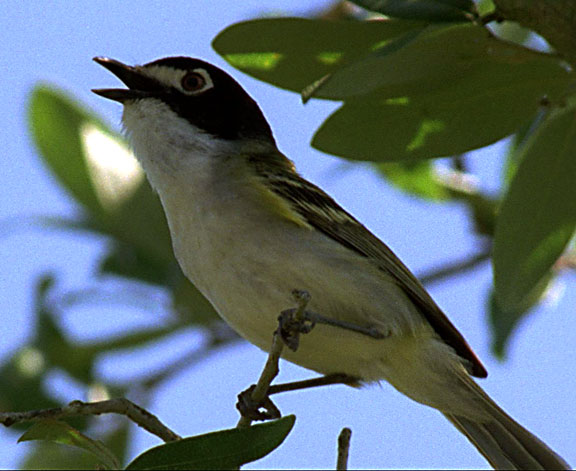
The Yellow-breasted Shrike-Vireo is easily identified by its bright yellow breast and underparts, which provide a stark contrast to its olive-green upperparts. Adult birds have a distinctive black eye-line running from the bill through the eye, bordered above by a white supercilium. The back and wings are predominantly olive green, with subtle streaks that blend into the canopy, offering excellent camouflage. Juveniles resemble adults but have slightly duller plumage and less defined facial markings. Males and females exhibit similar plumage, making them challenging to distinguish in the field. However, males are often slightly larger and more vocally active, particularly during the breeding season. In flight, the Cyclorhis flavipectus displays a rounded wing silhouette and a short, squared tail, aiding in quick maneuverability through dense foliage. When perched, it adopts an upright posture, often remaining motionless while scanning for prey. This behavior, combined with its vivid coloration, makes it a striking yet elusive bird to observe. Similar species, such as the Red-eyed Vireo, can be differentiated by their larger size and lack of the bright yellow breast.
Having trouble telling birds apart? Upload a photo to our bird identification tool for an instant species match.
Cyclorhis flavipectus Habitat and Range
Preferred Habitat
The Cyclorhis flavipectus inhabits a variety of forested environments, including montane and lowland rainforests, as well as secondary growth areas. It thrives in subtropical and tropical regions at elevations ranging from sea level to 2,000 meters. The bird can be found in both dense primary forests and fragmented landscapes, displaying a remarkable ability to adapt to habitat changes. Seasonal habitat shifts are minimal, as the species is non-migratory and remains within its established range year-round. While primarily a forest-dweller, it occasionally ventures into more open areas, such as forest edges and clearings, particularly when foraging. Its presence in urban areas is limited, though it can occasionally be observed in large, well-vegetated parks or gardens that provide suitable cover and food resources.
Geographic Range
The Yellow-breasted Shrike-Vireo's range encompasses much of eastern South America, including significant portions of Brazil, Paraguay, and northern Argentina. It is a resident breeder throughout this region, often found in the Atlantic Forest biome, which stretches along the Brazilian coast. Within its range, it exhibits a preference for humid forest environments, though it can also be found in drier areas during certain times of the year. The species does not undertake long-distance migrations, remaining within its established range year-round. Population density is highest in areas where forest cover is abundant and human disturbance is minimal. This bird is relatively common in suitable habitats, although its range is fragmented by deforestation and land conversion for agriculture.
Want to know which birds visit your area? Browse our backyard birds by location guides for region-specific species lists.
What Does the Cyclorhis flavipectus Eat?
The Cyclorhis flavipectus primarily feeds on insects and other small arthropods, employing a foraging strategy that involves active searching among leaves and branches. Its robust bill is well-suited for capturing a variety of prey, including caterpillars, beetles, and spiders. The bird supplements its diet with fruits and berries, particularly during the non-breeding season when insect availability may decrease. This dietary flexibility allows it to exploit different food resources throughout the year, ensuring a stable food supply. Foraging often occurs in the early morning and late afternoon when insect activity is highest, though the bird remains active throughout the day. During the breeding season, protein-rich insects are a crucial food source for nestlings, highlighting the importance of insect abundance in reproductive success.
Cyclorhis flavipectus Behavior and Social Structure
Cyclorhis flavipectus exhibits a solitary or loosely paired social structure, particularly during the breeding season. It is highly territorial, with males vocalizing frequently to assert dominance over their territory and attract mates. Courtship displays involve intricate vocalizations and subtle flight maneuvers, emphasizing the male's vitality and fitness. Outside the breeding season, the bird may join mixed-species foraging flocks, which enhances its ability to locate food and avoid predators. This species is diurnal, with peak activity occurring during the cooler parts of the day. The Yellow-breasted Shrike-Vireo displays a keen awareness of its surroundings, often remaining motionless when a predator is detected. Its response to threats includes using dense foliage as cover and employing alarm calls to alert other birds in the vicinity.
Cyclorhis flavipectus Nesting and Reproduction
The Yellow-breasted Shrike-Vireo constructs a nest that is a small, cup-shaped structure made from twigs, grasses, and other plant materials. Nests are typically located in the fork of a tree branch, often hidden within dense foliage to provide protection from predators. The nesting season spans from September to February, with females laying a clutch of two to three eggs. Incubation, primarily carried out by the female, lasts approximately 14 to 15 days. Once hatched, both parents participate in feeding and caring for the young, which fledge after about 18 to 21 days. The species typically raises one to two broods per year, depending on food availability and environmental conditions.
Cyclorhis flavipectus Sounds and Vocalizations
The primary song of the Cyclorhis flavipectus is a melodious series of clear, whistling notes that ascend and descend in pitch. This song serves as a primary tool for territory establishment and mate attraction during the breeding season. In addition to its song, the bird produces a variety of call notes, including sharp 'chip' and 'chup' sounds used for communication between mates or flock members. Alarm calls are harsher and more rapid, serving to alert others of potential danger. During the dawn chorus, the Yellow-breasted Shrike-Vireo is one of the first to vocalize, setting the stage for the morning's symphony of bird songs.
Interesting Facts About the Cyclorhis flavipectus
- 1The Yellow-breasted Shrike-Vireo is known for its ability to mimic the songs of other birds, a rare trait among vireos.
- 2Despite its vibrant coloration, the bird's camouflage is highly effective in its forest habitat, making it difficult to spot.
- 3The Cyclorhis flavipectus shares its habitat with over 400 other bird species in the Atlantic Forest.
- 4This species was first described scientifically in 1837, making it one of the earlier South American birds to be documented.
- 5The Yellow-breasted Shrike-Vireo has a lifespan of up to 7 years in the wild, typical for a songbird of its size.
- 6Its robust bill is not only adept at capturing insects but also breaking into tough-skinned fruits.
- 7The bird's call can carry over long distances in the dense forest, an adaptation for maintaining contact with mates.
Cyclorhis flavipectus Conservation Status
The Cyclorhis flavipectus is currently listed as a species of Least Concern by the IUCN, with population trends considered stable. However, habitat loss due to deforestation and agricultural expansion poses a significant threat to its long-term survival. Conservation efforts focus on preserving and restoring forest habitats, particularly in regions where deforestation rates are high. Historical population changes remain undocumented, but current efforts emphasize sustainable land management practices to mitigate habitat degradation. Protected areas and reserves play a crucial role in safeguarding populations, ensuring that the Yellow-breasted Shrike-Vireo remains a vibrant component of its ecosystem.