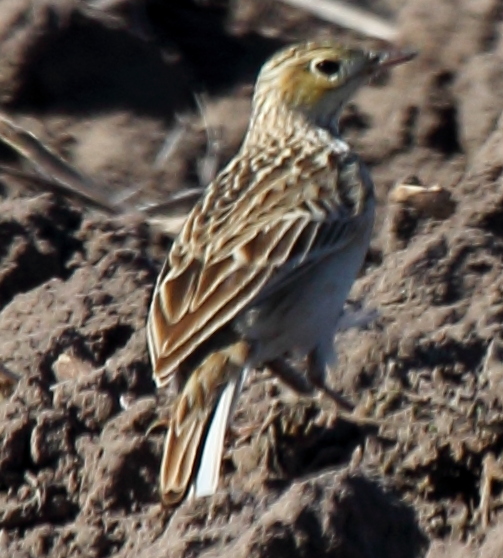
Eastern Yellow Wagtail
Motacilla tschutschensis
Order: Passeriformes / Family: Motacillidae

Wikimedia Commons
About the Eastern Yellow Wagtail
The Eastern Yellow Wagtail, with its distinctive bright yellow plumage, is a small passerine bird belonging to the family Motacillidae. This bird is a common sight across much of Asia and parts of Europe, characterized by its wagging tail and lively demeanor. It holds significant ecological importance as an insectivore, helping to control populations of various insect species, particularly in agricultural areas. During the breeding season, which typically occurs from April to July, the Eastern Yellow Wagtail occupies open grasslands, wetlands, and agricultural fields in the northern parts of Asia, including Russia, Mongolia, and parts of northern China. As a migratory bird, it embarks on long journeys to reach its wintering grounds spread across Southeast Asia, India, and even as far as Oceania. Its migration paths often include stopovers in diverse habitats, such as riverbanks and marshes, where they continue their vital role in controlling insect populations.
Ecologically, the Eastern Yellow Wagtail plays a crucial role in its habitat by preying on insects, thus contributing to the balance of these ecosystems. The bird's presence is often an indicator of healthy wetland and grassland environments. Its adaptability to various habitats makes it a resilient species, although it still faces threats from habitat destruction and changes in land use. Urbanization, agricultural expansion, and climate change pose significant challenges to the habitats of the Eastern Yellow Wagtail, impacting its breeding and feeding grounds. Nevertheless, its large range and adaptability have kept its population relatively stable, with no immediate threat of significant decline.
In the cultural context, the Eastern Yellow Wagtail serves as a symbol of vibrancy and resilience, often celebrated in folklore across its range. Its lively presence and bright coloration have made it a favorite among birdwatchers and naturalists, contributing to its role in promoting awareness of bird conservation. By understanding the significance and ecological role of the Eastern Yellow Wagtail, efforts can be made to ensure the preservation of this species and the habitats it depends on.
The Eastern Yellow Wagtail belongs to the family Motacillidae, within the order Passeriformes. These birds typically live average 2-3 years, with some individuals living up to 8 years..
How to Identify a Eastern Yellow Wagtail
The Eastern Yellow Wagtail is a small, slender bird, measuring around 16 to 18 centimeters in length. Its most striking field mark is its vivid yellow underparts, which are especially prominent in males during the breeding season. The back is olive-green, providing a stark contrast with the bright yellow underbelly. Females and juveniles tend to have duller plumage, with more subdued yellow tones and sometimes a grayish tinge on the head. The Eastern Yellow Wagtail's head varies geographically, with some populations exhibiting a bluish-gray head while others have greenish or entirely yellow heads.
In flight, the Eastern Yellow Wagtail exhibits a distinctive silhouette with its long, constantly wagging tail and swift, undulating flight pattern. When perched, it often bobs its tail up and down, a characteristic behavior that aids in its identification. This wagtail can be confused with other yellow wagtail species, such as the Western Yellow Wagtail (Motacilla flava), but distinguishing features like head coloration and vocalizations can help differentiate them.
The Eastern Yellow Wagtail's call is a sharp, high-pitched 'tsip' or a more melodious 'swee-wee,' which can be heard during flight or when they are foraging on the ground. This wagtail's vibrant plumage and energetic movements make it a conspicuous presence in its habitats, aiding birders in identifying it from a distance.
Having trouble telling birds apart? Upload a photo to our bird identification tool for an instant species match.
Eastern Yellow Wagtail Habitat and Range
Preferred Habitat
The Eastern Yellow Wagtail occupies a range of habitats, predominantly favoring open areas with abundant water sources. During the breeding season, it frequents grasslands, marshes, and agricultural fields in northern Asia. These habitats provide ample insect prey and suitable nesting sites. The bird is often associated with wet environments, such as riverbanks and floodplains, where its insectivorous diet thrives.
In the non-breeding season, the Eastern Yellow Wagtail shifts to a variety of habitats across Southeast Asia and India, including rice paddies, coastal mudflats, and even urban parks. This adaptability to different environments reflects its resilience and ability to exploit diverse food resources. Despite its adaptability, the Eastern Yellow Wagtail prefers lowland areas and is rarely found at high elevations.
Human-modified landscapes, such as agricultural fields and urban parks, provide alternative habitats for this wagtail, but such areas must have sufficient vegetation and water sources to sustain the bird's ecological needs.
Geographic Range
The Eastern Yellow Wagtail breeds across a vast range in northern Asia, extending from eastern Russia through Mongolia to parts of northern China. Its breeding range overlaps with various steppe and grassland biomes, where it finds suitable conditions for nesting and feeding. During migration, the Eastern Yellow Wagtail travels through East Asia, utilizing stopover sites in China, Korea, and Japan.
In winter, the Eastern Yellow Wagtail disperses across Southeast Asia, including countries such as Thailand, Vietnam, and the Philippines, reaching as far as Indonesia and northern Australia. This extensive wintering range highlights its migratory nature and adaptability to different environments. The bird's migration corridors are crucial for its survival, providing resting and feeding grounds during its long journeys.
Population density hotspots include the lush wetlands of Bangladesh and the fertile plains of India, where large flocks can be observed during the winter months. These regions offer abundant food resources and favorable climatic conditions essential for the Eastern Yellow Wagtail's survival during the harsh winter season.
Want to know which birds visit your area? Browse our backyard birds by location guides for region-specific species lists.
What Does the Eastern Yellow Wagtail Eat?
The Eastern Yellow Wagtail primarily feeds on insects, which form the bulk of its diet. This includes various species of flies, beetles, and caterpillars, which it actively hunts on the ground. The bird employs a characteristic foraging technique, walking briskly with its body held parallel to the ground while searching for prey. During the breeding season, when insect availability peaks, this diet provides the necessary energy for reproduction and rearing young.
In winter, the Eastern Yellow Wagtail's diet may diversify slightly to include small invertebrates and seeds, especially in areas where insects are less abundant. The bird's foraging activity peaks during the cooler parts of the day, such as early morning and late afternoon, when insect activity is also heightened.
The Eastern Yellow Wagtail's foraging is often observed in open fields and along the edges of water bodies, where it takes advantage of the abundant insect life. Its agile movements and keen eyesight allow it to efficiently capture prey, contributing to its role as an effective insectivore in its habitat.
Eastern Yellow Wagtail Behavior and Social Structure
Eastern Yellow Wagtails are social birds, often seen in small flocks, especially during migration and wintering periods. They exhibit strong territorial behavior during the breeding season, with males actively defending their nesting sites through displays and songs. These displays include tail-wagging and aerial chases to ward off intruders.
Courtship involves a series of intricate displays, with the male showcasing its plumage and performing aerial maneuvers to attract a mate. Once paired, the bond is generally monogamous for the season, with both parents participating in nest building and chick rearing.
Their response to predators involves a combination of alarm calls and evasive flight patterns. The Eastern Yellow Wagtail remains active throughout the day, engaging in foraging and social interactions, with peak activity during dawn and dusk. This pattern allows them to exploit the cooler, insect-rich hours of the day while avoiding the midday heat.
Eastern Yellow Wagtail Nesting and Reproduction
The Eastern Yellow Wagtail constructs a cup-shaped nest, typically located on the ground within dense vegetation or in a small depression. Nest materials include grass, roots, and moss, secured with mud and lined with softer materials like feathers and hair.
Clutch size usually ranges from four to six eggs, with an incubation period of approximately 11 to 13 days. Both parents share incubation duties, with the female taking the primary role. Once hatched, the chicks are altricial and require constant care and feeding from both parents.
Fledging occurs about 10 to 14 days after hatching, with young birds remaining dependent on parental care for several weeks post-fledging. The Eastern Yellow Wagtail may produce one or two broods per year, depending on environmental conditions and food availability, ensuring a successful breeding season.
Eastern Yellow Wagtail Sounds and Vocalizations
The Eastern Yellow Wagtail's primary song consists of a series of high-pitched, melodious notes, often described as a repetitive 'tswee-tswee-tswee.' This song serves to establish territory and attract a mate during the breeding season. Call notes are sharp and distinctive, typically a 'tsip' or 'chit' sound used for communication within flocks or as an alarm signal.
Alarm calls become more frequent when faced with threats, alerting other wagtails to potential danger. During the dawn chorus, the Eastern Yellow Wagtail's song is more prominent, contributing to the symphony of bird vocalizations in its habitat.
Its vocalizations, while not as complex as some songbirds, are crucial for social interactions, territory defense, and maintaining flock cohesion.
Interesting Facts About the Eastern Yellow Wagtail
- 1The Eastern Yellow Wagtail migrates up to 8,000 kilometers from breeding to wintering grounds, showcasing its remarkable endurance.
- 2This wagtail can be found in flocks of up to 100 individuals during migration, highlighting its social nature.
- 3Eastern Yellow Wagtails are known to follow grazing animals, catching insects disturbed by their movement.
- 4During the breeding season, male Eastern Yellow Wagtails sing from perches to establish territory and attract mates.
- 5The Eastern Yellow Wagtail's tail-wagging behavior helps it flush out insects from vegetation while foraging.
- 6In some regions, this wagtail is associated with bringing good fortune and is celebrated in local folklore.
- 7Eastern Yellow Wagtails have been recorded using urban parks as wintering habitats, adapting to human-modified landscapes.
Eastern Yellow Wagtail Conservation Status
The Eastern Yellow Wagtail currently holds a status of Least Concern according to the IUCN Red List. Its wide distribution and large population size contribute to this assessment. However, certain factors such as habitat loss due to agricultural expansion, urbanization, and climate change pose ongoing threats. Conservation efforts focus on habitat preservation and management, particularly in critical breeding and stopover sites. Monitoring programs track population trends to ensure early detection of potential declines. Historically, the Eastern Yellow Wagtail has shown resilience to environmental changes, maintaining stable population numbers across its range. Collaboration between conservation organizations and local communities plays a crucial role in mitigating threats and promoting sustainable land use practices to safeguard the future of this vibrant species.