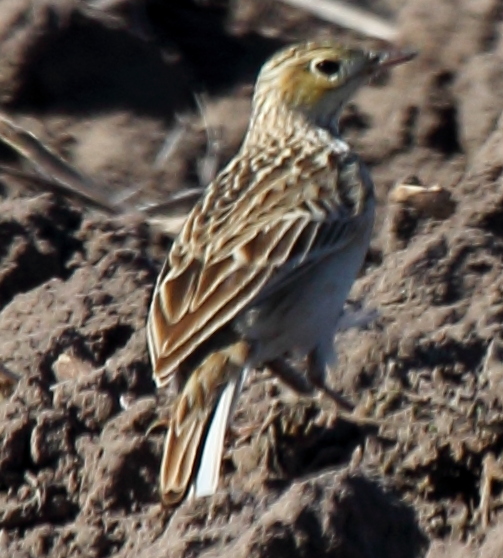
Fülleborn's Longclaw
Macronyx fuelleborni
Order: Passeriformes / Family: Motacillidae

Wikimedia Commons
About the Fülleborn's Longclaw
Fülleborn's Longclaw (Macronyx fuelleborni) is a captivating bird species found predominantly in the high-altitude grasslands of southern Africa. This bird plays a vital role in its ecosystem, acting as both predator and prey within its habitat. Its presence indicates healthy grassland ecosystems, as it relies on an abundance of insects and a well-structured grass layer for survival. Known for its bright yellow underparts and melodious song, the Fülleborn's Longclaw often catches the eye of birdwatchers and researchers alike.
The species is named in honor of the German zoologist Fülleborn, reflecting its historical discovery and classification. Fülleborn's Longclaw is found mostly in countries such as Tanzania, Zambia, Malawi, and Mozambique. These regions offer the specific ecological conditions required for its survival, including open grasslands, montane meadows, and sometimes wetland fringes. These areas provide ample feeding opportunities and nesting sites, crucial for the bird's life cycle.
Ecologically, the Fülleborn's Longclaw contributes to the control of insect populations, consuming a variety of invertebrates. In turn, it serves as prey for larger birds and mammals. During the breeding season, which typically spans the wet months when food is abundant, the bird becomes more territorial and vocal. Its song serves not only as a mechanism for attracting mates but also as a warning to intruders. As a species that depends on specific grassland conditions, changes in land use, agriculture, and climate can pose significant threats to its habitat and, consequently, its survival.
This bird's presence in protected areas such as national parks highlights the importance of conservation efforts in maintaining biodiversity. By preserving its natural habitats, we ensure the survival of the Fülleborn's Longclaw and the myriad of species with which it shares its environment. The resilience of this species serves as a testament to the delicate balance of grassland ecosystems and the need for ongoing ecological stewardship.
The Fülleborn's Longclaw belongs to the family Motacillidae, within the order Passeriformes. These birds typically live average 4-6 years with a max recorded of 8 years..
How to Identify a Fülleborn's Longclaw
The Fülleborn's Longclaw features distinct field marks that make it relatively easy to identify. Adult birds display vibrant yellow underparts that contrast sharply with their olive-brown upperparts, a combination that provides effective camouflage among grasses. A characteristic feature includes a black necklace marking across the chest, adding to its distinctive appearance. The throat is white, bordered by a dark malar stripe, enhancing its striking look.
In terms of size, the Fülleborn's Longclaw measures approximately 20 centimeters in length, making it a medium-sized bird. Males and females exhibit similar plumage, although males might appear slightly brighter during the breeding season. Juveniles resemble adults but with more muted coloration, lacking the full intensity of the yellow underparts and distinct chest band.
When observing in flight, the Fülleborn's Longclaw maintains a steady, direct flight pattern, characterized by rapid wingbeats. Its perching posture is upright, often seen on grass tussocks or rocks where it surveys its surroundings. This posture, combined with its coloration, helps distinguish it from similar species such as the Yellow-throated Longclaw, which has a more pronounced yellow throat and lacks the black chest band.
Having trouble telling birds apart? Upload a photo to our bird identification tool for an instant species match.
Fülleborn's Longclaw Habitat and Range
Preferred Habitat
Fülleborn's Longclaw thrives primarily in open grasslands and montane meadows, often at elevations ranging from 1,000 to 2,500 meters. These habitats provide the tall grasses and open spaces essential for foraging and nesting. The species is typically absent from densely wooded areas, preferring instead the expansive vistas of high-altitude grasslands found in southern Tanzania, Malawi, and parts of Zambia and Mozambique.
Seasonal shifts in habitat are minimal, as the Fülleborn's Longclaw is generally a resident species. However, it may adjust its range slightly within the grasslands in response to food availability and breeding conditions. Urban areas do not typically support this species due to its specific habitat requirements, although it may occasionally be found on the fringes of rural agricultural lands where grassland habitats remain intact.
Wetland fringes adjacent to grasslands may provide additional foraging opportunities, especially during periods of high insect activity. These areas are also less prone to disturbances, offering more secure nesting sites. Conservation of these habitats is crucial, as they support not only the Fülleborn's Longclaw but also a diverse array of associated grassland species.
Geographic Range
The Fülleborn's Longclaw is native to the African continent, primarily occupying the southeastern regions. Its breeding range is concentrated in the high-altitude grasslands of Tanzania, Malawi, northern Zambia, and western Mozambique. Within these countries, the bird is often found in areas where grassland habitats are well-preserved and relatively undisturbed by human activities.
As a largely non-migratory species, the Fülleborn's Longclaw shows limited movement outside its established range. However, some local movements might occur in response to seasonal food availability and climatic conditions, such as prolonged droughts or excessive rainfall.
Population density hotspots include protected areas such as the Nyika National Park in Malawi and the Kitulo Plateau National Park in Tanzania. These regions offer the ideal combination of elevation, grassland cover, and minimal human interference, supporting robust populations of this species. Outside of these protected zones, the bird's presence becomes more sporadic, often limited to isolated patches of suitable habitat.
Want to know which birds visit your area? Browse our backyard birds by location guides for region-specific species lists.
What Does the Fülleborn's Longclaw Eat?
Fülleborn's Longclaw primarily feeds on insects, with a diet consisting largely of grasshoppers, beetles, and caterpillars. During the wet season, when insect activity peaks, the bird takes advantage of the abundance of food to support its breeding efforts. It forages by walking slowly through the grass, using its keen eyesight to spot and capture prey.
Secondary food sources include small seeds and plant material, which become more prominent in the diet during the dry season when insects are less abundant. This dietary flexibility helps the bird maintain energy levels throughout the year, even when primary food sources are scarce.
The bird's feeding schedule is primarily diurnal, with peak foraging activity occurring in the early morning and late afternoon. During these times, the Fülleborn's Longclaw can be observed methodically picking through grasses and occasionally leaping to snatch insects from low-lying vegetation. Its feeding technique is efficient, minimizing energy expenditure while maximizing nutrient intake.
Fülleborn's Longclaw Behavior and Social Structure
Fülleborn's Longclaw exhibits a range of behaviors typical of territorial grassland birds. During the breeding season, males establish and defend territories through vocal displays and physical presence. Their song, a series of melodious whistles, serves both to attract potential mates and to ward off rival males.
Socially, the species tends to be solitary or found in pairs, especially during the breeding season. Outside of this period, Fülleborn's Longclaw may be observed in small, loose flocks, particularly when foraging in areas with abundant food resources. These groups rarely exceed a dozen individuals, reflecting the bird's generally solitary nature.
In response to predators, Fülleborn's Longclaw employs cryptic behavior, relying on its plumage for camouflage among the grasses. When alarmed, it may freeze or drop to the ground to avoid detection. If necessary, the bird takes flight to escape, using rapid wingbeats to ascend quickly before leveling off into a steady flight.
Daily activity patterns are influenced by temperature and weather conditions, with most activity occurring in the cooler parts of the day. During mid-day heat, the bird often seeks shade or rests, minimizing energy expenditure until conditions improve for foraging.
Fülleborn's Longclaw Nesting and Reproduction
Fülleborn's Longclaw constructs its nest on the ground, typically hidden within dense grass tussocks that provide concealment from predators. The nest is cup-shaped, made from grasses and lined with fine fibers to offer a soft interior for the eggs.
The preferred nesting sites are often in areas where the grass is tall and undisturbed, allowing the birds to remain vigilant while staying concealed. Clutch size generally ranges from 2 to 4 eggs, with eggs being pale in color and speckled to blend with the surrounding environment.
The incubation period lasts approximately 12 to 14 days, during which time both parents participate in guarding the nest and keeping watch for potential threats. After hatching, the young are altricial, requiring constant care and feeding from both parents. The fledging period lasts around two weeks, by which time the chicks have developed sufficient feathers and strength to leave the nest.
Fülleborn's Longclaw typically raises one brood per year, although if conditions are favorable, a second brood might be attempted. Parental roles are shared, with both male and female involved in feeding and nurturing the young, ensuring high survival rates in favorable habitats.
Fülleborn's Longclaw Sounds and Vocalizations
The primary song of the Fülleborn's Longclaw consists of a series of clear, melodious whistles that can be heard across its grassland habitat. The rhythm is steady, with a rising and falling pitch that carries well in open spaces. This song, often delivered from a prominent perch, serves both as an advertisement to potential mates and a territorial challenge to other males.
Call notes are less complex, consisting of simple chirps and whistles used primarily for communication between mates or to signal alarm. When threatened, the bird emits a sharp, repetitive call to alert others of potential danger.
During the dawn chorus, Fülleborn's Longclaw contributes a distinct, sweet melody to the symphony of grassland birds. Its voice stands out due to the clarity and tonal quality, reminiscent of a flute or a high-pitched whistle, making it a favorite among bird enthusiasts who enjoy early morning excursions.
Interesting Facts About the Fülleborn's Longclaw
- 1Fülleborn's Longclaw gets its name from the German zoologist Friedrich Fülleborn, who contributed significantly to African zoology.
- 2Despite its bright plumage, Fülleborn's Longclaw is surprisingly elusive, using its coloration to blend into the grassland environment.
- 3This species is one of the few birds that can be found at elevations as high as 2,500 meters, thriving in cool montane grasslands.
- 4The melodious song of the Fülleborn's Longclaw is often compared to that of a canary, charming birdwatchers with its clarity.
- 5Fülleborn's Longclaw is a crucial indicator species, where its presence signals healthy grassland ecosystems with balanced biodiversity.
- 6During the breeding season, the male Fülleborn's Longclaw becomes highly territorial, defending its domain with fervor and song.
- 7The bird's diet is heavily reliant on grassland insects, playing a vital role in controlling these populations and maintaining ecological balance.
Fülleborn's Longclaw Conservation Status
The IUCN currently lists the Fülleborn's Longclaw as a species of Least Concern, indicating that it does not face immediate threats of extinction. However, its population trend is subject to pressures from habitat loss and degradation, primarily due to agricultural expansion and land conversion in its native range. Conservation efforts focus on protecting grassland habitats through the establishment of national parks and protected reserves. These efforts aim to maintain the ecological integrity of regions like the Nyika and Kitulo Plateaus, which support significant populations of the species. Historically, the population of Fülleborn's Longclaw has remained relatively stable, benefiting from the extensive grassland habitats of southern Africa. Nonetheless, ongoing monitoring is essential to ensure that changes in land use do not adversely affect its populations in the future. Conservation programs that include community education and sustainable land management practices are vital in securing the long-term survival of this and other grassland-dependent species.