Gray-chested Greenlet
Hylophilus semicinereus
Order: Passeriformes / Family: Vireonidae

Wikimedia Commons
About the Gray-chested Greenlet
The Gray-chested Greenlet (Hylophilus semicinereus) is a small passerine bird belonging to the family Vireonidae, notable for its subtle yet beautiful coloration and melodious song. This bird inhabits the lush tropical forests of northern South America, particularly in countries such as Venezuela, Colombia, and Trinidad and Tobago. It plays a significant role in the ecosystem as both predator and prey, contributing to the control of insect populations while providing sustenance for various raptors and larger birds.
This species is a vital component of its ecological community, engaging in mutualistic relationships with other forest inhabitants. Its insectivorous diet helps control pest populations, benefiting the health of the trees and plants in its habitat. During the breeding season, Gray-chested Greenlets are particularly active, with males vocalizing to establish and defend territories. Their presence is often detected by their distinctive calls, a series of sweet, melodic notes that can be heard echoing through the dense forest canopy.
The Gray-chested Greenlet demonstrates seasonal behaviors that are closely tied to the availability of food and breeding conditions. In the wet season, when insects are plentiful, these birds are more likely to be found in the higher canopy levels, actively foraging and engaging in courtship displays. As the dry season approaches and food becomes scarcer, they may descend closer to the forest floor, exploring the undergrowth for alternative food sources. This adaptability in foraging strategy is a testament to their resilience and crucial for their survival in the ever-changing tropical environment.
The Gray-chested Greenlet belongs to the family Vireonidae, within the order Passeriformes. These birds typically live average 4-6 years with a max recorded of 8 years..
How to Identify a Gray-chested Greenlet
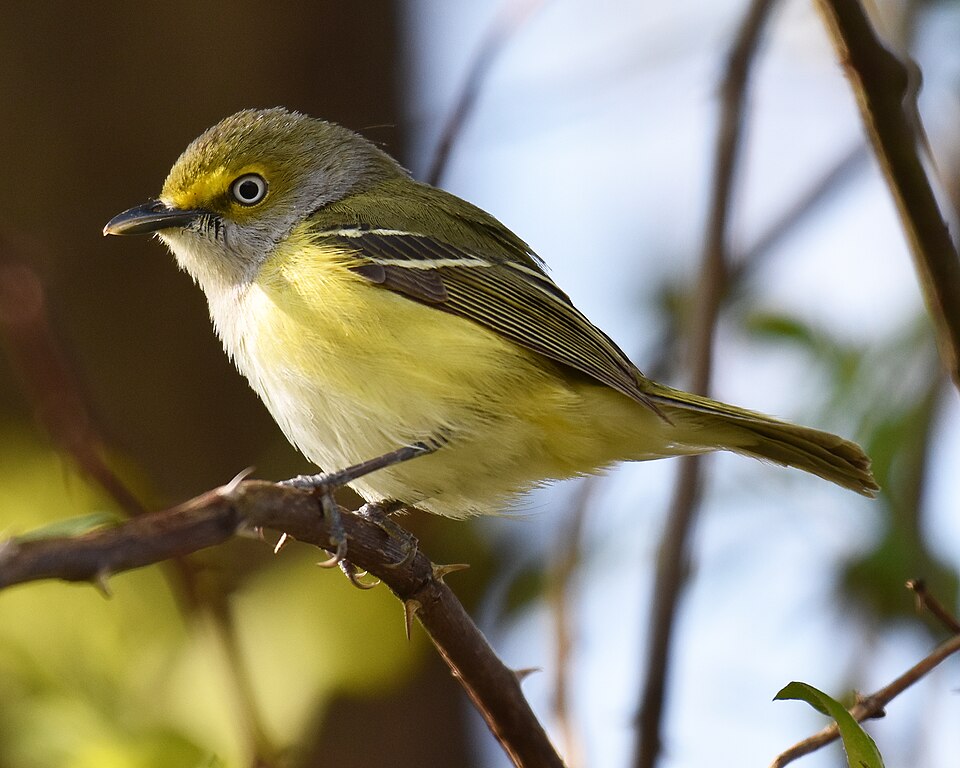
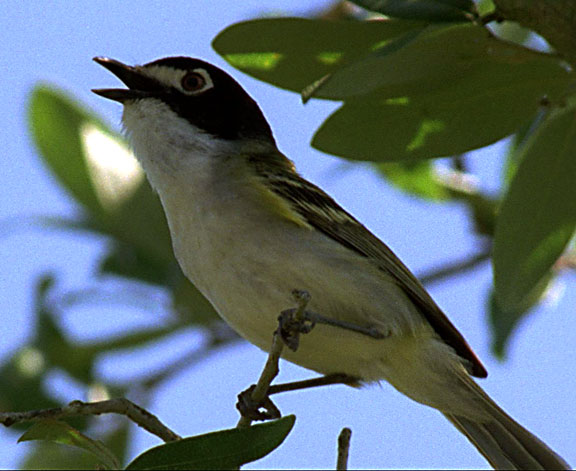
The Gray-chested Greenlet is immediately recognizable by its olive-green upperparts and contrasting gray chest, which gives the bird its common name. Adults exhibit a subtle blend of green and gray plumage, with the green extending from the back to the wings and coverts, while the chest and throat display a more subdued gray tone. This combination provides excellent camouflage against the dappled sunlight of the forest canopy.
Juveniles appear similar to adults but can be distinguished by their slightly duller plumage and less pronounced gray chest. Males and females of this species are alike in appearance, making it challenging to differentiate between the sexes in the field without observing their behavior, such as singing or nesting activities. In terms of size, the Gray-chested Greenlet is relatively small, measuring approximately 12-14 cm in length with a wingspan of 18-20 cm.
While observing these birds, birders should note their characteristic flight silhouette, which is compact and agile, with quick, fluttering wingbeats. When perched, the Gray-chested Greenlet adopts a typical vireo posture, with a slightly hunched neck and a tendency to tilt its head while foraging for insects. The bird's understated coloration may lead to confusion with other vireos or small passerines, but the combination of its song, behavior, and specific plumage patterns aids in accurate identification.
Having trouble telling birds apart? Upload a photo to our bird identification tool for an instant species match.
Gray-chested Greenlet Habitat and Range
Preferred Habitat
The Gray-chested Greenlet thrives in tropical and subtropical humid forests, favoring the dense canopy and understory layers. It is typically found at elevations ranging from sea level to 1,500 meters. This bird shows a preference for mature forests with a rich diversity of plant species, which offer ample foraging opportunities and nesting sites.
While primarily a forest-dwelling species, the Gray-chested Greenlet can also be found in secondary forests and forest edges, where the vegetation is dense enough to provide adequate cover and resources. In urban areas, this bird is less commonly observed, likely due to the lack of suitable habitat and increased human activity.
Seasonal shifts in habitat use are not pronounced for the Gray-chested Greenlet, as it remains largely sedentary throughout the year, maintaining territories within its preferred forest environment. However, during periods of food scarcity, individuals may venture into slightly more open areas or lower elevations in search of sustenance.
Geographic Range
The Gray-chested Greenlet's range extends across the northern part of South America, predominantly found in Venezuela, Colombia, and Trinidad and Tobago. Within these regions, it occupies a variety of forested habitats, from lowland rainforests to montane cloud forests.
This species is considered resident, meaning it does not undertake long-distance migrations. Instead, it remains within its established territories throughout the year, making only minor local movements in response to seasonal changes in food availability and breeding conditions.
Population density varies, with higher concentrations typically found in areas where the forest structure is diverse and intact, providing a rich array of foraging and nesting opportunities. Despite its limited range, the Gray-chested Greenlet is relatively widespread within suitable habitats, though its presence can be patchy in regions where deforestation has occurred.
Want to know which birds visit your area? Browse our backyard birds by location guides for region-specific species lists.
What Does the Gray-chested Greenlet Eat?
The diet of the Gray-chested Greenlet primarily consists of insects and other small invertebrates, which it forages for amidst the dense foliage of its forest habitat. This bird is an adept hunter, employing a variety of techniques to capture its prey, including gleaning from leaves and branches, as well as sallying flights to catch insects mid-air.
During the wet season, when insect populations are at their peak, the Gray-chested Greenlet's diet is heavily skewed towards caterpillars, beetles, and other soft-bodied insects. As the dry season progresses and these resources become less abundant, the bird may supplement its diet with small fruits and berries, taking advantage of the seasonal availability of these food sources.
Prey size is generally small, consistent with the bird's own diminutive stature, allowing it to efficiently process and consume its catch. The feeding schedule of the Gray-chested Greenlet tends to follow a diurnal pattern, with peak activity occurring during the cooler morning and late afternoon hours.
Gray-chested Greenlet Behavior and Social Structure
The Gray-chested Greenlet is typically observed as a solitary bird or in pairs, particularly during the breeding season when pair bonds are reinforced through shared foraging and cooperative nest building. This species is not known for forming large flocks, although it may occasionally join mixed-species foraging groups, benefiting from the increased vigilance and foraging efficiency provided by group dynamics.
Territorial behavior is pronounced in the Gray-chested Greenlet, with males defending their chosen breeding territories through song and visual displays. These territories are crucial for attracting mates and providing a safe space for raising offspring. In terms of social structure, the species exhibits a monogamous mating system, with both parents participating in the rearing of young.
Courtship displays may include mutual preening, food offerings, and synchronized movements, all of which help strengthen the pair bond. When faced with potential threats, such as predators or intruders, the Gray-chested Greenlet employs a range of vocalizations, including alarm calls that alert nearby individuals to the danger. Daily activity patterns are largely governed by the availability of food and the demands of parental care, with significant time devoted to foraging and maintaining the nest.
Gray-chested Greenlet Nesting and Reproduction
The nesting habits of the Gray-chested Greenlet are intricately tied to the dense foliage of its forest habitat. This bird constructs a cup-shaped nest, carefully weaving together plant fibers, leaves, and spider silk to create a secure structure. Nests are typically situated in the fork of a tree branch, often at a height of 2 to 10 meters above the ground, providing protection from ground-based predators.
The typical clutch size for the Gray-chested Greenlet ranges from two to three eggs, which are incubated primarily by the female. Incubation lasts approximately 12 to 14 days, during which time the male contributes by providing food to the brooding female.
Once hatched, the altricial chicks require constant care and feeding, a task undertaken by both parents. The fledging period occurs around 10 to 12 days after hatching, at which point the young begin to explore their surroundings, gradually gaining independence. The Gray-chested Greenlet typically raises one to two broods per year, depending on environmental conditions and the availability of resources.
Gray-chested Greenlet Sounds and Vocalizations
The primary song of the Gray-chested Greenlet is a series of sweet, melodic notes that flow in a rhythmic pattern, often described as a gentle, warbling tune. This song serves multiple functions, including mate attraction and territory defense. In addition to its song, the Gray-chested Greenlet produces a range of call notes, which vary in pitch and intensity depending on the context.
Alarm calls are sharp and abrupt, effectively alerting other birds to the presence of potential threats. During the dawn chorus, this bird's song contributes to the rich tapestry of sounds that characterize the early morning forest soundscape, although it is not as dominant or far-reaching as the calls of some larger species.
The quality of the Gray-chested Greenlet's vocalizations is often compared to the soft, lyrical songs of other vireos, though it possesses a unique timbre that aids in its identification among experienced birders.
Interesting Facts About the Gray-chested Greenlet
- 1The Gray-chested Greenlet is part of the diverse Vireonidae family, which includes over 50 species of small to medium-sized passerine birds.
- 2Despite its subtle coloration, the Gray-chested Greenlet is known for its sweet, melodious song, which is a key identifier in the field.
- 3Unlike many birds, the Gray-chested Greenlet remains largely sedentary, occupying the same territory year-round without migrating.
- 4Gray-chested Greenlets participate in mixed-species foraging flocks, benefiting from the increased vigilance against predators.
- 5These birds construct nests using spider silk, which provides both flexibility and strength to their intricately woven structures.
- 6The Gray-chested Greenlet's diet primarily consists of insects, but it also consumes small fruits and berries, especially during the dry season.
- 7Both male and female Gray-chested Greenlets contribute to raising their young, showcasing a strong pair bond and cooperative parental care.
Gray-chested Greenlet Conservation Status
The Gray-chested Greenlet is currently listed as Least Concern by the IUCN, reflecting its relatively stable population across much of its range. Despite this status, the species faces ongoing threats from habitat loss and fragmentation, primarily due to deforestation and land conversion for agriculture and urban development. Conservation efforts aimed at protecting the Gray-chested Greenlet focus on preserving its forest habitat through the establishment and maintenance of protected areas. These efforts are crucial for ensuring the long-term survival of the species, as well as the myriad other organisms that share its habitat. While historical population trends for the Gray-chested Greenlet have not shown dramatic declines, continued monitoring is essential to detect any future changes in abundance or distribution. Community-based conservation initiatives and education programs also play an important role in raising awareness and fostering local stewardship of tropical forest environments.