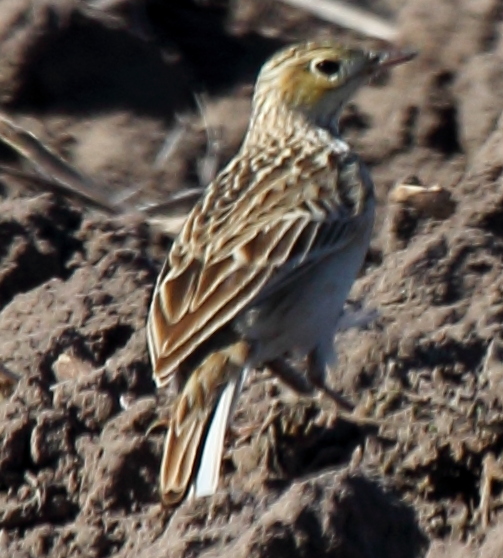
Gray Wagtail
Motacilla cinerea
Order: Passeriformes / Family: Motacillidae

Wikimedia Commons
About the Gray Wagtail
The Gray Wagtail (Motacilla cinerea) is a captivating member of the family Motacillidae, cherished for its vibrant plumage and dynamic behavior. This species is easily recognized by its distinctive long tail, which it uses adeptly to maintain balance and communicate. Found across Europe and Asia, the Gray Wagtail inhabits a variety of freshwater environments, including streams, rivers, and lakes. It often frequents rural and urban areas alike, demonstrating remarkable adaptability. During breeding season, which occurs from April to August, the Gray Wagtail shows a preference for upland and mountainous regions, where it takes advantage of the abundance of invertebrates. Its presence is a reliable indicator of healthy aquatic ecosystems due to its reliance on rich insect life. As a passage migrant, the Gray Wagtail can be observed in larger numbers during spring and autumn migrations, when it moves to and from its wintering grounds in southern Europe, North Africa, and Asia. In winter, it prefers lower elevations and coastal areas, where milder climates and accessible food sources support its survival. The ecological role of the Gray Wagtail extends beyond its immediate environment. By preying on insects, it helps control populations of potential pests, thus maintaining a balance within its ecosystem. Its movements and population trends are of interest to conservationists, as they can reflect broader environmental changes. Seasonal behaviors of the Gray Wagtail are marked by its migration patterns and breeding activities. In the spring, the arrival of Gray Wagtails at their breeding grounds is a sign of the changing seasons. They engage in elaborate courtship displays, where males perform aerial maneuvers to attract females. In autumn, the sight of these birds gathering in flocks heralds their impending journey southwards. Throughout the year, the Gray Wagtail remains a symbol of vitality and resilience in the landscapes it inhabits.
The Gray Wagtail belongs to the family Motacillidae, within the order Passeriformes. These birds typically live typically 3-4 years, with a maximum recorded of 7 years..
How to Identify a Gray Wagtail
The Gray Wagtail is a small, elegant songbird characterized by its long, slender tail, which it frequently wags. Adults display a stunning combination of slate-gray upperparts and bright yellow underparts, with a distinct white supercilium above the eye. During the breeding season, males exhibit more vivid yellow tones on the underparts compared to females. Juveniles are generally duller, with a more subdued yellow coloration and a less prominent supercilium. One of the key identification challenges is distinguishing the Gray Wagtail from the Yellow Wagtail (Motacilla flava). The Gray Wagtail's longer tail and more contrasting plumage help differentiate it from its close relative. In flight, the Gray Wagtail's swift, undulating movement and long tail are distinctive. When perched, it often adopts a horizontal posture, with the tail held slightly below the body line. This species can be encountered foraging along water edges, where its constant tail-wagging serves both as a balancing mechanism and a visual signal to other wagtails.
Having trouble telling birds apart? Upload a photo to our bird identification tool for an instant species match.
Gray Wagtail Habitat and Range
Preferred Habitat
Gray Wagtails thrive in habitats near freshwater sources, including streams, rivers, and lakes. They are commonly found in upland areas during the breeding season, favoring environments with rocky substrates and clear, fast-flowing water. Elevations range from sea level to mountainous regions, with a preference for higher altitudes in the summer months. In winter, they move to lower elevations and coastal regions, where they frequent wetland areas, estuaries, and even urban water bodies such as canals and ponds. Their adaptability allows them to occupy both rural countryside and urban landscapes, provided there is sufficient access to water and food.
Geographic Range
The Gray Wagtail's range extends across much of Europe and Asia. During the breeding season, it occupies a wide swathe from the British Isles and Scandinavia eastward through Russia to Japan. In winter, it migrates to milder climates in southern Europe, North Africa, and parts of the Middle East and South Asia. Migration corridors often follow river valleys, which offer essential resources during their journeys. Key population density hotspots during migration include the Iberian Peninsula and the Mediterranean basin, where large numbers can be observed passing through. While generally not considered a long-distance migrant compared to some other species, the Gray Wagtail's movements are extensive enough to connect disparate regions across continents.
Want to know which birds visit your area? Browse our backyard birds by location guides for region-specific species lists.
What Does the Gray Wagtail Eat?
The Gray Wagtail primarily feeds on insects and invertebrates, favoring aquatic and terrestrial prey such as mayflies, caddisflies, and beetles. Seasonal diet variations occur, with a greater reliance on aquatic insects during the breeding season when they are most abundant. The bird's foraging technique is characterized by its energetic movements along water edges, where it picks prey from surfaces with precision. In addition to insects, Gray Wagtails may consume small mollusks and crustaceans. Their feeding schedule is diurnal, with peak activity in the early morning and late afternoon when insect activity is highest.
Gray Wagtail Behavior and Social Structure
Gray Wagtails exhibit a strong affinity for water, often seen along riverbanks and streams. They demonstrate a largely solitary or pair-based social structure during the breeding season, becoming more gregarious outside this period. Territorial behavior is pronounced during breeding, with males defending nesting sites through song and display flights. Courtship involves males performing lively songs and aerial displays to attract mates. In response to predators, Gray Wagtails rely on their agility and speed, often taking refuge in dense vegetation or taking flight swiftly. Daily activity patterns revolve around feeding and preening, with periods of rest in sheltered locations. Observers often note their characteristic tail-wagging, a behavior thought to be a form of communication and balance aid.
Gray Wagtail Nesting and Reproduction
Nesting sites for the Gray Wagtail are typically located near water, where they utilize natural cavities, crevices in rocks, or man-made structures such as bridges. Nests are cup-shaped, constructed from grass, moss, and lined with feathers or hair. Clutch size ranges from 3 to 6 eggs, with an incubation period of about 11 to 14 days. Both parents share in incubation duties and feeding of the young. Fledging occurs around 12 to 13 days after hatching, with fledglings remaining dependent on parents for several weeks post-fledging. The species may raise two broods per year, particularly in favorable conditions.
Gray Wagtail Sounds and Vocalizations
The song of the Gray Wagtail is a high-pitched, melodious series of twittering notes, often delivered in flight or from a perch. Its call notes include sharp 'tseep' sounds and a more guttural 'chirrip' used in alarm. During the dawn chorus, their song contributes a distinct, lively element, blending with those of other songbirds. Compared to the harsher calls of similar species, the Gray Wagtail's song is more fluid and musical, offering a pleasing contrast to the surrounding environment.
Interesting Facts About the Gray Wagtail
- 1The Gray Wagtail's tail can be up to 80% of its total body length, aiding in balance and communication.
- 2Unlike many birds, the Gray Wagtail frequently wags its tail in a vertical motion, a behavior unique to wagtails.
- 3Gray Wagtails can travel over 2,000 km during migration, connecting disparate regions in Europe and Asia.
- 4Their preference for pristine water makes the Gray Wagtail an excellent indicator of ecosystem health.
- 5During the breeding season, male Gray Wagtails develop a striking black throat patch which enhances their attractiveness to females.
- 6Gray Wagtails have been observed catching insects mid-air, showcasing their agility and precision.
- 7The species' adaptability allows it to thrive in both urban and rural environments, provided there is access to water.
Gray Wagtail Conservation Status
The Gray Wagtail is currently listed as Least Concern by the IUCN, with populations considered stable across most of its range. However, localized declines have been noted in some areas due to water pollution and habitat degradation. Conservation efforts focus on preserving freshwater habitats and reducing pollution levels. Historical population fluctuations have been linked to changes in land use practices, particularly those impacting water quality. Monitoring programs continue to assess population health and inform conservation strategies.