
Himalayan Cutia
Cutia nipalensis
Order: Passeriformes / Family: Leiothrichidae

Wikimedia Commons
About the Himalayan Cutia
The Himalayan Cutia (Cutia nipalensis), a member of the Leiothrichidae family, is a vibrant songbird native to the montane forests of South Asia. It thrives in the dense, evergreen and deciduous woodlands of the Himalayan foothills, ranging from Nepal and Bhutan to parts of India and Myanmar. This bird, noticeable for its colorful plumage, plays an essential role in its ecosystem by contributing to seed dispersal and insect population control. The Himalayan Cutia often forms mixed-species flocks during the non-breeding season, enhancing its foraging efficiency and reducing predation risks. Its presence in these forests indicates a healthy, biodiverse environment.
Aside from its ecological role, the Himalayan Cutia holds cultural significance in local folklore and is a subject of interest for birdwatchers and naturalists worldwide. Its vibrant appearance and melodious calls make it a sought-after species for birding enthusiasts visiting the Himalayan region. Seasonal behaviors of the Himalayan Cutia include altitudinal movements, where it descends to lower elevations during the colder months, adapting to the availability of food sources. These movements ensure its survival through varying climatic conditions.
The Himalayan Cutia also contributes to the forest's dynamic by engaging in complex social behaviors. It participates in cooperative breeding, a trait seen in some bird species where group members assist in raising young. This behavior strengthens social bonds within flocks and increases reproductive success. The bird's adaptability to seasonal changes and its interaction with other species highlight its integral role within the Himalayan ecosystem.
The Himalayan Cutia belongs to the family Leiothrichidae, within the order Passeriformes. These birds typically live average 6 years, with a max recorded at 10 years..
How to Identify a Himalayan Cutia
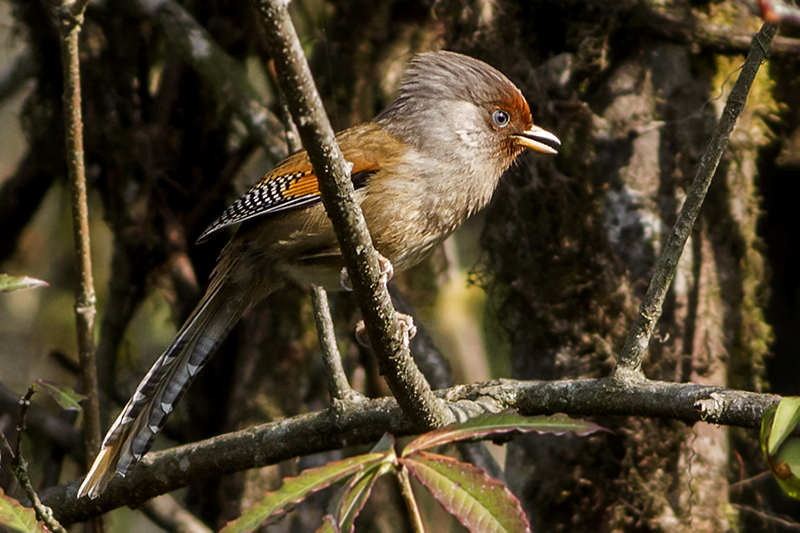
The Himalayan Cutia is a medium-sized bird distinguished by its striking plumage, which features a combination of orange, blue, and black. Adult males and females are similar in appearance, with the primary difference being slightly duller coloration in females. The bird has a predominantly blue head with a white throat and distinctive black lines running from the beak to the nape. Its back is a mix of gray and orange, with black streaks, while the wings display a vibrant blue with black barring. The underparts are a softer orange, transitioning to white on the belly.
Juvenile Himalayan Cutias resemble adults but have a more muted color palette, lacking the full vibrancy of mature plumage. They also exhibit less distinct streaking on the back and wings. In flight, the Himalayan Cutia shows broad, rounded wings and a relatively short tail, providing it with agile maneuverability through forested environments. When perched, it often adopts an upright posture, accentuating its bold coloration.
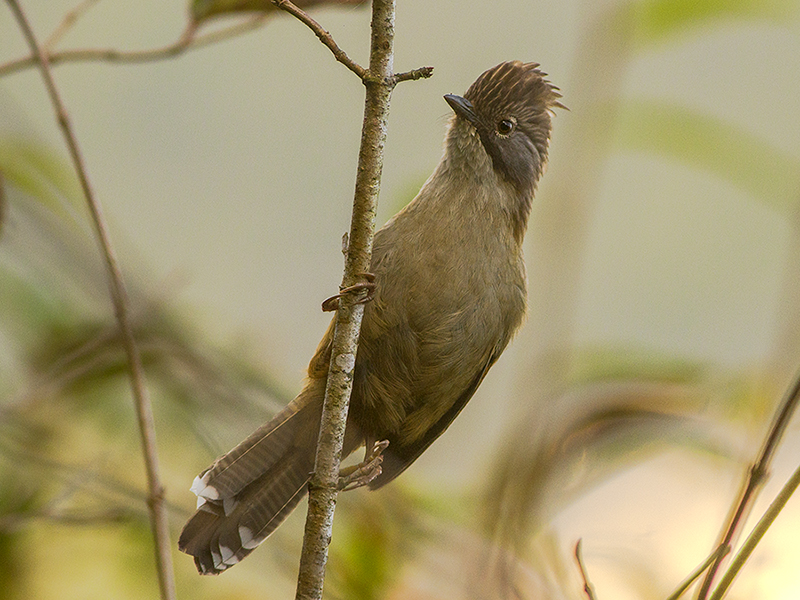
This species can be confused with other similarly colored birds such as the Minivet or the Blue-winged Siva. However, the Himalayan Cutia's unique combination of colors and its distinct facial markings help differentiate it. Observers should note its preference for staying within forest canopies, which can aid identification.
Having trouble telling birds apart? Upload a photo to our bird identification tool for an instant species match.
Himalayan Cutia Habitat and Range
Preferred Habitat
The Himalayan Cutia thrives in montane forests, particularly favoring areas with dense evergreen and mixed deciduous trees. Typical habitats include subtropical or tropical moist lowland forests and montane forests, often at elevations ranging from 1,500 to 3,000 meters. It prefers regions with abundant foliage, which provide ample cover and food resources. During the breeding season, it nests in secluded spots within these lush forests, ensuring protection from predators.
In the winter, the Himalayan Cutia may descend to slightly lower altitudes as it tracks the availability of food. It is rarely found in urban areas, preferring the undisturbed stretches of forest that offer richer ecological resources. The bird's habitat selection underscores its reliance on healthy forest ecosystems for survival and reproduction.
Geographic Range
The Himalayan Cutia's range spans across the eastern Himalayas and extends into northern parts of Southeast Asia. It is found in countries such as Nepal, Bhutan, India (especially in the states of Sikkim, Arunachal Pradesh, and Assam), and Myanmar. The bird's range aligns closely with the Himalayan mountain range, following its contours to take advantage of the varied elevations and climates. Though largely sedentary, the Himalayan Cutia exhibits altitudinal migrations, moving to lower elevations during the cooler months.
Within its range, population density is highest in undisturbed forest areas, where human encroachment is minimal. It is less common in heavily logged or fragmented habitats, emphasizing the importance of conservation efforts in these regions. The bird's distribution reflects its adaptability to various forest types, although it remains closely tied to the mountainous landscapes of South Asia.
Want to know which birds visit your area? Browse our backyard birds by location guides for region-specific species lists.
What Does the Himalayan Cutia Eat?
The Himalayan Cutia primarily feeds on insects and other small invertebrates, which it gleans from the foliage of trees. Its diet includes beetles, ants, caterpillars, and spiders, providing essential protein for growth and energy. In addition to insects, the Himalayan Cutia consumes a variety of fruits and berries, particularly during the breeding season when nutritional demands increase.
The bird employs a methodical foraging technique, often hanging upside down to access food on the undersides of leaves. This behavior allows it to exploit food resources unavailable to other birds. The Himalayan Cutia's feeding schedule typically peaks in the early morning and late afternoon, aligning with insect activity levels. By consuming a diverse diet, the Himalayan Cutia helps control insect populations and facilitates seed dispersal within its habitat.
Himalayan Cutia Behavior and Social Structure
The Himalayan Cutia exhibits complex social behaviors, often forming small flocks that can include up to a dozen individuals. During the breeding season, these flocks may break into smaller units as pairs focus on nesting activities. Territorial behavior is pronounced, with pairs defending their nesting sites vigorously against intruders. Courtship displays involve a series of calls and aerial maneuvers, strengthening pair bonds.
Outside the breeding season, the Himalayan Cutia participates in mixed-species foraging flocks, a strategy that enhances protection from predators and increases feeding efficiency. This bird is diurnal, engaging in most activities during daylight hours. It exhibits a curious and active demeanor, frequently exploring its environment and interacting with conspecifics. When threatened, the Himalayan Cutia employs alarm calls to alert flock members, showcasing its vigilance and communication skills.
Himalayan Cutia Nesting and Reproduction
Himalayan Cutias construct cup-shaped nests using twigs, moss, and leaves, often lined with softer materials like feathers or plant down. They prefer nesting sites in dense foliage or among the branches of tall trees, providing concealment from predators. The breeding season typically spans from April to June, aligning with the onset of warmer weather and increased food availability.
A typical clutch consists of two to four eggs, with both parents sharing incubation duties over a period of 14 to 16 days. Post-hatching, the young remain in the nest for approximately 18 to 22 days before fledging. Both male and female Himalayan Cutias participate in feeding and caring for the chicks, demonstrating a strong parental investment. The species often raises one brood per year, although favorable conditions can lead to a second brood.
Himalayan Cutia Sounds and Vocalizations
The primary song of the Himalayan Cutia is a melodious series of whistles and trills, characterized by a rhythmic and complex pattern. These vocalizations serve as both territory markers and courtship signals. Call notes are sharp and clear, often used to maintain contact between flock members. The alarm call is a rapid series of harsh notes, signaling potential threats to the group.
During the dawn chorus, the Himalayan Cutia contributes a distinctive and pleasing melody that resonates through the forest. Its song can be compared to the sweet, yet intricate, notes of other passerines, providing a natural symphony that underscores the bird's presence in its habitat.
Interesting Facts About the Himalayan Cutia
- 1The Himalayan Cutia can hang upside down while foraging, a behavior that showcases its acrobatic agility.
- 2Despite its colorful plumage, the Himalayan Cutia is adept at camouflaging among the forest canopy, blending in with its surroundings.
- 3The species often participates in mixed-species flocks, which can include up to 10 different bird species, enhancing feeding success.
- 4Himalayan Cutia's song is considered one of the most melodious among the passerines of the Himalayan region.
- 5The bird's altitudinal migrations help it cope with seasonal changes in food availability and climatic conditions.
- 6Himalayan Cutias are known for their cooperative breeding behavior, where group members assist in raising the young.
- 7The species has a broad range of vocalizations, each serving distinct purposes, from attracting mates to warning of danger.
Himalayan Cutia Conservation Status
The IUCN currently lists the Himalayan Cutia as a species of Least Concern, reflecting a stable population trend. However, habitat loss due to deforestation and fragmentation poses significant threats to its long-term survival. Conservation efforts focus on preserving its forest habitats and promoting sustainable land-use practices. Historically, the Himalayan Cutia has maintained a relatively stable population, but ongoing environmental changes necessitate monitoring and protective measures. Local conservation initiatives aim to raise awareness about the ecological importance of maintaining intact forest ecosystems.
Other Leiothrichidae Species


Birds Similar to the Himalayan Cutia
These species are often confused with the Himalayan Cutia due to similar appearance or overlapping range.

