
Red-tailed Laughingthrush
Trochalopteron milnei
Order: Passeriformes / Family: Leiothrichidae

Wikimedia Commons
About the Red-tailed Laughingthrush
The Red-tailed Laughingthrush, scientifically known as Trochalopteron milnei, is a captivating bird found predominantly in parts of Southeast Asia. This bird is part of the Leiothrichidae family and is renowned for its vivid plumage and distinctive vocalizations. Its habitat spans across the subtropical and temperate forests of countries like China, Vietnam, and Myanmar. The Red-tailed Laughingthrush prefers dense undergrowth and bamboo thickets where it forages for insects and fruits. The species thrives in forested regions, benefiting from the rich biodiversity these environments offer. Seasonal behaviors include slight altitudinal migrations, as individuals move to lower elevations during the colder months. Ecologically, the Red-tailed Laughingthrush plays a vital role in seed dispersal, contributing to forest regeneration. Its presence indicates a healthy forest ecosystem, as it requires intact habitats free from excessive human disturbance. Given its reliance on specific habitats, the Red-tailed Laughingthrush serves as an indicator species for environmental changes. Conservation of this bird ensures the preservation of complex forest ecosystems that support countless other species.
The Red-tailed Laughingthrush belongs to the family Leiothrichidae, within the order Passeriformes. These birds typically live around 6-9 years in the wild..
How to Identify a Red-tailed Laughingthrush
The Red-tailed Laughingthrush exhibits a remarkable combination of colors that make it relatively easy to identify. Adults showcase a vibrant red tail, which is a key distinguishing feature. Their upperparts are predominantly gray, with a notable white patch on the face and a contrasting black mask around the eyes. The underparts merge into a warmer brown, providing a harmonious color palette. In contrast, juveniles are slightly duller, lacking the full intensity of the adult's plumage. Males and females appear quite similar, making sex differentiation in the field challenging. However, subtle differences such as slightly more pronounced coloration in males can sometimes be noted. The bird's flight silhouette is characterized by broad wings and a long tail, typical of many forest-dwelling laughingthrushes. When perched, the Red-tailed Laughingthrush often adopts an upright posture, emphasizing its long tail. While similar species exist within its range, the combination of the red tail and the contrasting facial markings are usually sufficient to avoid confusion.
Having trouble telling birds apart? Upload a photo to our bird identification tool for an instant species match.
Red-tailed Laughingthrush Habitat and Range
Preferred Habitat
The Red-tailed Laughingthrush inhabits dense subtropical and temperate forests, favoring regions with rich undergrowth and bamboo thickets. It thrives in elevations ranging from 600 to 2,400 meters, often found in montane forests. During winter, the species may descend to lower elevations in search of more favorable conditions. Though primarily associated with rural and forested areas, it can occasionally be spotted in urban green spaces that offer sufficient cover and resources. The bird's preference for dense vegetation makes it less visible in open habitats, and it is rarely found in heavily urbanized regions. Seasonal habitat shifts are minimal, as the bird generally remains within its established range, only moving altitudinally to adapt to seasonal climate changes.
Geographic Range
The Red-tailed Laughingthrush is predominantly found in Southeast Asia, with its range spanning several countries. It breeds in the montane regions of southern China, including provinces such as Yunnan and Sichuan. Its range also extends into northern Vietnam and parts of Myanmar. While not a long-distance migrant, this bird exhibits altitudinal movements, descending to lower elevations during the colder months. Population density is highest in regions with abundant forest cover and minimal human disturbance. Although not migratory, the species' presence in specific areas can fluctuate based on seasonal availability of food and habitat quality.
Want to know which birds visit your area? Browse our backyard birds by location guides for region-specific species lists.
What Does the Red-tailed Laughingthrush Eat?
The diet of the Red-tailed Laughingthrush is varied, consisting primarily of insects and fruits. During the breeding season, the bird's diet leans towards protein-rich insects such as beetles and caterpillars, which are essential for chick development. In the non-breeding season, the bird shifts to a more fruit-based diet, foraging for berries and seeds. This dietary shift reflects the seasonal availability of food sources. The Red-tailed Laughingthrush employs a foraging technique that involves probing and gleaning from foliage and the forest floor. This method allows it to exploit a wide range of prey sizes, from small insects to larger berries. It often forages in small groups, suggesting a social component to its feeding habits. The bird's feeding schedule is primarily diurnal, with peak activity observed during the early morning and late afternoon.
Red-tailed Laughingthrush Behavior and Social Structure
The social structure of the Red-tailed Laughingthrush is characterized by small family groups or pairs, especially during the breeding season. This bird exhibits territorial behavior, often defending its chosen habitat with vocalizations and displays. Courtship involves elaborate displays, where males puff out their plumage and perform a series of hops and calls to attract females. Flocking patterns vary, with larger groups occasionally forming outside of the breeding season. These groups facilitate foraging and provide protection against predators. In response to threats, the Red-tailed Laughingthrush relies on dense cover and its keen awareness to evade predators. Its daily activity patterns are mostly diurnal, with peak activity in the cooler hours of the day. Despite its vibrant appearance, the bird remains elusive, often heard before it is seen.
Red-tailed Laughingthrush Nesting and Reproduction
The nesting habits of the Red-tailed Laughingthrush reflect its preference for secluded forest areas. Nests are typically constructed in dense shrubs or low trees, using materials such as twigs, grasses, and leaves. The female usually lays a clutch of 2 to 4 eggs, which are incubated for about 14 to 16 days. Both parents participate in feeding the chicks, which fledge approximately 12 to 14 days after hatching. The number of broods per year can vary, with some pairs raising up to two broods in a favorable season. Parental roles are shared, with both male and female involved in nest building, incubation, and chick rearing. The choice of nesting location is crucial, as it must provide sufficient cover from predators and adverse weather.
Red-tailed Laughingthrush Sounds and Vocalizations
The Red-tailed Laughingthrush is known for its melodious song, which consists of a series of fluting notes delivered in a rhythmic pattern. The song is often described as having a clear and resonant quality, making it a delightful addition to the forest soundscape. Call notes include sharp, metallic 'tink' sounds used for communication within groups. Alarm calls are more urgent and rapid, serving to alert other birds to potential dangers. During the dawn chorus, the Red-tailed Laughingthrush's song stands out due to its clarity and musicality. The bird's vocalizations are not only a means of communication but also play a role in establishing territory and attracting mates.
Interesting Facts About the Red-tailed Laughingthrush
- 1The Red-tailed Laughingthrush's song can carry over long distances, making it easier to detect in dense forests.
- 2Despite its vibrant plumage, the bird's shy nature often makes it difficult to spot in its preferred habitat.
- 3The species exhibits a fascinating altitudinal migration, moving to lower elevations during colder months.
- 4Red-tailed Laughingthrushes often forage in small groups, enhancing their efficiency in finding food.
- 5This species is part of a diverse family known for its rich vocalizations and complex social behaviors.
- 6In addition to insects and fruits, the Red-tailed Laughingthrush occasionally consumes small amphibians.
- 7The species' preference for bamboo thickets highlights the importance of this plant in its ecosystem.
Red-tailed Laughingthrush Conservation Status
The Red-tailed Laughingthrush is currently listed as Least Concern by the IUCN, though its population trend is decreasing. Habitat loss due to deforestation and land conversion poses significant threats to its survival. Conservation efforts focus on protecting and restoring forest habitats, ensuring that these birds have sufficient resources and breeding sites. Historical population changes have been linked to increased human activity within its range, highlighting the need for sustainable land-use practices. While not currently endangered, maintaining stable population levels requires ongoing monitoring and habitat conservation initiatives.
Other Leiothrichidae Species

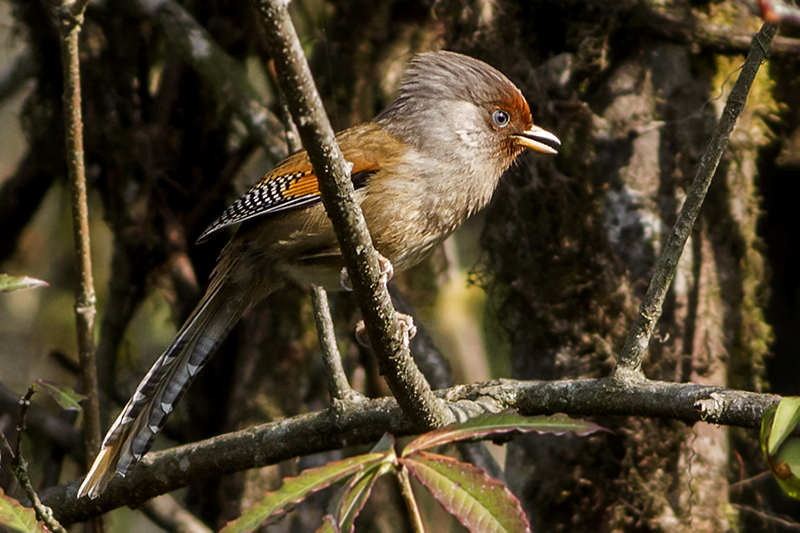

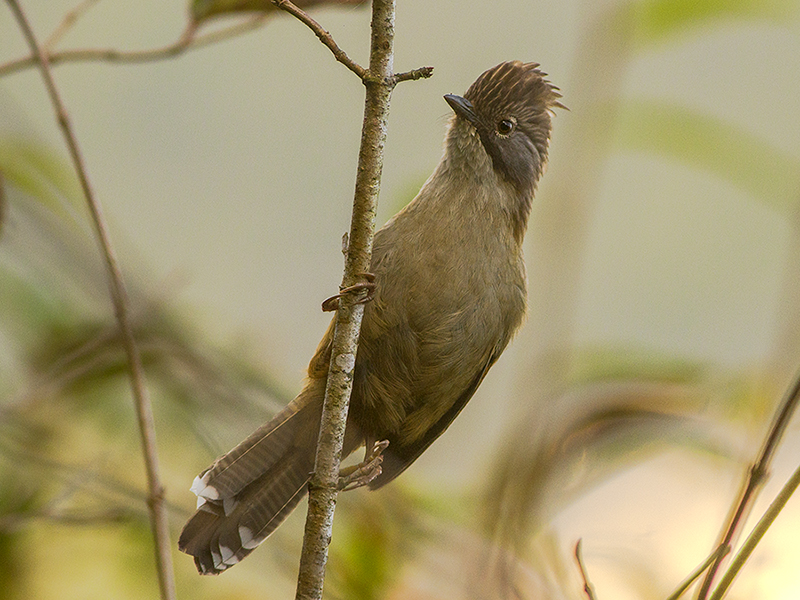
Birds Similar to the Red-tailed Laughingthrush
These species are often confused with the Red-tailed Laughingthrush due to similar appearance or overlapping range.

