Himalayan Shrike-Babbler
Pteruthius ripleyi
Order: Passeriformes / Family: Vireonidae

Wikimedia Commons
About the Himalayan Shrike-Babbler
The Himalayan Shrike-Babbler, known scientifically as Pteruthius ripleyi, is a captivating bird species residing predominantly in the montane forests of the Himalayas. These birds belong to the family Vireonidae, which is notable for their vibrant plumage and intricate songs. The Himalayan Shrike-Babbler plays a vital role in its ecosystem by participating in seed dispersal and insect population control. It is typically found in temperate forests where it occupies dense tree canopies. This bird is primarily seen in regions stretching from the western Himalayas in Nepal and Bhutan to parts of northern India, including the states of Uttarakhand and Sikkim. The species thrives in these biodiverse regions, preferring elevations between 1,500 and 3,000 meters. The forests in these areas provide abundant food resources and nesting opportunities, making them ideal habitats for the Himalayan Shrike-Babbler.
The bird's ecological significance stems from its insectivorous diet, which helps regulate insect populations, thereby maintaining ecological balance. During the breeding season, which typically occurs from April to July, the Himalayan Shrike-Babbler becomes more vocal and noticeable as it engages in courtship and territorial defense. Outside the breeding season, these birds may form mixed-species foraging flocks, which enhances their foraging efficiency and provides protection from predators.
Himalayan Shrike-Babblers are predominantly sedentary, but some seasonal altitudinal movements have been recorded in response to changing weather conditions and food availability. During the colder months, they may descend to lower elevations, seeking out warmer areas with ample food resources. Their adaptability to seasonal changes in their environment highlights their resilience and capacity to thrive in varying conditions. Despite their relatively stable population, ongoing habitat degradation poses a threat to their long-term survival, making conservation efforts crucial to preserve their natural habitats.
The Himalayan Shrike-Babbler belongs to the family Vireonidae, within the order Passeriformes. These birds typically live average 5-7 years with a maximum recorded of 9 years..
How to Identify a Himalayan Shrike-Babbler
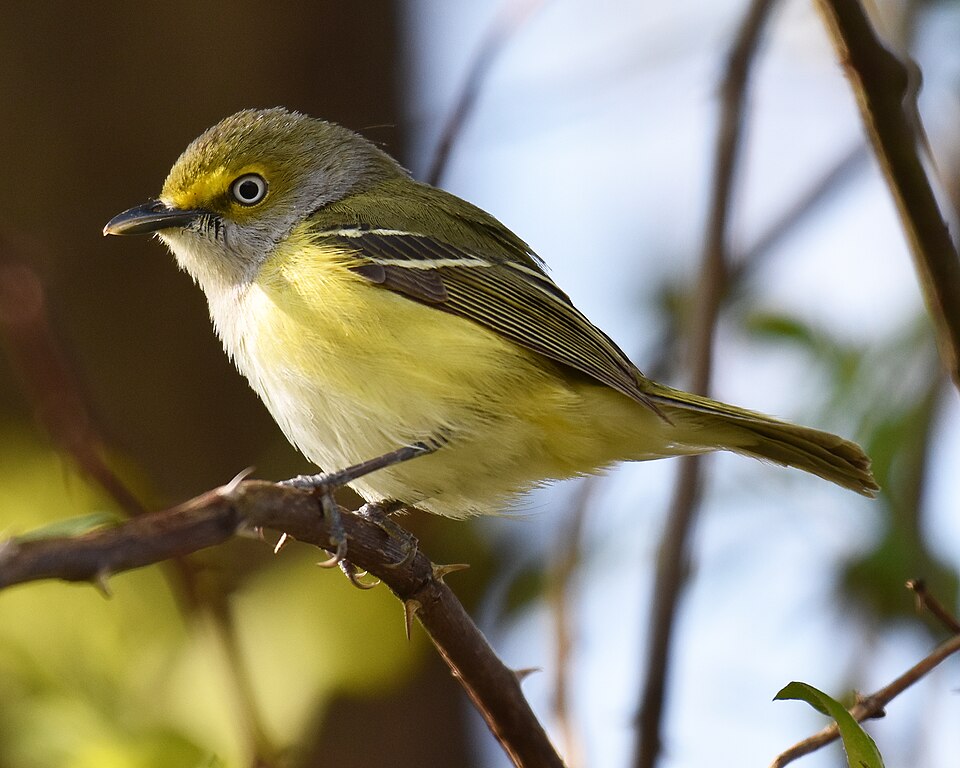
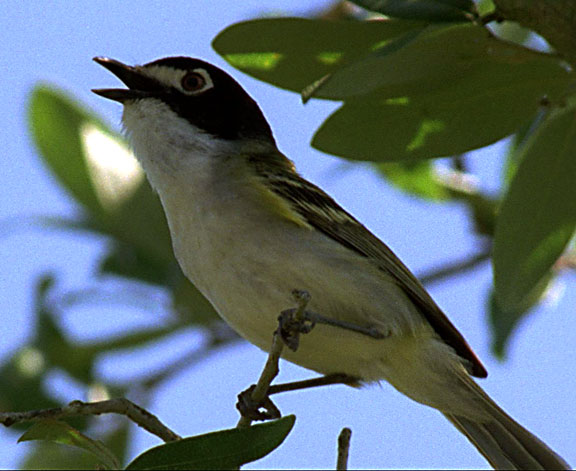
The Himalayan Shrike-Babbler exhibits a distinctive plumage that makes identification relatively straightforward. Adults have a striking combination of black and white plumage, with a prominent black head and back, contrasting sharply with their white underparts. Their wings are marked with white bars, adding to their distinctive appearance. The bird's black tail features white outer tail feathers, which are visible during flight. Juvenile birds tend to exhibit more subdued coloration, with browner tones replacing the stark black of adults.
There is minimal sexual dimorphism in the Himalayan Shrike-Babbler, meaning males and females look quite similar, though females may sometimes appear slightly duller in plumage. This lack of significant difference between the sexes can make it challenging to distinguish between male and female birds in the field without close observation.
When compared to similar species, such as other shrike-babblers, the Himalayan Shrike-Babbler stands out due to its more contrasting plumage. Observers should note the bird's upright posture when perching and its robust, slightly curved bill, which it uses skillfully to forage for insects. In flight, their broad wings and long tail create a distinctive silhouette, aiding in identification.
Having trouble telling birds apart? Upload a photo to our bird identification tool for an instant species match.
Himalayan Shrike-Babbler Habitat and Range
Preferred Habitat
The Himalayan Shrike-Babbler primarily inhabits montane and submontane forests in the Himalayan region. These birds favor dense, mixed deciduous and evergreen forests, often found at elevations ranging from 1,500 to 3,000 meters. They are commonly associated with areas abundant in oak, rhododendron, and pine trees, which provide an ideal mix of cover and food resources. During the breeding season, the bird frequents forest interiors, where it can find suitable nesting sites and a rich supply of insects.
In the non-breeding season, the Himalayan Shrike-Babbler may move to slightly lower elevations, adjusting to seasonal changes in temperature and food availability. They are less commonly found in urban or suburban areas, preferring the relative seclusion of forested environments. However, in regions where forests have been degraded, they may occasionally appear in secondary growth or plantations, though these habitats are less optimal for breeding and feeding.
Geographic Range
The Himalayan Shrike-Babbler's range is primarily confined to the extensive Himalayan mountain range. It inhabits regions from western Nepal through Bhutan and into northeastern India, particularly in states such as Sikkim and Uttarakhand. These birds are known for their relatively narrow altitudinal range, typically residing between 1,500 and 3,000 meters. While the species is considered resident, some individuals may exhibit altitudinal migration, descending to lower elevations during harsher winter months in search of food and milder climate conditions.
In these areas, population density tends to be concentrated in regions with well-preserved forest habitats. Due to their preference for higher elevations, they are less likely to be found in lowland areas or regions heavily impacted by human activity. There is currently no evidence suggesting significant long-distance migration, with movements primarily dictated by local environmental conditions and food resource availability.
Want to know which birds visit your area? Browse our backyard birds by location guides for region-specific species lists.
What Does the Himalayan Shrike-Babbler Eat?
The Himalayan Shrike-Babbler primarily relies on an insectivorous diet, which plays a crucial role in maintaining the balance of forest ecosystems. They forage actively in the forest canopy, employing a variety of techniques such as gleaning insects from leaves and branches, as well as hawking for flying insects. Their prey consists mainly of small arthropods, including caterpillars, beetles, and various other insects, which they catch with their robust, slightly hooked bill.
During the breeding season, the demand for protein-rich food increases, prompting the birds to intensify their foraging efforts to meet the nutritional needs of their young. In addition to insects, they occasionally consume small fruits and seeds, particularly during times when insect availability is low. This dietary flexibility allows them to adapt to seasonal changes in food resources, ensuring their survival across different times of the year.
The Himalayan Shrike-Babbler typically forages during daylight hours, with peak activity occurring in the early morning and late afternoon, when insects are most active. This schedule also helps them avoid the midday heat, which can be intense in their montane habitats.
Himalayan Shrike-Babbler Behavior and Social Structure
Himalayan Shrike-Babblers exhibit a fascinating array of behaviors that reflect their adaptation to montane forest life. These birds are generally observed alone or in pairs, particularly during the breeding season, when they establish and defend territories. Their territorial behavior is marked by frequent vocalizations and displays, which serve to ward off potential rivals and attract mates. Outside the breeding season, they may join mixed-species foraging flocks, which can offer increased protection from predators and improved foraging success.
Courtship displays in Himalayan Shrike-Babblers involve vocal duets and synchronized movements between partners, strengthening pair bonds. During these displays, males may also present food to females as part of the courtship ritual. These birds are diurnal, with most of their activity occurring during daylight hours. They typically forage for food in the morning and late afternoon, resting during the hotter parts of the day.
When faced with potential threats, the Himalayan Shrike-Babbler employs various strategies to deter predators, such as alarm calls and evasive flight. Their keen eyesight and cautious nature help them identify and react to danger promptly. These behaviors, combined with their adaptability to seasonal changes, contribute to their resilience in the dynamic environments of the Himalayas.
Himalayan Shrike-Babbler Nesting and Reproduction
The Himalayan Shrike-Babbler constructs cup-shaped nests, which it builds with great care using a variety of materials such as grass, leaves, and moss. These nests are typically situated in the fork of a tree branch, providing a secure location away from ground-dwelling predators. Nest sites are usually chosen within dense forests, ensuring adequate cover and a plentiful supply of insects to feed their young.
The breeding season for the Himalayan Shrike-Babbler generally spans from April to July. During this time, the female lays a clutch of 2 to 4 eggs, which she incubates for approximately 14 to 16 days. Both parents participate in feeding the chicks, which fledge about 14 to 18 days after hatching. Parental care continues for some time after fledging, as the young birds gradually learn to forage independently.
Typically, the species raises one brood per year, although in favorable conditions, a second brood may be attempted. Their nesting success is influenced by various factors, including predation and habitat quality, highlighting the importance of conserving their forest habitats to ensure their continued reproductive success.
Himalayan Shrike-Babbler Sounds and Vocalizations
The Himalayan Shrike-Babbler is noted for its melodious song, which consists of a series of clear, flute-like notes delivered in a rhythmic pattern. The song serves both to establish territory and to attract a mate during the breeding season. In addition to their primary song, these birds produce a variety of call notes, including sharp 'chip' sounds used for communication between mates and to signal alarm.
Their alarm calls are more abrupt and higher-pitched, serving as an alert to potential threats. During the early morning, the Himalayan Shrike-Babbler often participates in the dawn chorus, contributing its voice to the symphony of forest sounds. The quality and clarity of their song make it a distinctive and recognizable part of the Himalayan soundscape, often compared to the notes of a flute when heard from a distance.
Interesting Facts About the Himalayan Shrike-Babbler
- 1The Himalayan Shrike-Babbler was initially placed in the Timaliidae family but was later reclassified into the Vireonidae family based on genetic studies.
- 2Despite its striking plumage, the Himalayan Shrike-Babbler is often heard before it is seen, due to its preference for dense forest canopies.
- 3These birds are known for their cooperative behavior, often joining mixed-species flocks to enhance foraging success and predator detection.
- 4The Himalayan Shrike-Babbler is one of the few bird species where both sexes participate equally in nest building and chick rearing.
- 5Its robust bill allows the Himalayan Shrike-Babbler to efficiently catch and consume a variety of insects, playing a key role in controlling pest populations.
- 6The species' vocalizations are complex and varied, with individuals capable of mimicking the calls of other bird species within their habitat.
- 7In some regions, the bird is considered an indicator species for healthy montane forests, as it thrives in biodiverse and undisturbed environments.
Himalayan Shrike-Babbler Conservation Status
The Himalayan Shrike-Babbler currently holds a status of Least Concern according to the IUCN Red List, with stable population trends across its range. Despite this relatively secure status, the species faces threats primarily from habitat loss due to deforestation and human encroachment. The degradation of montane forests, driven by logging and agricultural expansion, poses a significant risk to their long-term survival. Conservation efforts focus on preserving and restoring forest habitats in the Himalayan region, as these are crucial for the bird's continued existence. Protected areas and national parks play a vital role in safeguarding these habitats. Additionally, raising awareness about the importance of conserving montane ecosystems can help mitigate the impact of human activities. Historical population changes have been relatively stable, though continued monitoring is essential to ensure that any negative trends are promptly addressed. Collaborative efforts between conservation organizations and local communities are crucial in maintaining the ecological integrity of the Himalayan Shrike-Babbler's natural environment.