Hylophilus acuticaudus
Hylophilus acuticaudus
Order: Passeriformes / Family: Vireonidae
About the Hylophilus acuticaudus
Hylophilus acuticaudus, commonly known as the Sharp-tailed Vireo, is a small, unobtrusive bird of the family Vireonidae. It thrives in the dense, humid forests of South America, with a distribution primarily in the Amazon Basin and adjacent lowlands. This bird plays a crucial ecological role as both a predator of insects and a seed disperser, contributing to the health of its forest ecosystem. The Sharp-tailed Vireo is an important indicator species for the health of tropical forests, as it requires dense foliage and a diverse understory to thrive. Researchers often use this species to gauge the impact of deforestation and habitat degradation in key regions such as Brazil, Peru, and Colombia. During the breeding season, which typically aligns with the wet season in these regions, the Sharp-tailed Vireo exhibits increased vocal activity and territoriality. Its presence in the forest is often revealed by its persistent, melodious song, which carries through the dense canopy. Unlike many birds that migrate seasonally, the Hylophilus acuticaudus maintains a relatively stable presence in its habitat year-round, although it may exhibit some altitudinal movements in response to food availability and climatic conditions. This stability in habitat utilization underscores the bird's adaptation to its environment but also highlights its vulnerability to deforestation and habitat fragmentation.
The Hylophilus acuticaudus belongs to the family Vireonidae, within the order Passeriformes. These birds typically live average 3 years; max recorded 5 years.
How to Identify a Hylophilus acuticaudus
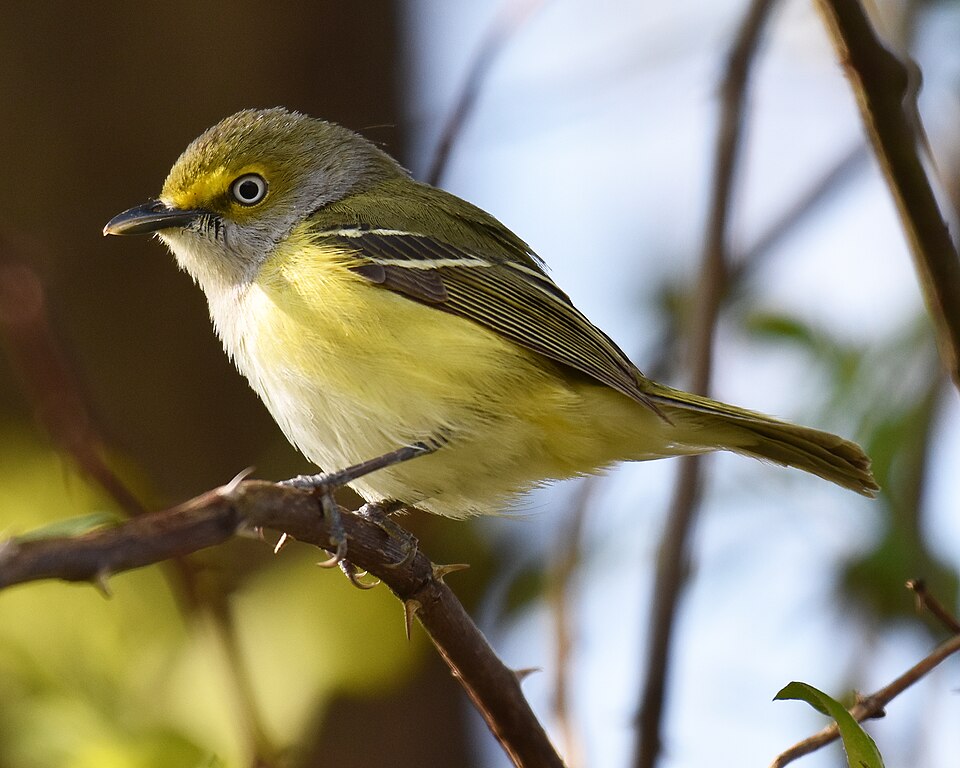
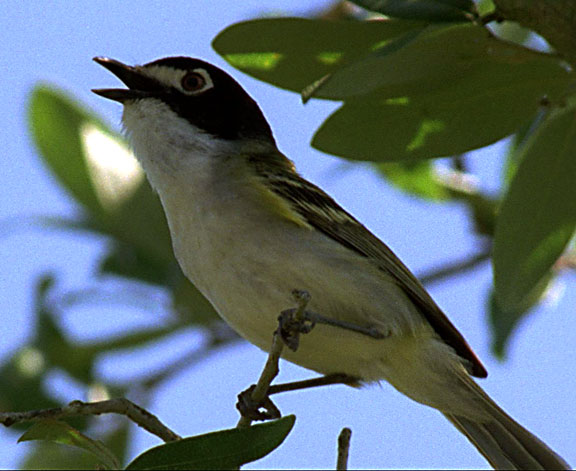
The adult Hylophilus acuticaudus presents a predominantly olive-green plumage, which provides excellent camouflage among the leaves of the forest canopy. Its underparts are paler, with a subtle yellowish wash across the belly. One of the key identifying features of the Sharp-tailed Vireo is its sharp, pointed tail, which contrasts with the more rounded tail shapes of similar species. This characteristic is particularly evident in flight, where the tail appears almost needle-like. Juvenile birds resemble adults but may have slightly duller plumage, lacking the full vibrancy seen in mature individuals. Sexual dimorphism is minimal, making it challenging to distinguish between males and females based solely on appearance. However, males are typically more vocal during the breeding season. When perched, the Sharp-tailed Vireo exhibits a slightly hunched posture, often with its tail cocked upwards, a behavior that aids in identification. Similar species, such as the Rufous-browed Peppershrike, can be confused with the Sharp-tailed Vireo, but the latter's lack of rufous coloration and pointed tail help differentiate it.
Having trouble telling birds apart? Upload a photo to our bird identification tool for an instant species match.
Hylophilus acuticaudus Habitat and Range
Preferred Habitat
The Sharp-tailed Vireo is predominantly found in humid tropical forests, thriving in regions with dense foliage and complex vertical structures. It prefers lowland forests, often at elevations below 1,000 meters, although it may occasionally be found in foothill areas. The bird exhibits a strong preference for primary forest habitats, where the canopy provides ample cover and food resources. During certain seasons, particularly the wet season, the Sharp-tailed Vireo may venture into secondary growth or edge habitats in search of insects and fruits. Unlike some passerines, this species is rarely found in urban areas, as it requires the dense, undisturbed vegetation typical of mature forests. The presence of the Sharp-tailed Vireo in a given area often indicates a healthy, biodiverse forest ecosystem, as it relies on a variety of plant and insect species for survival.
Geographic Range
Hylophilus acuticaudus has a distribution that spans several countries in South America, with its core range centered in the Amazon Basin. It is commonly found in Brazil, Peru, Colombia, and Venezuela, thriving in the expansive tropical forests that define these regions. The Sharp-tailed Vireo is a non-migratory species, maintaining its presence in its habitat year-round. However, some individuals may exhibit local movements, potentially moving to higher elevations during periods of food scarcity. Population density tends to be highest in regions with extensive forest cover, such as the central Amazon. While the bird is not considered globally threatened, localized declines have been noted in areas experiencing significant deforestation, particularly in the eastern Amazon. Conservation efforts focusing on habitat preservation are crucial for maintaining stable populations of this forest-dependent species.
Want to know which birds visit your area? Browse our backyard birds by location guides for region-specific species lists.
What Does the Hylophilus acuticaudus Eat?
The diet of the Sharp-tailed Vireo consists primarily of insects and other small invertebrates, which it gleans from leaves and branches in the forest canopy. It is an agile forager, moving methodically through the foliage to capture prey such as caterpillars, beetles, and spiders. During the wet season, when insect abundance peaks, the Hylophilus acuticaudus may also incorporate a variety of fruits and berries into its diet, aiding in seed dispersal for numerous plant species. This seasonal dietary shift reflects the bird's adaptability and its role as both a predator and a mutualist within its ecosystem. The Sharp-tailed Vireo typically forages alone or in pairs, although it may join mixed-species flocks, particularly outside of the breeding season. This social foraging behavior increases feeding efficiency and provides protection from predators. The bird's feeding schedule is largely diurnal, with peak activity occurring in the early morning and late afternoon.
Hylophilus acuticaudus Behavior and Social Structure
Socially, the Sharp-tailed Vireo is typically observed alone or in pairs, although it may occasionally join mixed-species flocks. This flocking behavior is more common outside the breeding season and provides the bird with increased foraging opportunities and predator avoidance. Territoriality is a key aspect of its behavior during the breeding season, with males singing persistently to defend their territory and attract mates. Courtship displays involve both song and a series of visual displays, including wing flicking and tail spreading. The daily activity patterns of Hylophilus acuticaudus are primarily diurnal, with peak activity occurring during the early morning and late afternoon. In response to predators, the Sharp-tailed Vireo employs a combination of vocal alarms and evasive flight, retreating to denser cover to avoid detection. Its sharp-tailed profile aids in maneuverability through the dense foliage of its forest habitat.
Hylophilus acuticaudus Nesting and Reproduction
The nesting behavior of the Sharp-tailed Vireo reflects its adaptation to the dense forest environment. Nests are typically cup-shaped structures constructed from a variety of materials, including grass, leaves, and spider silk, which provide both strength and camouflage. These nests are often placed in the fork of a tree branch, concealed by foliage to protect from predators. The clutch size usually ranges from two to three eggs, with an incubation period of approximately 12 to 14 days. Both parents share responsibility for incubating the eggs and feeding the chicks, which fledge approximately two weeks after hatching. The Sharp-tailed Vireo is capable of raising multiple broods per year, particularly in regions where environmental conditions remain favorable throughout the breeding season. Parental care continues post-fledging, with adults providing food and protection until the young are independent.
Hylophilus acuticaudus Sounds and Vocalizations
The primary song of Hylophilus acuticaudus is a melodious series of clear, whistling notes that vary in pitch and rhythm. This song serves both to defend territory and attract mates, and is most commonly heard during the breeding season. The call notes are shorter, more abrupt tones used for communication between individuals, particularly within mixed-species flocks. Alarm calls are harsher and more rapid, signaling the presence of predators. During the dawn chorus, the Sharp-tailed Vireo contributes its distinctive song to the symphony of forest sounds, often initiating singing activity at first light. The sound has a quality similar to a flute, with a series of warbling notes that rise and fall in a fluid melody.
Interesting Facts About the Hylophilus acuticaudus
- 1The Sharp-tailed Vireo's tail is so distinctive that it inspired its scientific name, 'acuticaudus,' meaning 'sharp tail.'
- 2This bird can join mixed-species flocks, enhancing its foraging success and reducing predation risk.
- 3Despite being a forest-dependent species, the Sharp-tailed Vireo shows some adaptability to secondary growth conditions.
- 4The song of the Sharp-tailed Vireo is often compared to a melodious flute, resonating through dense forest canopies.
- 5Hylophilus acuticaudus is primarily found below 1,000 meters elevation but can occasionally be seen in foothill regions.
- 6During the wet season, this species diversifies its diet to include fruits, playing a role in seed dispersal.
- 7The Sharp-tailed Vireo is an indicator species for the health of tropical forests, reflecting ecosystem changes.
Hylophilus acuticaudus Conservation Status
The IUCN currently lists the Sharp-tailed Vireo as a species of Least Concern, with stable population trends across much of its range. However, primary threats include habitat loss and fragmentation due to deforestation for agriculture and logging. Conservation efforts focus on preserving large tracts of continuous forest, particularly in the Amazon Basin, which is crucial for the survival of this forest-dependent species. Historical population changes have been influenced by the extent of deforestation, with regional declines noted where forest cover has been significantly reduced. Ongoing research and monitoring are vital to ensure the long-term conservation of Hylophilus acuticaudus and the ecosystems it inhabits.