
Least Storm-Petrel
Hydrobates microsoma
Order: Procellariiformes / Family: Hydrobatidae

Wikimedia Commons
About the Least Storm-Petrel
The Least Storm-Petrel (Hydrobates microsoma) captivates ornithologists with its diminutive stature and remarkable abilities. As the smallest member of the storm-petrel family, this species measures approximately 13 cm in length with a wingspan of around 32 cm, making it one of the tiniest seabirds in the world. Its presence is most notable along the Pacific coast of North America, particularly in the waters off Baja California and the Gulf of California. The Least Storm-Petrel occupies a crucial ecological niche, primarily feeding on plankton and small fish near the ocean's surface. This behavior plays a significant role in controlling the populations of these marine organisms and maintaining the balance of the oceanic ecosystem. The bird's small size and dark plumage make it challenging to spot against the background of the open sea, yet its swift, fluttering flight pattern is distinctive. The Least Storm-Petrel is a pelagic bird, spending the majority of its life far from land, only returning to coastal islands to breed. Its breeding colonies are often situated on remote, rocky islets where it nests in burrows or crevices. This secluded breeding strategy helps protect the bird from predators and human disturbance. During the breeding season, which typically spans from May to September, the Least Storm-Petrel can be observed engaging in remarkable nocturnal activity. As a nocturnal breeder, the bird minimizes predation risks by returning to its colony under the cover of darkness. This behavior is indicative of its adaptation to a life at sea, where it remains elusive to both predators and researchers. Understanding the ecological role and behavior of the Least Storm-Petrel is essential for marine conservation efforts. As oceanic environments face increasing threats from climate change and pollution, monitoring seabird populations such as the Least Storm-Petrel provides valuable insights into the health of marine ecosystems. Researchers continue to study this species to better understand its migration patterns, foraging behavior, and breeding success, all of which are critical for effective conservation strategies.
The Least Storm-Petrel belongs to the family Hydrobatidae, within the order Procellariiformes. These birds typically live average lifespan is up to 15 years, with a maximum recorded of 20 years..
How to Identify a Least Storm-Petrel
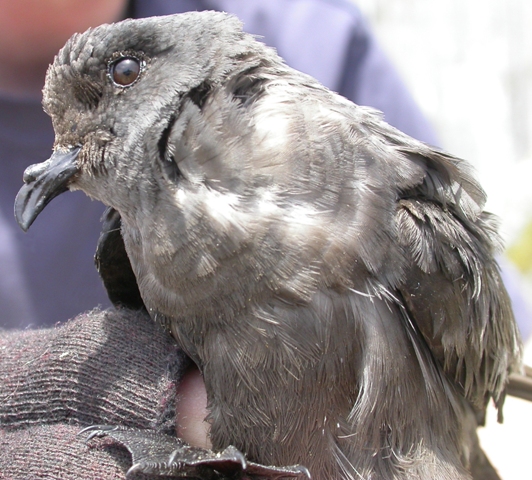
In the field, the Least Storm-Petrel can be identified by its small size and characteristic sooty brown plumage. The bird's upperparts, including the head, back, and wings, are uniformly dark, while its underparts are slightly paler. Unlike some related species, the Least Storm-Petrel lacks a prominent white rump, which can help distinguish it from other storm-petrels in its range. Juveniles resemble adults but may appear somewhat duller in coloration. Males and females share similar plumage, and there are no noticeable differences in size or coloration between the sexes. The bird's flight silhouette is unique, characterized by rapid, fluttering wingbeats and a low, skimming trajectory over the water's surface. When seen in flight, the Least Storm-Petrel's wings appear narrow and pointed, aiding its agile maneuverability. On the rare occasion that the bird perches, it does so in a hunched posture, typically on rocky outcrops near its breeding sites. Its small, dark appearance and erratic flight can sometimes lead to confusion with swallows or other small seabirds, but the Least Storm-Petrel's habitat and behavior are distinct.
Having trouble telling birds apart? Upload a photo to our bird identification tool for an instant species match.
Least Storm-Petrel Habitat and Range
Preferred Habitat
The Least Storm-Petrel thrives in open ocean environments, specifically favoring the warmer waters of the eastern Pacific Ocean. This seabird is most commonly associated with the Gulf of California and along the western coast of Baja California. During the breeding season, it is found on remote, rocky islands where it nests in burrows or natural crevices. These breeding sites are typically located at low elevations near the sea, providing easy access to food sources. While the Least Storm-Petrel spends most of its life at sea, it relies on the presence of specific coastal habitats for successful reproduction. The bird does not typically inhabit urban areas and avoids heavily forested or inland regions, preferring the vast expanse of the ocean. Seasonal shifts may occur as individuals move to different parts of the ocean to follow food availability, but the species remains largely pelagic throughout the year.
Geographic Range
The breeding range of the Least Storm-Petrel is confined to a few key locations, primarily on islands in the Gulf of California and off the coast of Baja California. These breeding grounds serve as vital habitats during the breeding season. Outside of this period, the Least Storm-Petrel is pelagic, dispersing across the eastern Pacific Ocean. Its wintering range extends farther south, possibly reaching waters off the coast of Central America. Migration patterns of the Least Storm-Petrel are not fully understood, but it is believed that the species undertakes seasonal movements to take advantage of changing oceanic conditions and food availability. The bird is most frequently observed in regions where upwellings create rich feeding grounds, such as the California Current. These areas are considered population density hotspots, providing essential resources for the species' survival.
Want to know which birds visit your area? Browse our backyard birds by location guides for region-specific species lists.
What Does the Least Storm-Petrel Eat?
The Least Storm-Petrel primarily feeds on plankton and small fish, which it captures near the ocean's surface. Its diet consists of various marine organisms, including copepods, krill, and small crustaceans. During the breeding season, the bird's diet may shift slightly to accommodate the needs of its chicks, with adults potentially targeting larger prey items to ensure sufficient nutrition. Foraging techniques involve skimming the ocean's surface and employing a fluttering flight to maintain proximity to the water while snatching prey. The bird's small size allows it to be highly agile, adjusting its flight path quickly to capture food. Its feeding schedule is largely dictated by the availability of prey, with foraging occurring primarily during daylight hours when plankton and fish are more accessible near the surface.
Least Storm-Petrel Behavior and Social Structure
The Least Storm-Petrel exhibits distinct social and territorial behaviors, often forming loose flocks while foraging at sea. These groups provide safety in numbers, enabling individuals to locate food more efficiently. During the breeding season, the bird displays strong site fidelity, returning to the same nesting colony year after year. Courtship displays involve synchronized flights and vocalizations, strengthening pair bonds. The species is generally non-territorial at sea, with minimal aggression observed between individuals outside of the breeding period. In response to predators, the Least Storm-Petrel relies on its nocturnal habits to reduce visibility, particularly when attending to its nest. Its daily activity patterns are largely diurnal, with most foraging occurring during daylight hours. However, at the breeding colonies, activities such as returning to nests and feeding chicks predominantly occur at night.
Least Storm-Petrel Nesting and Reproduction
Nesting for the Least Storm-Petrel involves the use of burrows or natural crevices on remote, rocky islands. These sites offer protection from predators and environmental extremes. The bird typically lays a single egg per breeding season, with both parents sharing incubation duties over a period of approximately 40 days. Once hatched, the chick remains in the nest, dependent on parental care for food and protection. The fledging period lasts around 60 days, during which both adults participate in feeding the young. Parental roles are relatively equal, with both sexes involved in brooding and provisioning. The species generally produces one brood per year, with breeding timed to coincide with peak food availability in the surrounding ocean.
Least Storm-Petrel Sounds and Vocalizations
The vocalizations of the Least Storm-Petrel are characterized by a series of rapid, high-pitched chirps and trills. These sounds are most often heard at the breeding colonies, particularly during nocturnal activities when birds return to their nests. Call notes serve as communication between mates and are critical for maintaining pair bonds. Alarm calls are sharper and more abrupt, functioning as a warning system against potential threats. While the Least Storm-Petrel does not participate in a dawn chorus, its vocalizations contribute to the ambient sounds of its breeding habitat, providing a stark contrast to the relative silence of the open ocean.
Interesting Facts About the Least Storm-Petrel
- 1The Least Storm-Petrel is the smallest storm-petrel in the world, measuring only about 13 cm in length.
- 2Despite its small size, the Least Storm-Petrel can travel vast distances across the Pacific Ocean.
- 3The species exhibits nocturnal breeding behavior to avoid predation, a fascinating adaptation to its environment.
- 4Least Storm-Petrels can form large flocks when feeding at sea, showcasing their social nature.
- 5Their diet mainly consists of plankton and small fish, highlighting their role in the marine food web.
- 6The bird's flight is characterized by rapid, fluttering wingbeats, making it distinct among seabirds.
- 7The Least Storm-Petrel's breeding colonies are often located on remote, rocky islets inaccessible to many predators.
Least Storm-Petrel Conservation Status
The Least Storm-Petrel is currently listed as Least Concern by the IUCN, with population trends considered stable. However, the species faces threats from habitat degradation, pollution, and climate change, which can impact food availability and breeding success. Conservation efforts focus on protecting breeding colonies from human disturbance and invasive species, as well as monitoring population dynamics to detect early signs of decline. Historical data suggests that the species has maintained a relatively stable population, but continued vigilance is necessary to ensure its long-term survival.
Other Hydrobatidae Species



Birds Similar to the Least Storm-Petrel
These species are often confused with the Least Storm-Petrel due to similar appearance or overlapping range.
