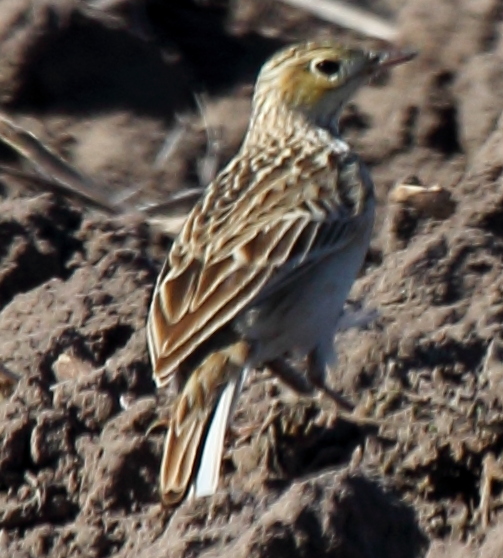
Malindi Pipit
Anthus melindae
Order: Passeriformes / Family: Motacillidae

Wikimedia Commons
About the Malindi Pipit
The Malindi Pipit, Anthus melindae, is a small passerine bird endemic to the coastal regions of eastern Africa, specifically in Kenya. It is part of the Motacillidae family, which also includes wagtails and other pipits. This species thrives in savanna grasslands and open fields, often found near the coastal town of Malindi, which is reflected in its common name. The Malindi Pipit plays a crucial role in the ecosystem as an insectivore, helping to control insect populations, which benefits both agriculture and natural plant communities. Its presence is a good indicator of healthy grassland ecosystems.
The Malindi Pipit is particularly significant due to its limited range and specialized habitat requirements. Unlike some other pipit species, it does not migrate extensively, remaining within its range year-round. This sedentary lifestyle makes it vulnerable to habitat changes caused by human activities such as agriculture and urban development. Although not currently listed as endangered, the Malindi Pipit’s limited distribution and the ongoing habitat fragmentation in East Africa pose potential threats to its population.
Ecologically, the Malindi Pipit contributes to the biodiversity of the grassland habitats by participating in seed dispersal through its feeding habits. It also serves as prey for larger birds of prey and small mammals, thus fitting into the food web both as a consumer and a source of sustenance for other species. During the breeding season, which coincides with the onset of the rainy season, the Malindi Pipit becomes more active and vocal, establishing territories and engaging in courtship behaviors. Its subtle yet melodious song adds to the soundscape of the East African grasslands, marking the presence of a healthy avian community.
The Malindi Pipit belongs to the family Motacillidae, within the order Passeriformes. These birds typically live estimated to be 3-5 years, with limited data on longevity..
How to Identify a Malindi Pipit
The Malindi Pipit is characterized by its medium size among pipits, with an average length of about 15-17 cm. Its plumage is predominantly brown with darker streaks, providing excellent camouflage against the grassland terrain. The underparts are paler, with a whitish belly and buff flanks, which can become more pronounced in certain lighting conditions. The wings display a subtle pattern of darker brown with faint bars, aiding in identification during flight.
Juvenile Malindi Pipits resemble adults but tend to have a slightly more mottled appearance with less distinct streaking. There is little sexual dimorphism, meaning males and females appear similar in plumage, though males may display slightly brighter coloration during the breeding season. The bird's flight silhouette is typical of pipits, with long wings and a somewhat elongated tail, allowing for agile maneuvering through its habitat.
The Malindi Pipit can be mistaken for other local pipit species, such as the African Pipit, but it can be differentiated by its distinct call and localized range. Observers should note its typical perching posture, often seen standing erect on the ground or on low perches like rocks or termite mounds, from where it may launch into short exploratory flights in search of food.
Having trouble telling birds apart? Upload a photo to our bird identification tool for an instant species match.
Malindi Pipit Habitat and Range
Preferred Habitat
The Malindi Pipit primarily inhabits open grasslands and savannas, often preferring areas with sparse vegetation that allows for easy foraging. It is most commonly found at elevations ranging from sea level to 1,000 meters, particularly in the coastal regions of Kenya, including the grasslands surrounding the town of Malindi. This bird tends to avoid dense forests and prefers habitats where grasses and low shrubs dominate the landscape.
During the wet season, the availability of insects increases, prompting the Malindi Pipit to remain in these grasslands. However, during particularly dry periods, it may venture slightly closer to human settlements, where irrigation or other water sources might provide additional food sources. Despite its adaptability to some habitat changes, the Malindi Pipit is generally absent from heavily urbanized areas, instead favoring rural settings where land use practices are more compatible with its ecological needs.
Geographic Range
The Malindi Pipit is endemic to the coastal regions of eastern Kenya, with its range primarily restricted to areas around Malindi. This localized range is a defining characteristic of the species, as it does not exhibit significant migratory behavior. Instead, it remains within its established territory year-round, relying on the seasonal abundance of food resources to sustain its population.
Within its range, the population density of the Malindi Pipit can be quite variable, often influenced by the quality and extent of suitable grassland habitat. While it is not considered a migratory species, local movements may occur in response to weather patterns, such as seeking higher grounds to escape flooding during heavy rains. The bird's presence in specific regions is often tied to traditional land management practices that preserve its preferred habitat conditions.
Want to know which birds visit your area? Browse our backyard birds by location guides for region-specific species lists.
What Does the Malindi Pipit Eat?
The Malindi Pipit primarily feeds on a diet of insects, which it forages for by walking along the ground. Its diet includes a variety of invertebrates such as beetles, ants, and grasshoppers, which are abundant in its grassland habitat. During the wet season, when insect populations peak, the Malindi Pipit becomes particularly active, taking advantage of the increased food availability.
In addition to insects, the Malindi Pipit occasionally consumes seeds and small plant materials, especially during periods when insect prey is scarce. This dietary flexibility aids its survival in environments where food availability can fluctuate. The bird employs a foraging technique that involves slow, deliberate movements punctuated by sudden sprints to capture prey, often using its slender, pointed bill to probe into the soil or lift debris.
The Malindi Pipit typically forages alone or in pairs, rarely forming larger groups except when food is particularly abundant. Its feeding activity peaks during the cooler parts of the day, such as early morning and late afternoon, aligning with the periods when its insect prey is most active.
Malindi Pipit Behavior and Social Structure
The Malindi Pipit exhibits a territorial behavior, particularly during the breeding season, when males establish and fiercely defend their territories. This is achieved through a combination of vocal displays and physical posturing. The male's song, delivered from an elevated perch or during a display flight, serves to advertise its presence and deter rivals.
Courtship displays are subtle but include behaviors such as wing flicking and tail fanning to attract females. Once paired, Malindi Pipits often remain together throughout the breeding season, working cooperatively to raise their young. Outside of the breeding season, the pipits may become less territorial and can be observed in small groups, especially in areas where food is plentiful.
The bird's daily activity patterns are influenced by temperature and food availability. Generally, the Malindi Pipit is most active in the early morning and late afternoon to avoid the midday heat. Its response to predators includes crouching and remaining still to blend into its surroundings or taking flight with a rapid, zigzag pattern to evade capture. These behaviors highlight its adaptability and survival strategies in the dynamic East African savannas.
Malindi Pipit Nesting and Reproduction
Malindi Pipits build their nests on the ground, usually hidden among grasses or under small shrubs to protect against predators and environmental elements. The nest is a small cup-shaped structure, constructed primarily from dried grasses, roots, and sometimes lined with finer materials for added insulation.
The female typically lays a clutch of 3-4 eggs, with incubation lasting approximately 12-14 days. Both parents share incubation duties and are highly attentive, ensuring the eggs remain at optimal temperatures. Once hatched, the chicks are altricial, requiring significant parental care and feeding.
Fledging occurs around 14-16 days after hatching, though the young may remain dependent on the parents for a short period afterward as they learn to forage and navigate their environment. The Malindi Pipit usually raises one to two broods per year, with breeding timed to coincide with periods of peak food availability, ensuring sufficient resources for their offspring.
Malindi Pipit Sounds and Vocalizations
The primary song of the Malindi Pipit is a series of clear, melodic notes delivered in a rapid sequence. The rhythm is lively, comprising a mix of high-pitched trills and softer whistles. This song is often heard during the breeding season, as males use it both to attract mates and to establish territorial boundaries.
The bird also produces distinct call notes, which include a short, sharp 'chip' sound used for communication between individuals or as an alarm call when potential threats are detected. In the early morning, the Malindi Pipit contributes to the dawn chorus with its musical notes, which add a unique and pleasant sound to the grassland environment.
Compared to other pipits, the Malindi Pipit's song is less complex but carries a certain clarity that makes it recognizable to experienced birdwatchers. Its vocalizations play a crucial role in maintaining social structures and facilitating interactions within its territory.
Interesting Facts About the Malindi Pipit
- 1The Malindi Pipit is named after the town of Malindi, reflecting its strong association with the coastal region of Kenya.
- 2Despite its modest appearance, the Malindi Pipit plays a key role in controlling insect populations, benefiting local agriculture.
- 3The Malindi Pipit is one of the few pipit species that does not migrate, making it a reliable resident of its home range.
- 4With a length of 15-17 cm, the Malindi Pipit is medium-sized for a pipit, yet its camouflage makes it hard to spot in the wild.
- 5The nesting strategy of the Malindi Pipit involves placing nests on the ground, well-hidden among grasses, to evade predators.
- 6During courtship, the Malindi Pipit exhibits various displays, including wing flicking and tail fanning, to attract a mate.
- 7The Malindi Pipit's song, a series of clear, melodic notes, adds to the soundscape of the East African savannas, particularly during the breeding season.
Malindi Pipit Conservation Status
The Malindi Pipit is currently classified as Least Concern by the IUCN, indicating that its population is stable. However, its limited range and specific habitat requirements make it vulnerable to habitat loss due to agricultural expansion and urban development. These activities lead to fragmentation of the grasslands that the Malindi Pipit depends on for survival. Conservation efforts focus on preserving these natural grassland habitats through sustainable land management practices and protected area designations. Educating local communities about the importance of maintaining these ecosystems can also aid in conservation. Historically, the population of the Malindi Pipit has been relatively stable, but ongoing monitoring is necessary to ensure that it remains unaffected by environmental changes or human activities. Continued research and habitat conservation will be essential to safeguard the future of this distinctive species.