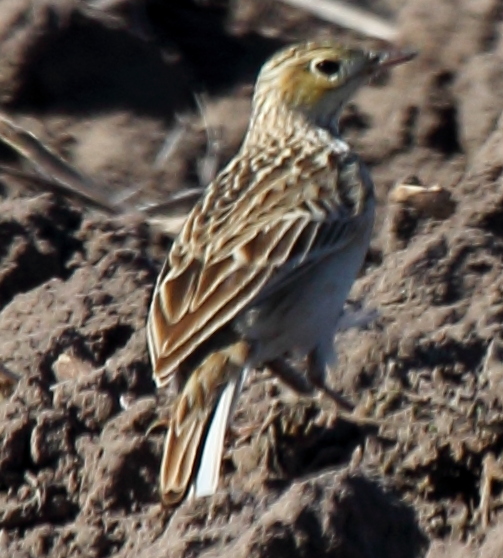
Motacilla aurorea
Motacilla aurorea
Order: Passeriformes / Family: Motacillidae

Wikimedia Commons
About the Motacilla aurorea
The Eastern Yellow Wagtail, scientifically known as Motacilla aurorea, is a vibrant songbird belonging to the family Motacillidae. This species is notable for its adaptability and broad geographic range, thriving across much of Asia, including China, Japan, Korea, and southeast Russia. The wagtail prefers open habitats, where its striking yellow plumage often stands out against the greens and browns of grasslands and wetlands. This bird plays a crucial role in the ecosystem as an insectivore, helping regulate insect populations. Its presence is often indicative of healthy wetland and grassland ecosystems. The Eastern Yellow Wagtail's migratory behavior is a spectacle in itself, with large flocks embarking on long journeys from breeding grounds in the north to wintering sites in Southeast Asia and the Indian subcontinent. Seasonal changes influence its behaviors, with breeding occurring in the northern reaches during spring and summer, while winter months are spent in warmer southern locales. This adaptability to different climates and habitats underscores its ecological importance and resilience amid environmental changes. The species' vibrant coloration and lively behavior make it a favorite among bird watchers and nature enthusiasts, offering a vivid glimpse into the dynamics of avian life across varied landscapes.
The Motacilla aurorea belongs to the family Motacillidae, within the order Passeriformes. These birds typically live estimated around 5-7 years, with limited data available..
How to Identify a Motacilla aurorea
Adult Eastern Yellow Wagtails are easily recognized by their bright yellow underparts and contrasting olive-green to brown upperparts. The head often features a distinct yellow supercilium, giving it an alert expression. Males in breeding plumage exhibit more intense coloration, while females tend to have duller hues. Juveniles are generally paler, with less pronounced yellow and more uniform brownish tones. The species can be confused with other wagtails, such as the Western Yellow Wagtail, but the Eastern variant typically has a more pronounced contrast between its upper and lower body. In flight, the wagtail displays a distinctive undulating pattern, with rapid wing beats followed by short glides. When perched, it is known for its constant tail wagging, a characteristic behavior that aids identification even at a distance.
Having trouble telling birds apart? Upload a photo to our bird identification tool for an instant species match.
Motacilla aurorea Habitat and Range
Preferred Habitat
Motacilla aurorea inhabits a variety of open spaces, favoring grasslands and wetlands. It can be found at elevations ranging from sea level to upland meadows in mountainous regions. During breeding season, it prefers moist, grassy areas near water bodies, such as rivers and lakes. In winter, it often moves to more open and dry habitats, including agricultural fields and rural landscapes. The wagtail's ability to thrive in both urban and rural settings demonstrates its adaptability. While it is more common in rural and semi-natural environments, it can occasionally be seen in parks and gardens within urban areas.
Geographic Range
The breeding range of the Eastern Yellow Wagtail extends across Northeast Asia, including southeastern Russia, northern China, Korea, and Japan. During migration, it travels through East and Southeast Asia, with significant stopover sites in countries such as China and Vietnam. Its wintering grounds spread across southern Asia, including India, Bangladesh, and parts of Southeast Asia. Notably, it avoids much of central and western Asia, choosing instead the rich, moist environments of its preferred regions. Population densities are highest in areas with abundant insect life, particularly around wetlands and river valleys.
Want to know which birds visit your area? Browse our backyard birds by location guides for region-specific species lists.
What Does the Motacilla aurorea Eat?
The diet of the Eastern Yellow Wagtail primarily consists of insects and other small invertebrates, which it actively hunts in open areas. Its foraging technique involves brisk walking and sudden darting movements to catch prey, often seen in fields and along water edges. During the breeding season, the diet may expand to include small crustaceans and mollusks found in their wetland habitats. In winter, as insect availability decreases, it may also consume seeds and small berries. The wagtail typically feeds throughout the day, with peak activity in the early mornings and late afternoons.
Motacilla aurorea Behavior and Social Structure
Eastern Yellow Wagtails exhibit a social and dynamic behavior, often found in pairs or small groups. They are territorial during the breeding season, with males performing elaborate flight displays to establish dominance and attract mates. These displays often involve ascending flights and musical calls. During migration and winter, they form larger flocks for protection and efficient foraging. The species is generally diurnal, with activity peaks at dawn and dusk. In response to predators, wagtails rely on their agility and flocking behavior to avoid capture, often taking to the air in coordinated flights.
Motacilla aurorea Nesting and Reproduction
Eastern Yellow Wagtails build their nests on the ground, often concealed among dense vegetation or grass tussocks. The nests are cup-shaped and constructed from grass, leaves, and rootlets, lined with softer materials like feathers. A typical clutch contains 4 to 6 eggs, which are incubated primarily by the female for about 12 to 14 days. Both parents participate in feeding the hatchlings, which fledge approximately two weeks after hatching. The species often raises two broods per year, especially in favorable conditions.
Motacilla aurorea Sounds and Vocalizations
The primary song of the Eastern Yellow Wagtail is a melodious series of high-pitched notes, delivered in rapid succession. These songs are often heard during the breeding season and serve as territorial displays. The call notes are sharp and metallic, commonly described as 'tsip' or 'chit' sounds. Alarm calls are more urgent and can be heard when predators approach. During the dawn chorus, their songs contribute a lively and cheerful tone to the soundscape of their habitats, reminiscent of chattering small bells.
Interesting Facts About the Motacilla aurorea
- 1Eastern Yellow Wagtails can migrate over 3,000 kilometers between breeding and wintering grounds.
- 2They are known to share roosting sites with other wagtail species, creating mixed-species flocks.
- 3Despite their name, not all Eastern Yellow Wagtails have distinctly yellow heads; there is regional variation.
- 4The tail-wagging behavior is thought to help flush out insects, making them easier to catch.
- 5Eastern Yellow Wagtails often follow grazing livestock, catching insects stirred up by their movement.
- 6Their call can vary significantly between different regions, with some populations developing unique dialects.
- 7The species' adaptability to various habitats makes it a useful indicator of environmental health.
Motacilla aurorea Conservation Status
The Eastern Yellow Wagtail is not currently considered threatened, with a stable population trend according to the IUCN. However, habitat loss due to agricultural expansion and wetland drainage poses ongoing risks. Conservation efforts focus on habitat protection and monitoring population trends. Historically, the species has adapted well to changes in land use, but continued vigilance is necessary to ensure its habitats remain viable.