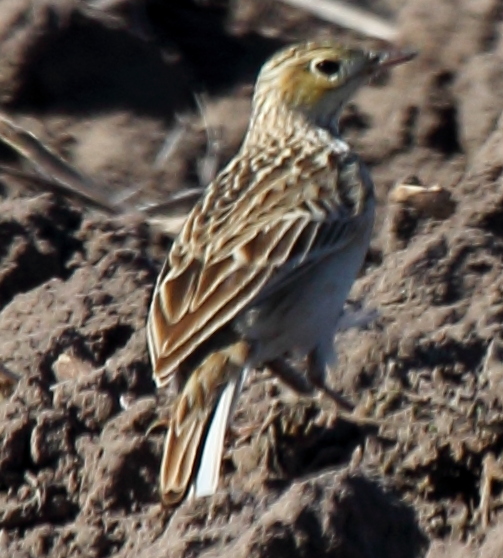
Eastern Yellow Wagtail
Motacilla borealis
Order: Passeriformes / Family: Motacillidae

Wikimedia Commons
About the Eastern Yellow Wagtail
The Eastern Yellow Wagtail (Motacilla borealis) is a small passerine bird known for its striking yellow coloration and dynamic movements. This bird belongs to the family Motacillidae, which is characterized by slender bodies and elongated tails. The species is widely distributed across Eurasia, primarily breeding in the northern regions, including Siberia and parts of Scandinavia. The wagtail's bright plumage makes it a visually captivating presence in its habitat, which ranges from open grasslands to wetland areas.
Ecologically, the Eastern Yellow Wagtail plays a significant role in controlling insect populations. Its diet largely consists of insects, which it adeptly catches through its agile flight and keen eyesight. During the breeding season, this bird is found in abundance in the tundra and subarctic regions, where it nests close to water sources. Here, its ecological role expands as it becomes a prey species for larger predators, thus contributing to the food web.
In its wintering grounds located in Southeast Asia and parts of the Indian subcontinent, the Eastern Yellow Wagtail is often seen in agricultural fields and grasslands. Its presence benefits the agricultural ecosystem by reducing pest populations. Seasonal behaviors include long migratory journeys, where these wagtails travel thousands of kilometers to reach warmer climates. The bird's adaptability to various wetland and grassland habitats across its range underscores its ecological significance and resilience.
The Eastern Yellow Wagtail belongs to the family Motacillidae, within the order Passeriformes. These birds typically live average 2-3 years with a maximum recorded of 5 years..
How to Identify a Eastern Yellow Wagtail
The Eastern Yellow Wagtail is a small bird measuring around 16 to 18 cm in length with a wingspan of 23 to 26 cm. Its vibrant yellow underparts and olive-green upperparts make it unmistakable, particularly in males. Adult males exhibit a brighter yellow hue during the breeding season, whereas females and juveniles have a more subdued coloration, appearing paler and often with a hint of grey or brown tones on the back.
Juvenile Eastern Yellow Wagtails can be distinguished by their more streaked brown upperparts and less vivid underparts compared to adults. The wagtail's slender body and long tail, which it often wags, are key features aiding identification even from a distance. In flight, its rapid wingbeats and undulating flight pattern are characteristic, with the tail often fanned out.
When perched, the wagtail's stance is upright, often seen on the ground or low vegetation. While they can be confused with the Western Yellow Wagtail, careful observation of plumage details and geographical location can aid in accurate identification.
Having trouble telling birds apart? Upload a photo to our bird identification tool for an instant species match.
Eastern Yellow Wagtail Habitat and Range
Preferred Habitat
The Eastern Yellow Wagtail occupies a range of habitats, with a preference for open, wet environments. During the breeding season, it is commonly found in the tundra and wet meadows of northern Eurasia. These areas provide ample insect prey and suitable nesting grounds near water sources. The wagtail also inhabits floodplains and marshes, where it benefits from the rich insect life.
In winter, the wagtail migrates to lower altitudes and warmer climates, including flooded rice paddies, grasslands, and agricultural fields in Southeast Asia. These habitats offer abundant food resources and a mild climate. While more commonly seen in rural areas, the Eastern Yellow Wagtail can also adapt to urban environments, particularly in areas with available water and open spaces.
Geographic Range
The breeding range of the Eastern Yellow Wagtail extends across northern Eurasia, particularly in Siberia, Scandinavia, and parts of northern Russia. During breeding, it is most densely populated in these subarctic regions, where it utilizes the vast open landscapes for nesting.
As a migratory species, it undertakes extensive journeys to reach its wintering grounds, which cover Southeast Asia, including countries like India, Thailand, and Myanmar. Migration routes typically follow major flyways across the continent, with birds often seen in large flocks during transit.
Population density is highest in breeding areas with suitable wetland habitats, while wintering populations disperse across agricultural and grassland regions of the Indian subcontinent and Southeast Asia. These regions offer the resources necessary to sustain the wagtail through the winter months.
Want to know which birds visit your area? Browse our backyard birds by location guides for region-specific species lists.
What Does the Eastern Yellow Wagtail Eat?
The Eastern Yellow Wagtail primarily feeds on insects and other small invertebrates, employing a foraging technique that involves running and hopping on the ground to catch prey. Common prey items include flies, beetles, and grasshoppers, which are captured with swift, precise movements.
During the breeding season, the wagtail's diet remains insect-centric, as it needs to provide high-protein food for its chicks. In its wintering grounds, the bird's diet may diversify slightly to include seeds and small aquatic organisms, although insects remain the staple.
The wagtail typically feeds during daylight hours, taking advantage of the active periods of its prey. Its feeding schedule is often synchronized with the availability of prey, leading to increased activity during early morning and late afternoon.
Eastern Yellow Wagtail Behavior and Social Structure
Eastern Yellow Wagtails exhibit a range of interesting behaviors, many of which are influenced by their migratory lifestyle. They are generally social birds, often found in flocks, especially during migration and in winter. These flocks provide safety in numbers and facilitate efficient foraging.
Territorial behavior becomes more pronounced during the breeding season, with males establishing and defending nesting territories through song and display flights. Courtship displays involve males chasing females while calling, often accompanied by aerial acrobatics.
The wagtail's response to predators includes alarm calls and evasive flight, often seeking cover in dense vegetation. Its daily activity follows a pattern of high activity during dawn and dusk, with periods of rest and preening in between.
Their characteristic tail-wagging behavior is believed to be a form of communication or a mechanism to flush insects from the ground.
Eastern Yellow Wagtail Nesting and Reproduction
The Eastern Yellow Wagtail constructs its nest on the ground, usually in a shallow depression lined with grass, moss, and feathers. Nests are often located in concealed spots within grasslands or near water bodies, providing some protection from predators.
Clutch size generally ranges from 4 to 6 eggs, with the female primarily responsible for incubation, which lasts about 11 to 13 days. Both parents participate in feeding the chicks. The fledging period lasts another 10 to 14 days after hatching, during which the chicks develop rapidly.
Parental roles are well-defined, with males often engaging in territory defense while females focus on nesting duties. Typically, the wagtail raises one brood per year, although favorable conditions may allow for a second brood.
Eastern Yellow Wagtail Sounds and Vocalizations
The Eastern Yellow Wagtail's primary song consists of a series of high-pitched, clear notes delivered in quick succession, often described as a 'tsip-tsip-tsip' sound. These vocalizations serve to attract mates and establish territory.
Call notes are sharp and often delivered in flight, serving as a contact call between individuals within a flock. Alarm calls are more urgent and harsh, alerting other wagtails to the presence of predators.
During the breeding season, males often sing from perches or during flight displays. The dawn chorus features a blend of these calls, creating a complex soundscape characteristic of their breeding habitats.
Interesting Facts About the Eastern Yellow Wagtail
- 1The Eastern Yellow Wagtail's migration journey can span over 10,000 kilometers, crossing multiple countries.
- 2Despite their small size, Eastern Yellow Wagtails can form flocks of several hundred during migration.
- 3The tail-wagging behavior is not just for show; it helps flush insects from hiding, making them easier prey.
- 4Eastern Yellow Wagtails often use the same nesting sites year after year, showing strong site fidelity.
- 5Their diet shifts to include more aquatic insects in winter, taking advantage of available resources.
Eastern Yellow Wagtail Conservation Status
The Eastern Yellow Wagtail is currently assessed as Least Concern by the IUCN, with stable population trends across most of its range. However, habitat loss due to agricultural expansion and wetland drainage poses ongoing threats. Conservation efforts focus on preserving critical breeding and wintering habitats. In particular, protecting wetlands and promoting sustainable agricultural practices can benefit wagtail populations. Historically, populations have fluctuated with changes in land use and climate conditions, but the adaptability of the species has mitigated significant declines. Continued monitoring and habitat conservation remain vital to safeguard its future.