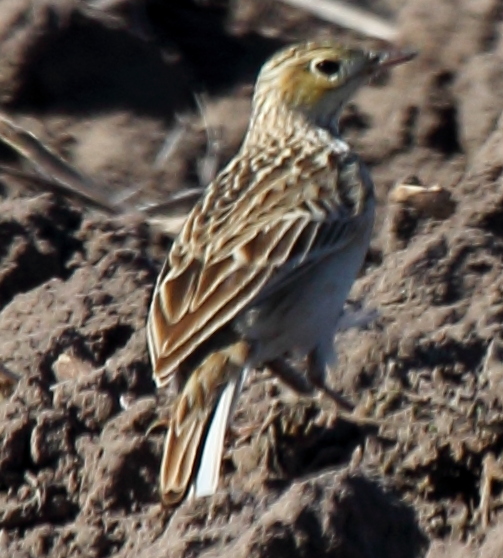
Motacilla cinnamomea
Motacilla cinnamomea
Order: Passeriformes / Family: Motacillidae
About the Motacilla cinnamomea
The Eastern Yellow Wagtail, scientifically known as Motacilla cinnamomea, is a small passerine bird renowned for its vivid yellow underparts and its characteristic habit of constantly wagging its tail. This bird belongs to the family Motacillidae, which includes other wagtails and pipits. Native to Asia, the Eastern Yellow Wagtail can be found across diverse regions, including India, China, and Southeast Asia. During the breeding season, it favors open fields and grasslands, often near water bodies, where its striking plumage stands out against the green landscape. In the non-breeding season, it migrates to warmer regions such as Indonesia and the Philippines, showcasing its remarkable adaptability to various environments.
The significance of the Eastern Yellow Wagtail extends beyond its attractive appearance. As an insectivore, it plays a crucial role in controlling insect populations, thus contributing to the ecological balance in its habitats. The bird's presence in agricultural landscapes aids in natural pest control, benefiting local farmers. Its migratory patterns also highlight the importance of conserving wetlands and grasslands along its migration routes, as these are critical stopover points that provide essential resources during its long journeys.
Eastern Yellow Wagtails are known for their dynamic foraging behavior. They actively hunt insects on the ground, darting back and forth in search of prey. This high-energy activity makes them a lively presence in their habitats, often seen in pairs or small groups during the breeding season. As the seasons change, so do their behaviors; during migration, they form larger flocks, which can number in the hundreds, illustrating their social nature and reliance on group dynamics for survival during long flights. The Eastern Yellow Wagtail's adaptability to various climates and its broad geographic range underscore its resilience and ecological importance.
The Motacilla cinnamomea belongs to the family Motacillidae, within the order Passeriformes. These birds typically live typically 3-4 years, with some living up to 6 years..
How to Identify a Motacilla cinnamomea
The Eastern Yellow Wagtail is a small bird, measuring about 16 to 18 cm in length. It is easily identified by its bright yellow underparts and olive-green upperparts. Adult males exhibit more vivid yellow tones, especially during the breeding season when they display brighter plumage to attract mates. Females and juveniles are generally duller, with more muted yellow and green shades. Juveniles often have a paler appearance, and their plumage lacks the intensity of the adults.
In flight, the Eastern Yellow Wagtail displays a distinctive silhouette, with its long tail and short, rounded wings. The tail is often wagged up and down, a behavior that gives the wagtail its name. This motion is not only characteristic but also aids in identification from a distance. When perched, the wagtail maintains an upright posture, often on low vegetation or ground, where it is seen flicking its tail up and down.
While similar in appearance to other wagtail species, the Eastern Yellow Wagtail can be distinguished by its robust yellow coloring and the lack of strong facial markings that are present in some other wagtails. Birdwatchers should note the absence of the prominent eye stripe seen in the Grey Wagtail to avoid confusion.
Having trouble telling birds apart? Upload a photo to our bird identification tool for an instant species match.
Motacilla cinnamomea Habitat and Range
Preferred Habitat
The Eastern Yellow Wagtail inhabits a variety of open environments, primarily favoring grasslands, wetlands, and agricultural fields. It is frequently found near water sources such as rivers, lakes, and marshes, where it can hunt for insects. In mountainous regions, it can be observed at elevations up to 3000 meters, although it more commonly inhabits lower elevations.
During the breeding season, these wagtails prefer open grassy areas with sparse vegetation, which provide an ideal landscape for nesting and foraging. In the winter months, the Eastern Yellow Wagtail shifts to more varied habitats, including rice paddies and tidal flats, demonstrating its adaptability to different environments.
While not typically found in dense urban areas, the Eastern Yellow Wagtail may occasionally venture into parks and gardens on the city outskirts, especially if these areas provide suitable foraging opportunities. Its presence in both rural and peri-urban landscapes highlights its ecological versatility.
Geographic Range
The Eastern Yellow Wagtail breeds across a wide range, extending from the eastern parts of Europe to Central Asia. Its breeding range includes countries such as Russia, China, and Mongolia, where it inhabits open grasslands and steppe regions. During the non-breeding season, the wagtail migrates southward to winter in Southeast Asia and the Indian subcontinent, including countries like India, Bangladesh, Thailand, and Vietnam.
Migration corridors for the Eastern Yellow Wagtail include key flyways across the Himalayas and through Southeast Asia, where it utilizes wetlands and river valleys as stopover sites. These migration routes are vital for the bird's survival, providing resting and feeding grounds during its long journeys.
Population density hotspots for the Eastern Yellow Wagtail during the breeding season are typically located in the steppe regions of southern Siberia and northern China. In winter, it becomes more widespread across its range, with significant populations found in the lowland rice fields and wetland areas of India and Southeast Asia.
Want to know which birds visit your area? Browse our backyard birds by location guides for region-specific species lists.
What Does the Motacilla cinnamomea Eat?
The diet of the Eastern Yellow Wagtail primarily consists of insects and other small invertebrates, which it captures through its active foraging behavior. During the breeding season, it predominantly feeds on insects such as beetles, flies, and caterpillars, which provide the necessary protein for raising young. The wagtail often forages on the ground, darting about to catch prey with quick, agile movements.
In the winter months, the wagtail's diet diversifies slightly to include seeds and small aquatic invertebrates, especially when insects become less abundant. This dietary flexibility allows it to thrive in various habitats during migration and wintering periods.
The wagtail typically forages throughout the day, with peak activity observed in the early morning and late afternoon. Its feeding technique involves a combination of walking and short flights, during which it continually wags its tail, possibly to flush out insects from vegetation.
Motacilla cinnamomea Behavior and Social Structure
The Eastern Yellow Wagtail exhibits a range of behaviors that are both intriguing and characteristic of its species. It is predominantly a ground-dwelling bird, spending much of its time foraging for insects on the ground. This wagtail is highly social, especially during migration when it forms large flocks that can number in the hundreds. In these flocks, wagtails communicate and coordinate through a series of calls, maintaining group cohesion during flights.
Territorial behavior is most pronounced during the breeding season, when males establish and defend territories to attract mates. Males perform aerial displays and sing to assert dominance and allure females. Their courtship displays often include fluttering flights with exaggerated tail-wagging and vocalizations.
In response to predators, the Eastern Yellow Wagtail relies on its agility and speed. It takes flight quickly, often zigzagging to avoid capture. During the day, it is most active during the cooler parts of the morning and late afternoon, avoiding the midday heat. Its daily pattern involves periods of intense foraging interspersed with rest and preening.
Motacilla cinnamomea Nesting and Reproduction
The Eastern Yellow Wagtail constructs its nest on the ground, often concealed among grass tussocks or low vegetation, which provides camouflage from predators. The nest is a cup-shaped structure made from grasses, plant fibers, and sometimes animal hair, ensuring a soft lining for the eggs.
Clutch size typically ranges from 4 to 6 eggs, which are incubated by the female for about 11 to 13 days. During this period, the male remains nearby to guard the territory and assist with feeding once the chicks hatch. Both parents participate in feeding the young, which fledge about 12 to 15 days after hatching.
The Eastern Yellow Wagtail may produce two broods per breeding season, depending on environmental conditions and food availability. This reproductive strategy allows it to maximize its offspring's survival chances in variable climates.
Motacilla cinnamomea Sounds and Vocalizations
The Eastern Yellow Wagtail's primary song is a series of high-pitched, clear notes, often delivered in a rapid, rhythmic sequence. This song serves both to attract mates and to signal territorial presence. Its call notes are sharp and somewhat metallic, used for communication within flocks and to alert others to potential threats.
Alarm calls are distinct, consisting of rapid, repeated notes that increase in urgency with approaching danger. During the dawn chorus, the Eastern Yellow Wagtail contributes with its melodious song, adding to the symphony of the waking landscape.
The wagtail's vocalizations are reminiscent of the sounds produced by other small passerines, yet its distinct rhythm and pitch set it apart, aiding in its identification by sound.
Interesting Facts About the Motacilla cinnamomea
- 1The Eastern Yellow Wagtail can travel over 3000 kilometers during its migratory journeys between breeding and wintering grounds.
- 2Unlike many birds, the Eastern Yellow Wagtail wags its tail up and down rather than side to side, a behavior that likely helps in flushing out insects.
- 3This wagtail species has been observed using mud baths to clean its plumage, a behavior not commonly seen in all birds.
- 4The Eastern Yellow Wagtail's diet varies seasonally; during migration, it consumes a higher proportion of aquatic insects.
- 5A group of wagtails is known as a 'walk' of wagtails, highlighting their characteristic ground-foraging behavior.
- 6Eastern Yellow Wagtails have been recorded nesting as high as 3000 meters in the Himalayas, showcasing their adaptability.
- 7The species name 'cinnamomea' refers to the cinnamon-like color seen in some subspecies during certain plumage phases.
Motacilla cinnamomea Conservation Status
The Eastern Yellow Wagtail is currently listed as Least Concern by the IUCN, with stable population trends across most of its range. However, localized declines have been noted in certain areas due to habitat loss and degradation, particularly in wetlands and grasslands. Primary threats to the species include agricultural intensification, which reduces insect prey availability, and the drainage of wetlands for development. To counter these threats, conservation efforts focus on preserving key habitats along migration routes and wintering grounds. Historically, the wagtail's population has shown resilience, adapting to changes in land use and climate. Continued monitoring and habitat protection are essential to ensure its long-term survival.