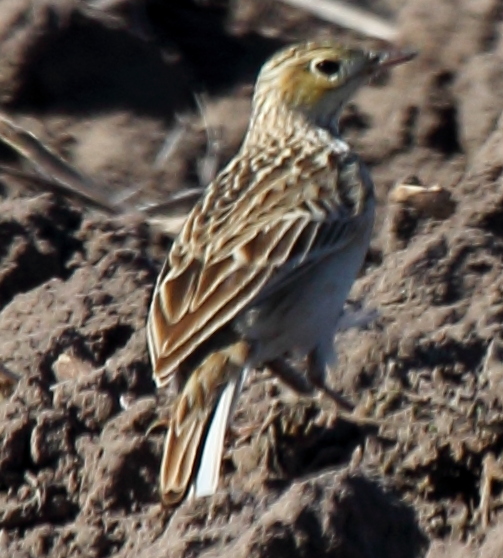
Mountain Wagtail
Motacilla montana
Order: Passeriformes / Family: Motacillidae

Wikimedia Commons
About the Mountain Wagtail
The Mountain Wagtail (Motacilla montana) is a captivating species of songbird found predominantly in sub-Saharan Africa. This bird plays a significant ecological role by controlling insect populations, primarily in highland regions. The Mountain Wagtail is particularly prevalent in southern and eastern Africa, where its presence is most noted along streams and riverbanks. These birds are adept at thriving in their specific niche, often observed foraging along fast-flowing streams in montane and submontane systems. Unlike many other wagtail species, the Mountain Wagtail does not migrate extensively, although it may move locally in response to seasonal changes in water levels and food availability. Observers frequently spot this bird in countries like South Africa, Zambia, and Kenya, where it contributes to the biodiversity of riparian ecosystems. During the breeding season, which typically aligns with the rainy season, the Mountain Wagtail's role in the ecosystem becomes even more pronounced. The increase in insect activity during this period provides ample feeding opportunities for both adults and their offspring. As an indicator species, the Mountain Wagtail's presence signifies healthy aquatic environments. Its reliance on clear, unpolluted water bodies means that any decline in numbers could indicate ecological issues. The bird's adaptability is evident in its ability to exploit both natural and human-altered landscapes, making it a vital component of its ecosystem. The Mountain Wagtail's ecological significance extends beyond its insectivorous diet; it also acts as prey for higher trophic levels, including predatory birds and mammals. This wagtail's interactions within its habitat exemplify the interconnectedness of organisms within ecosystems. Its vibrant activity along streams provides an opportunity for birdwatchers and ecologists alike to study riparian biodiversity. The Mountain Wagtail's ability to thrive in diverse conditions, from rural highlands to semi-urban areas, underscores its adaptability and ecological importance.
The Mountain Wagtail belongs to the family Motacillidae, within the order Passeriformes. These birds typically live average 3-4 years, with some living up to 5-6 years..
How to Identify a Mountain Wagtail
The Mountain Wagtail is a small, slender bird with striking plumage that makes it relatively easy to identify. Adults display a distinctive grey back and wings, contrasting with a paler underbody. The face is marked with a subtle white eyebrow stripe, and the tail is notably long and black, with white outer feathers that are prominent when the bird is in flight. Juveniles resemble adults but have a more muted coloration and lack the crispness of adult plumage. Males and females are similar in appearance, though males may exhibit slightly brighter plumage during the breeding season. The unmistakable tail-wagging behavior aids in identification, differentiating it from other similar species like the African Pied Wagtail, which has a more pronounced black and white contrast. In flight, the Mountain Wagtail exhibits a distinct undulating pattern, often flying low over water. When perched, its posture is upright, and it frequently bobs its tail, a characteristic behavior of the wagtail family.
Having trouble telling birds apart? Upload a photo to our bird identification tool for an instant species match.
Mountain Wagtail Habitat and Range
Preferred Habitat
Mountain Wagtails are predominantly found in highland regions, favoring habitats near streams, rivers, and occasionally lakes. They thrive in elevations ranging from 500 to 3,000 meters above sea level. These birds are adaptable, inhabiting both natural forested areas and human-altered landscapes such as agricultural fields and urban parks with adequate water sources. Seasonal shifts may prompt slight habitat changes, moving to lower altitudes during colder months. Despite urban encroachment, Mountain Wagtails continue to persist in suitable waterways, demonstrating resilience in varied environments.
Geographic Range
The Mountain Wagtail inhabits a broad range across sub-Saharan Africa. Its breeding range extends from the highlands of Ethiopia and Kenya through Tanzania and Zambia down to South Africa's Drakensberg Mountains. While largely sedentary, some populations exhibit localized migrations in response to environmental conditions. Population density is highest in regions with abundant water sources. While not migratory in the traditional sense, these wagtails adjust their range based on seasonal availability of resources, particularly during dry spells or flooding events. Countries such as Zimbabwe, Malawi, and Mozambique also host sizeable populations.
Want to know which birds visit your area? Browse our backyard birds by location guides for region-specific species lists.
What Does the Mountain Wagtail Eat?
The Mountain Wagtail primarily consumes insects, making it an essential player in controlling insect populations near aquatic environments. Its diet includes a variety of small invertebrates such as flies, beetles, and aquatic larvae. During the rainy season, when insects are most abundant, the wagtail takes advantage of the increased food supply. Foraging typically occurs along the edges of water bodies where the bird can deftly catch prey both on the ground and in mid-air. The wagtail's feeding strategy involves short, darting movements and frequent changes in direction, capitalizing on its agility and keen eyesight. The bird's diet may also include small crustaceans or even seeds, especially in altered habitats where usual prey is less available.
Mountain Wagtail Behavior and Social Structure
Mountain Wagtails exhibit fascinating social and territorial behaviors. They are generally solitary or found in pairs, particularly during the breeding season. Territorial disputes are common, with males often engaging in aerial displays to assert dominance. Courtship involves intricate displays where males showcase their plumage and perform fluttering flights to attract females. Outside of breeding, these wagtails might gather in loose flocks, especially around abundant food sources. Their response to predators includes alarm calls and evasive maneuvers, frequently relying on their agility and speed to escape. Daily activity peaks during early morning and late afternoon, coinciding with peak insect activity.
Mountain Wagtail Nesting and Reproduction
Mountain Wagtails display a distinct nesting behavior, often choosing sites close to water. Nests are typically located on riverbanks, cliffs, or even man-made structures like bridges. They construct cup-shaped nests using grass, roots, and mud, lined with feathers and soft materials. The female typically lays 3-5 eggs per clutch, with an incubation period of about 12-14 days. Both parents partake in feeding the chicks, which fledge approximately two weeks post-hatching. The species may produce two broods per year, particularly in regions with extended rainy seasons. Parental roles are shared, with both sexes contributing to the care and protection of the young.
Mountain Wagtail Sounds and Vocalizations
The Mountain Wagtail's song is a melodious series of high-pitched whistles, often delivered from a prominent perch. Its call notes, sharp and distinctive, serve as communication signals between mates or as alarms. During dawn chorus, male wagtails actively sing to establish territory and attract females. The quality of their vocalizations can be likened to a clear, ringing bell, easily audible over the sounds of rushing water. Their alarm calls are short, rapid notes that alert others to potential threats.
Interesting Facts About the Mountain Wagtail
- 1Mountain Wagtails can wag their tails up to 60 times per minute, aiding in balance and communication.
- 2The species has been observed using artificial structures like bridges as nesting sites, showcasing adaptability.
- 3Mountain Wagtails are known for their agility, capable of catching insects mid-flight with precision.
- 4Despite their name, Mountain Wagtails can also thrive in lowland areas with suitable water sources.
- 5The wagtail's tail-wagging behavior may help flush out insects hidden in vegetation or soil.
Mountain Wagtail Conservation Status
The Mountain Wagtail is currently listed as Least Concern by the IUCN, with stable population trends. However, habitat loss due to deforestation, pollution, and waterway alteration pose potential threats. Conservation efforts focus on preserving natural habitats and ensuring clean water sources. Historical records suggest fluctuations in local populations, often correlating with environmental changes. Continued monitoring is crucial to detect any shifts in population dynamics that could indicate ecological imbalances.