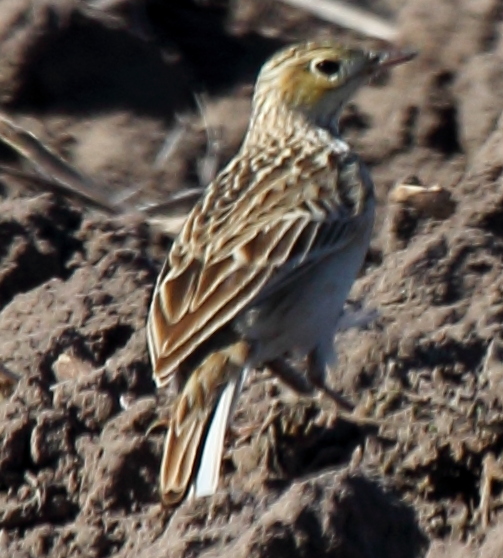
Little Wagtail
Motacilla pusilla
Order: Passeriformes / Family: Motacillidae

Wikimedia Commons
About the Little Wagtail
The Little Wagtail, Motacilla pusilla, is a small passerine bird renowned for its characteristic tail-wagging motion. This species is a member of the family Motacillidae and is commonly found across various parts of Europe and Asia. Its presence in a habitat indicates a healthy ecosystem, as it often thrives in environments rich in insects and other invertebrates. This species prefers open areas near water bodies such as rivers and lakes, where it can forage efficiently.
The Little Wagtail plays a significant ecological role as both a prey and predator. It contributes to insect population control, feeding on a wide range of arthropods, and in turn, serves as a food source for larger predators. During the breeding season, typically from April to August, these birds are highly active. They engage in elaborate courtship displays and are often seen chasing each other with quick, darting flights.
Seasonal behaviors of the Little Wagtail include migration to southern regions during the colder months. In the northern parts of its range, such as Scandinavia and Russia, the bird migrates southward to warmer climates in South Asia and the Middle East for the winter. Here, it inhabits rice paddies and other agricultural lands, taking advantage of the abundant food supply. Throughout the year, the Little Wagtail can be observed in both rural and urban settings, where it adapts to human-modified environments.
The Little Wagtail belongs to the family Motacillidae, within the order Passeriformes. These birds typically live typically 2-3 years, with some living up to 4 years..
How to Identify a Little Wagtail
Little Wagtails are small birds with a length of approximately 15 centimeters and a wingspan of about 22 centimeters. Their plumage is primarily gray with a striking white belly and a distinct black bib under their throats. The tail is long and dark, with white outer feathers, which are particularly noticeable in flight. Juveniles resemble adults but have a more subdued color palette, with less pronounced black markings.
Males and females of the species look quite similar, making it challenging to distinguish between them without close observation. However, during the breeding season, males may exhibit slightly brighter plumage. The Little Wagtail is often confused with other wagtail species, such as the White Wagtail, but can be differentiated by the more consistent coloration of its back and the pattern of its bib.
In flight, the Little Wagtail displays a distinctive undulating pattern, with regular bouts of rapid wing flaps followed by glides. When perched, it characteristically bobs its tail up and down, a behavior that makes it relatively easy to identify even from a distance.
Having trouble telling birds apart? Upload a photo to our bird identification tool for an instant species match.
Little Wagtail Habitat and Range
Preferred Habitat
The Little Wagtail thrives in a variety of habitats, but it shows a strong preference for open areas close to water. Common habitats include riverbanks, lakeshores, marshes, and even urban parks where water features exist. The bird can be found at various elevations, from sea level up to mountainous regions at around 2,000 meters.
Seasonal habitat shifts occur, with birds moving to more protected lowland areas during colder months. In urban settings, the Little Wagtail often frequents gardens and city parks, adapting well to human-modified landscapes. Despite its adaptability, it remains more common in rural areas, where natural bodies of water provide abundant feeding opportunities.
Geographic Range
The breeding range of the Little Wagtail extends across northern Europe and Asia. Countries such as Norway, Sweden, and Finland host significant populations during the breeding season. As autumn approaches, these birds migrate southward to wintering grounds in southern Asia, including India, Bangladesh, and parts of the Middle East, such as Iran and Iraq.
Migration corridors follow key river systems and lowland routes, which offer suitable stopover sites. Within these ranges, population densities vary, with higher concentrations found in areas offering abundant food resources and suitable nesting sites. During the winter, Little Wagtails can be spotted in rice fields and along riverbanks, where they find the necessary sustenance.
Want to know which birds visit your area? Browse our backyard birds by location guides for region-specific species lists.
What Does the Little Wagtail Eat?
The diet of the Little Wagtail primarily consists of insects and other small invertebrates, making it an effective insectivore. Common prey items include flies, mosquitoes, beetles, and spiders, which it captures with its agile movements and quick reflexes.
In the spring and summer, when insects are abundant, the Little Wagtail's diet helps keep pest populations in check. During these months, the bird often forages along water edges, using a combination of visual cues and quick, precise movements to capture prey. In the winter, its diet becomes more varied, incorporating seeds and small berries to supplement the reduced availability of insects.
The Little Wagtail employs a distinctive foraging technique, involving swift walks along the ground interspersed with short bursts of flight. This method allows it to cover large areas efficiently while minimizing energy expenditure. The bird typically feeds throughout the day, with peak activity occurring during the early morning and late afternoon.
Little Wagtail Behavior and Social Structure
Little Wagtails exhibit a range of interesting behaviors, particularly during the breeding season. They are known for their elaborate courtship displays, which involve both vocal and visual components. Males often engage in aerial chases, displaying their agility and stamina to potential mates. During these displays, the birds emit a series of rapid, high-pitched calls, adding an auditory element to their visual performance.
Socially, Little Wagtails are generally solitary or found in small groups, particularly outside the breeding season. They are territorial during nesting, vigorously defending their chosen area from intruders. Once the breeding season concludes, these birds may form loose flocks, especially during migration, which provides safety in numbers against predators.
Predator response is acute, with the Little Wagtail using its agility to evade capture. When threatened, it often takes to the air with rapid, erratic flight patterns. Daily activity patterns are predominantly diurnal, with peak activity in the morning and afternoon as the birds forage for food. The Little Wagtail's distinctive tail-wagging behavior is not only a key identifier but also a potential signal to other birds regarding individual fitness and alertness.
Little Wagtail Nesting and Reproduction
The nesting habits of the Little Wagtail are quite adaptable. Nests are typically built on the ground or in low vegetation, often near water. They construct their nests using grass, moss, and other plant materials, creating a cup-shaped structure that provides safety and comfort for the young.
A typical clutch consists of 4 to 6 eggs, which are pale with brown speckling. Both parents participate in incubation, which lasts around 12 to 14 days. Once hatched, the chicks remain in the nest for another 12 to 15 days under the care of both parents, who diligently feed and protect them.
The Little Wagtail may produce two broods per year, depending on environmental conditions and food availability. Parental roles are shared, with both the male and female actively involved in feeding and protecting the young until they fledge.
Little Wagtail Sounds and Vocalizations
The primary song of the Little Wagtail is a series of high-pitched, rapid notes that create a lively and cheerful melody. These vocalizations serve both territorial and courtship purposes. The rhythm of the song is consistent, making it a reliable field mark for identification.
In addition to their song, Little Wagtails produce a variety of call notes, including a sharp 'tsip' sound often used as an alarm call. These calls alert other wagtails to potential threats and help maintain group cohesion. During the dawn chorus, the Little Wagtail's song blends with those of other early risers, contributing to the rich tapestry of morning bird sounds.
Interesting Facts About the Little Wagtail
- 1Little Wagtails can cover over 3,000 kilometers during their migration from breeding to wintering grounds.
- 2The distinctive tail-wagging behavior of Little Wagtails is believed to help flush out insects, making them easier to catch.
- 3Despite their small size, Little Wagtails are robust travelers, often crossing multiple countries during migration.
- 4Little Wagtails can adapt to urban environments, often seen in city parks and gardens.
- 5The species is known for its agile flight, which allows it to escape predators with ease.
- 6A group of wagtails is sometimes called a 'flock' or a 'splay,' reflecting their diverse social behaviors.
- 7Little Wagtails are capable of breeding at altitudes up to 2,000 meters, showcasing their adaptability.
Little Wagtail Conservation Status
The IUCN currently lists the Little Wagtail as a species of Least Concern, reflecting its relatively stable population across its range. However, there are localized threats that could impact its numbers, such as habitat destruction and pollution of water bodies. Conservation efforts focus on protecting natural habitats, particularly wetlands and riverbanks that serve as critical feeding and breeding grounds. Monitoring population trends helps identify areas where the species may be declining, allowing for targeted conservation actions. Historically, the Little Wagtail has shown resilience to changing environmental conditions, but ongoing efforts are essential to ensure its habitats remain intact and free from detrimental human activities.