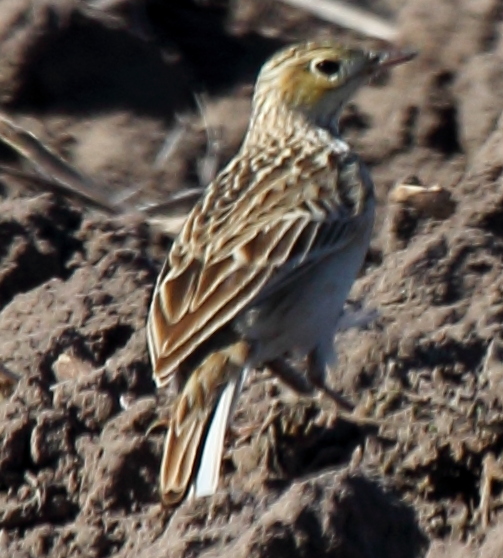
White Wagtail
Motacilla samamisica
Order: Passeriformes / Family: Motacillidae

Wikimedia Commons
About the White Wagtail
The White Wagtail (Motacilla alba) is a widely distributed bird species notable for its striking black and white coloration and its distinctively buoyant, undulating flight pattern. This small passerine bird, belonging to the family Motacillidae, exhibits a remarkable adaptability to various environments, from urban settings to rural landscapes. Found across a large geographical range that includes parts of Europe, Asia, and North Africa, the White Wagtail holds a significant ecological role as both a predator and prey within its ecosystem.
The bird's presence in these diverse habitats underscores its adaptability and ecological importance. In agricultural and suburban areas, White Wagtails often play a beneficial role by controlling insect populations, as they are voracious insectivores. Their diet primarily consists of insects and other small invertebrates, which they skillfully catch through their agile movements and quick reflexes.
Ecologically, White Wagtails contribute to the biological control of pests and serve as prey for larger birds of prey and mammals, thus maintaining the balance within food webs. Their seasonal behaviors reflect their migratory nature; they breed in the northern parts of their range during the warmer months and migrate southward to milder climates as temperatures drop. This migration not only showcases their adaptability but also their reliance on diverse ecosystems to survive throughout the year.
The White Wagtail's ability to thrive in human-altered landscapes highlights its resilience, making it a subject of interest for ornithologists and bird enthusiasts alike. Its presence across continents and in varying environments offers valuable insights into the adaptability of avian species and the interconnectedness of ecosystems.
The White Wagtail belongs to the family Motacillidae, within the order Passeriformes. These birds typically live up to 12 years in the wild, with an average lifespan of around 5 years..
How to Identify a White Wagtail
In the field, the White Wagtail is easily recognizable by its contrasting black and white plumage. Adult males typically boast a jet-black cap, throat, and upper parts, contrasting sharply with their white face and underparts. Females, while similar, often have a slightly duller appearance with a grayish tinge to their black areas. Juveniles sport a more subdued coloration, with a browner tone to their upper parts and a less defined cap and bib.
One of the most striking features of the White Wagtail is its long, constantly wagging tail, which is a key identifying trait. This movement is not just characteristic but also functional, helping in balance and communication among individuals. In flight, the White Wagtail's silhouette is slender, with narrow wings and a long tail that often fans out, aiding in its light, bounding flight pattern.
Confusion with similar species, such as the Pied Wagtail, particularly in regions where their ranges overlap, can occur. However, the White Wagtail typically has cleaner, sharper contrasts and lacks the sooty wash that Pied Wagtails sometimes exhibit. When perched, the White Wagtail often assumes an upright posture, using its tail as a counterbalance, which is a useful field mark for birders.
Having trouble telling birds apart? Upload a photo to our bird identification tool for an instant species match.
White Wagtail Habitat and Range
Preferred Habitat
The White Wagtail inhabits a wide variety of environments, showcasing its adaptability. It thrives in open landscapes such as fields, meadows, and along riverbanks, where it can forage easily. Additionally, the species is commonly found in urban areas, including parks and gardens, where it often forages on lawns and pavements.
In terms of elevation, White Wagtails can be found from sea level up to mountainous regions, adapting to different altitudes as necessary. During breeding season, they favor open areas near water sources, which provide abundant food and nesting opportunities.
Seasonal habitat shifts occur with migration, as birds move from northern breeding grounds to southern wintering areas. In winter, they are more frequently observed in coastal regions and lower altitudes, where milder conditions and food availability are more favorable. The species' presence in both rural and urban settings makes it a familiar sight across its range.
Geographic Range
The range of the White Wagtail spans across a vast area, primarily encompassing Europe, Asia, and parts of North Africa. During the breeding season, they occupy northern areas, including Scandinavia, the British Isles, and parts of northern Europe, extending into Russia and Mongolia.
As temperatures drop in autumn, the White Wagtail migrates southward, heading to wintering grounds in southern Europe, North Africa, the Middle East, and parts of South Asia. Countries such as Spain, Italy, and Egypt become winter havens for these birds, providing milder climates and ample food resources.
Migration corridors often follow river valleys and coastlines, providing navigational aids and rest stops along the way. Population density can vary, with some regions hosting large flocks, particularly during migration periods, while others maintain smaller, more dispersed populations.
Want to know which birds visit your area? Browse our backyard birds by location guides for region-specific species lists.
What Does the White Wagtail Eat?
The White Wagtail's diet primarily consists of insects and small invertebrates, making it an important predator of pest species. They feed on a variety of prey, including flies, beetles, and spiders, which they catch through dynamic foraging behaviors.
During the breeding season, their diet may expand to include caterpillars and other larger insects, which provide necessary protein for nestlings. Seasonal changes in prey availability can influence foraging behavior, with birds adapting to local conditions and resources.
White Wagtails employ a distinctive foraging technique, often seen running across open ground or along the edges of water bodies, chasing after prey with agility and precision. They typically feed throughout the day, adjusting their activity based on temperature and prey activity, ensuring they meet their nutritional needs.
White Wagtail Behavior and Social Structure
White Wagtails exhibit a range of interesting behaviors, from their characteristic tail-wagging to complex social structures. These birds are often seen in pairs during the breeding season, maintaining territories where they court, nest, and raise their young.
Courtship displays involve males showcasing their plumage and vocal abilities to attract a mate, often accompanied by aerial chases and displays of agility. Once paired, White Wagtails exhibit strong territorial behavior, actively defending their chosen area from intruders.
Outside the breeding season, they often form flocks, which can number in the hundreds during migration and winter months. These flocks provide safety in numbers, reducing the risk of predation by raptors and other predators. Daily activity patterns are influenced by daylight, with birds becoming most active at dawn and dusk, aligning with the activity patterns of their prey.
White Wagtail Nesting and Reproduction
White Wagtails build nests that are typically cup-shaped and constructed from grass, leaves, and moss, lined with softer materials such as feathers and animal hair. They prefer to place their nests in sheltered locations, often choosing crevices in rocks, walls, or buildings, as well as natural sites like riverbanks.
The clutch size generally ranges from three to eight eggs, with an incubation period lasting around 11 to 14 days. Both parents share incubation duties and care for the young, providing protection and food until the chicks fledge.
Fledglings usually leave the nest approximately two weeks after hatching, though they remain dependent on their parents for some time thereafter. White Wagtails typically raise one to two broods per year, depending on environmental conditions and food availability.
White Wagtail Sounds and Vocalizations
The primary song of the White Wagtail is a series of high-pitched, melodic chirps that carry a rhythmic, cheerful quality. These vocalizations are often heard during the breeding season, as males sing to establish and defend territories, as well as to attract mates.
Their call notes are sharp and distinctive, often described as a 'tsit-tsit' sound, used for communication within flocks and to alert others of potential threats. Alarm calls are more strident, serving as a warning to conspecifics when predators are near.
During the dawn chorus, White Wagtails join in with other birds, their clear, ringing notes contributing to the symphony of sounds that heralds the start of a new day. The simplicity yet effectiveness of their vocal repertoire makes them a delight to listen to in the field.
Interesting Facts About the White Wagtail
- 1White Wagtails are known for their long migrations, traveling up to 4,800 miles between breeding and wintering grounds.
- 2The species' name 'wagtail' comes from its characteristic tail-wagging behavior, which is thought to help flush out insects.
- 3In Japan, the White Wagtail is considered a symbol of luck and prosperity, often appearing in local folklore.
- 4White Wagtails can adapt to urban environments and are frequently seen in city parks and gardens, even in densely populated areas.
- 5Despite their small size, White Wagtails are capable of flying at speeds up to 30 miles per hour during migration.
- 6The White Wagtail is the national bird of Latvia, where it is cherished for its beauty and adaptability.
- 7White Wagtails have a unique way of bathing, often seen splashing in shallow water or rain puddles to clean their plumage.
White Wagtail Conservation Status
The White Wagtail is currently listed as Least Concern by the IUCN, with populations considered stable across much of its range. However, like many other species, it faces threats from habitat loss and degradation, particularly in areas where human activities lead to significant environmental changes. Conservation efforts focus on preserving habitats and ensuring that key migratory corridors remain intact. Monitoring population trends helps identify areas where intervention may be needed to prevent declines. Historically, White Wagtail populations have benefitted from their adaptability to human-altered landscapes, though ongoing vigilance is necessary to maintain stable populations. Protecting wetland and riparian environments, crucial for their feeding and breeding, remains a priority.