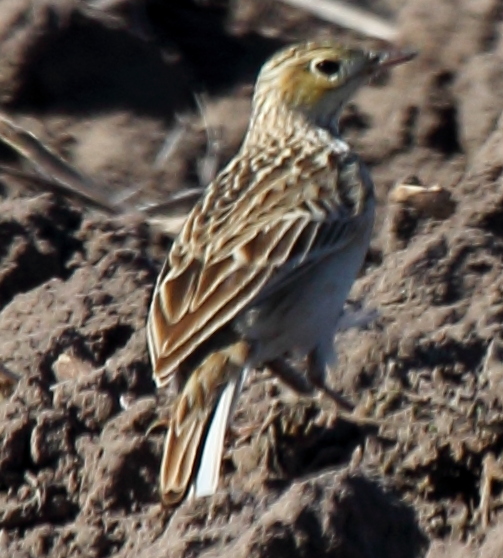
Motacilla tiphia
Motacilla tiphia
Order: Passeriformes / Family: Motacillidae
About the Motacilla tiphia
The Motacilla tiphia, commonly known as the Indian Pied Wagtail, plays a vital ecological role in its native habitats across the Indian subcontinent. This bird is often found in open country and urban settings, favoring environments near water, such as riverbanks, lakeshores, and flooded rice fields. Its presence is a common sight throughout India, Pakistan, Nepal, and Bangladesh. The Indian Pied Wagtail is notable for its adaptability to various environments, including urban areas where it is frequently seen near human habitation. During the breeding season, which typically spans from March to September, the Motacilla tiphia becomes particularly active in its native range. This species contributes to controlling insect populations, as its diet consists mainly of small invertebrates. As a ground-foraging bird, it plays a crucial role in the ecosystem by helping to manage insect populations and thus maintain a balance in its habitat. Outside the breeding season, the Indian Pied Wagtail may move locally in response to rain patterns and food availability, demonstrating some degree of seasonal movement but remaining largely resident within its range. Its adaptability to different environments and its role in insect control highlight its ecological importance across the regions it inhabits.
The Motacilla tiphia belongs to the family Motacillidae, within the order Passeriformes. These birds typically live average 3-5 years, with some records up to 8 years..
How to Identify a Motacilla tiphia
The Indian Pied Wagtail is easily recognized by its distinctive black and white plumage. Adult birds display a stark contrast between their black upperparts and white underparts, a pattern that is maintained in both males and females, though males may have a slightly glossier appearance. Juvenile Motacilla tiphia have a more subdued coloration with a brownish tinge on their back and wings, which gradually changes into the adult plumage. One of the defining characteristics of this species is its habit of constantly wagging its tail up and down, a behavior common among wagtails. In flight, the Indian Pied Wagtail exhibits a distinctive undulating pattern, making it easily distinguishable from other species. When perched, it often sits upright, allowing for a clear view of its striking plumage. While similar in size and shape to other wagtails, the Indian Pied Wagtail's bold coloration and characteristic tail-wagging habit help differentiate it from other species in the region.
Having trouble telling birds apart? Upload a photo to our bird identification tool for an instant species match.
Motacilla tiphia Habitat and Range
Preferred Habitat
Primarily found in open country, the Indian Pied Wagtail thrives in a variety of habitats including riverbanks, lakeshores, and flooded rice fields. It is also a common sight in urban areas, often seen foraging in parks and gardens. Although it prefers lower elevations, it can be found up to 2,000 meters in the Himalayan foothills. This adaptability to different environments, from rural agricultural areas to bustling cities, highlights its resilience. Seasonal habitat shifts may occur as the bird moves locally in search of food or suitable breeding sites, but it remains largely within its established range.
Geographic Range
The Indian Pied Wagtail's range is extensive across the Indian subcontinent, including India, Pakistan, Nepal, and Bangladesh. It is a resident breeder in these regions, often found near water bodies and in open countryside. Some populations may undertake short-distance movements in response to monsoon rains, but these movements are largely local. The species is not migratory in the traditional sense, remaining within its range year-round. Population densities are highest in areas with abundant water sources and suitable open habitats, making it common in both rural and urban settings.
Want to know which birds visit your area? Browse our backyard birds by location guides for region-specific species lists.
What Does the Motacilla tiphia Eat?
The diet of the Motacilla tiphia primarily consists of small invertebrates, including insects and their larvae, which it captures by gleaning from the ground. During the breeding season, it intensifies its foraging activity to meet the increased nutritional demands. The Indian Pied Wagtail employs a characteristic tail-wagging motion as it searches for prey, which may help in flushing out insects. Occasionally, it supplements its diet with small seeds and plant matter, though animal prey remains its primary food source. The species typically forages during daylight hours, with peak activity in the early morning and late afternoon.
Motacilla tiphia Behavior and Social Structure
The Indian Pied Wagtail is a highly adaptable and social bird, often seen in pairs or small family groups, especially during the breeding season. It exhibits strong territorial behavior, with males defending their breeding territories through song and displays. During courtship, males perform elaborate aerial displays and sing to attract females. The species is diurnal, actively foraging during the day, and becomes particularly vocal at dawn and dusk. Flocking behavior is more common outside the breeding season, when the birds may gather in larger groups, particularly in areas with abundant food resources. In response to predators, the Indian Pied Wagtail relies on its agility and quick flight to escape, often sounding an alarm call to alert other birds.
Motacilla tiphia Nesting and Reproduction
Motacilla tiphia typically builds its nest in a sheltered location, such as a crevice in a rock or wall, or in a dense bush. The nest is a cup-shaped structure made from grasses and lined with softer materials like feathers and wool. Clutch size generally ranges from three to five eggs, which are incubated primarily by the female for about 12 to 14 days. Both parents participate in feeding the chicks, which fledge approximately 14 to 16 days after hatching. The Indian Pied Wagtail may raise two or more broods per year, depending on environmental conditions and food availability.
Motacilla tiphia Sounds and Vocalizations
The song of the Indian Pied Wagtail is a series of clear, melodious notes that can be heard throughout its range. Its calls are sharp and metallic, often described as 'chissick' or 'chit'. These calls serve various functions, from establishing territory to warning of predators. During the dawn chorus, the male's song becomes more frequent and intense, serving both to attract a mate and to assert dominance over its territory. The clarity and rhythm of its song make it a distinctive sound in its environment.
Interesting Facts About the Motacilla tiphia
- 1The Indian Pied Wagtail is known for its habit of wagging its tail continuously, a behavior believed to help in balancing and flushing out insects.
- 2Unlike many other wagtails, the Indian Pied Wagtail often nests in man-made structures, showcasing its adaptability to urban environments.
- 3The species exhibits a unique flight pattern, characterized by a series of quick flaps followed by short glides, giving an undulating appearance.
- 4Despite its name, the Indian Pied Wagtail is found not only in India but across much of the South Asian region.
- 5The tail-wagging behavior of the Indian Pied Wagtail is so distinctive that it is often used as an identifying characteristic in field guides.
Motacilla tiphia Conservation Status
Currently, the Indian Pied Wagtail is listed as Least Concern by the IUCN, with stable population trends across its range. The species faces threats from habitat degradation and pollution, particularly in urban and agricultural areas. Conservation efforts focus on preserving wetlands and maintaining suitable habitats. Historically, the population has remained stable due to its adaptability to human-altered environments. Continued monitoring and habitat protection remain essential to ensure its long-term survival.