Pachysylvia minor
Pachysylvia minor
Order: Passeriformes / Family: Vireonidae
About the Pachysylvia minor
The Pachysylvia minor, commonly referred to as the Lesser Greenlet, is a small passerine bird within the Vireonidae family. This species plays a significant role in the ecosystems of Central and South America, where it is predominantly found. The Lesser Greenlet thrives in a variety of habitats, from the humid lowland rainforests of the Amazon Basin to the montane forests of the Andes. Its presence in such diverse areas highlights its adaptability as well as its importance in seed dispersal and insect population control. The bird's ecological role extends to its interactions within mixed-species flocks, where it contributes to the complexity and health of its habitat. During the breeding season, which varies across its range, the Lesser Greenlet can be observed engaging in intricate courtship displays. This species is known for its resilience but is also affected by habitat loss, which makes conservation efforts crucial. Understanding the Lesser Greenlet's role within these ecosystems can provide insight into the health of tropical forest environments at large, as their presence often indicates a well-functioning ecosystem.
The Pachysylvia minor belongs to the family Vireonidae, within the order Passeriformes. These birds typically live average 4-6 years with a max recorded of 8 years..
How to Identify a Pachysylvia minor
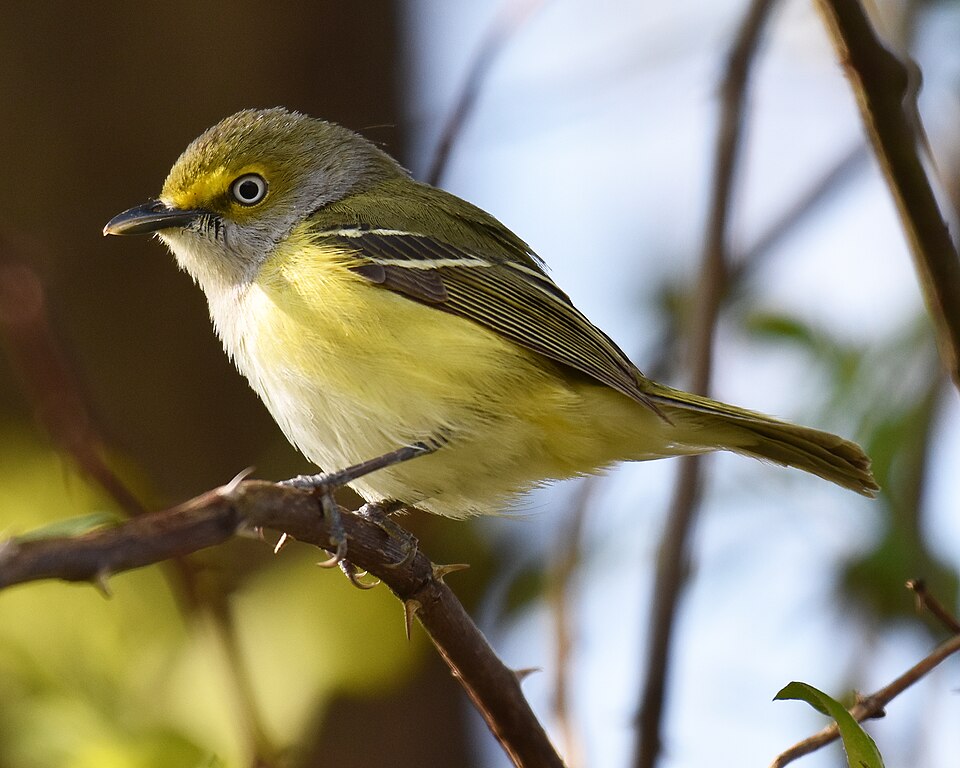
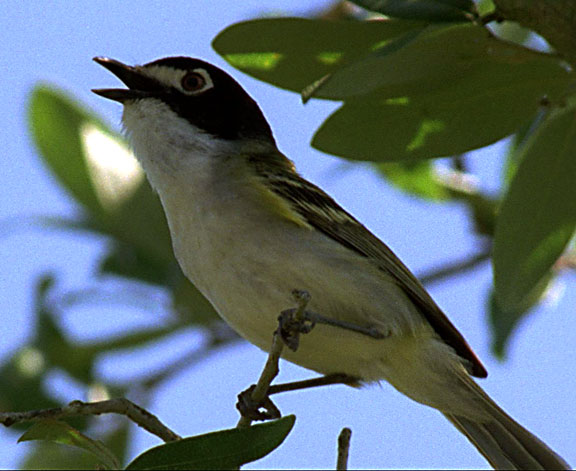
Identifying the Lesser Greenlet requires attention to its subtle features. Adults showcase a muted greenish upper body with a slightly more vibrant green on the wings and tail. The underparts are generally pale, providing a contrast that aids in identification. Juveniles appear similar to adults but may exhibit duller plumage. There is little sexual dimorphism, as males and females look alike, making behavioral observation key for differentiation. The Lesser Greenlet can be confused with other vireos, such as the Red-eyed Vireo, but it lacks the bold eye-stripe. Its flight silhouette is distinctive, with short, rounded wings and a slightly notched tail, contributing to its agile flight as it navigates through dense foliage. When perching, the bird often maintains an upright posture, which is typical of vireos, and it can often be seen gleaning insects from leaves.
Having trouble telling birds apart? Upload a photo to our bird identification tool for an instant species match.
Pachysylvia minor Habitat and Range
Preferred Habitat
The Lesser Greenlet occupies a range of habitats, primarily favoring tropical and subtropical forests. It is found in both primary and secondary forests, demonstrating a notable degree of adaptability. In terms of elevation, it inhabits areas from sea level up to approximately 1,500 meters. While primarily a forest dweller, it can occasionally be observed in more open woodlands and forest edges, especially during certain times of the year. Seasonal habitat shifts are not pronounced, as the Lesser Greenlet tends to remain within its preferred forested areas year-round. Its presence in urban environments is limited, typically restricted to large parks or botanical gardens that mimic its natural habitat.
Geographic Range
The breeding range of the Lesser Greenlet spans a broad swath of Central and South America, including countries such as Nicaragua, Costa Rica, Panama, Colombia, Venezuela, and extending into the northern regions of Brazil and Ecuador. It does not undertake long-distance migrations, but rather, exhibits localized movements in response to food availability and breeding conditions. Population density can vary, with hotspots often found in pristine forested areas of the Amazon and Andean foothills. During the non-breeding season, the Lesser Greenlet remains in its customary range, reflecting its non-migratory nature, although slight altitudinal movements may occur.
Want to know which birds visit your area? Browse our backyard birds by location guides for region-specific species lists.
What Does the Pachysylvia minor Eat?
The Lesser Greenlet predominantly feeds on insects and other invertebrates, which it skillfully gleans from the foliage. Its diet includes caterpillars, beetles, and spiders, providing essential pest control in its habitat. During certain seasons, particularly when insect abundance decreases, the Lesser Greenlet supplements its diet with small fruits and berries, aiding in seed dispersal. Its foraging technique involves agile movements through the canopy, often hanging upside down to access hidden prey. The bird typically forages alone or in small family groups, although it joins mixed-species flocks, enhancing its foraging efficiency.
Pachysylvia minor Behavior and Social Structure
Socially, the Lesser Greenlet is generally solitary or found in pairs, but it often participates in mixed-species flocks, especially during non-breeding periods. This behavior increases foraging success and predator avoidance. Territorial behavior is evident during the breeding season, with males establishing and defending territories through song and displays. Courtship involves mutual singing and pursuit flights, strengthening pair bonds. The Lesser Greenlet's response to predators includes alarm calls and mobbing, particularly when nest sites are threatened. Daily activity patterns show a peak in foraging during early morning and late afternoon, with periods of rest during the midday heat.
Pachysylvia minor Nesting and Reproduction
The Lesser Greenlet builds a cup-shaped nest, typically situated in the fork of a tree branch, several meters above the ground. The nest is constructed from fine plant materials such as grasses and spider silk, which provide strength and flexibility. A typical clutch consists of two to three eggs, with both parents sharing incubation duties over a period of approximately 12 to 14 days. Once hatched, the young fledge after about two weeks, with both parents involved in feeding and protecting the chicks. The Lesser Greenlet generally raises one to two broods per year, depending on environmental conditions and food availability.
Pachysylvia minor Sounds and Vocalizations
The song of the Lesser Greenlet is a series of short, melodious phrases, often described as sweet and musical. Each phrase is repeated several times, creating a consistent rhythm. Call notes include sharp, quick chips used for communication within pairs or flocks. Alarm calls are harsher and more rapid, serving to alert others of potential threats. During the dawn chorus, the Lesser Greenlet's song contributes to the tapestry of forest sounds, marking its territory and announcing its presence to rivals and mates alike.
Interesting Facts About the Pachysylvia minor
- 1The Lesser Greenlet is often found in mixed-species flocks, enhancing its survival chances by reducing predation risk.
- 2Despite its small size, the Lesser Greenlet has a melodious song that can be heard over considerable distances in its habitat.
- 3The species plays a crucial ecological role in controlling insect populations and dispersing seeds, maintaining forest health.
- 4Lesser Greenlets are known to use spider silk in their nests, which provides both flexibility and strength to the structure.
- 5Breeding pairs of Lesser Greenlets exhibit strong territorial behavior, often engaging in vocal duets to assert dominance.
- 6The bird's presence in varied habitats from lowlands to montane regions demonstrates its extraordinary adaptability.
- 7While not a migratory species, the Lesser Greenlet shows remarkable resilience to seasonal changes in its environment.
Pachysylvia minor Conservation Status
The International Union for Conservation of Nature (IUCN) currently lists the Lesser Greenlet as a species of Least Concern, with populations considered stable. However, primary threats include habitat loss due to deforestation and land conversion for agriculture. Conservation efforts focus on preserving tropical forest habitats and promoting sustainable land-use practices. Historical population trends indicate relative stability, but ongoing monitoring is necessary to ensure long-term survival given environmental pressures.