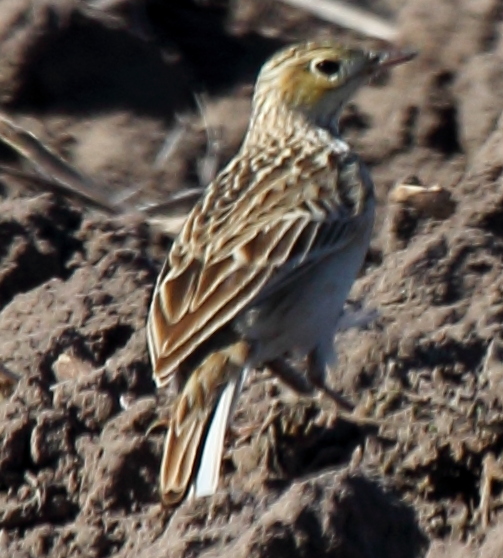
Paddyfield Pipit
Anthus rufulus
Order: Passeriformes / Family: Motacillidae

Wikimedia Commons
About the Paddyfield Pipit
The Paddyfield Pipit, scientifically known as Anthus rufulus, is a small passerine bird that belongs to the family Motacillidae. This species is prevalent across the Indian subcontinent and Southeast Asia, making it a familiar sight in countries like India, Sri Lanka, Thailand, and Malaysia. Paddyfield Pipits are predominantly found in open grasslands, agricultural fields, and sometimes urban fringes, where their inconspicuous plumage allows them to blend seamlessly into their surroundings. They play a significant role in controlling insect populations, providing valuable ecological services in both rural and urban ecosystems.
The ecological significance of the Paddyfield Pipit is notable. By consuming a variety of insects, including beetles, grasshoppers, and caterpillars, they help maintain a balance in their habitats, preventing pest outbreaks in agricultural areas. This makes them an integral component of their ecosystem, particularly in regions where agriculture is a dominant activity. In addition to their insectivorous diet, Paddyfield Pipits also consume seeds, contributing to seed dispersion and soil aeration through their foraging activities.
This species exhibits a range of seasonal behaviors, including local movements in response to rainfall patterns and food availability. During the breeding season, which typically coincides with the rainy months, males engage in elaborate displays to attract mates. These displays often involve song flights where the male ascends into the air while singing and then descends back to the ground, a behavior that showcases the Pipit's agility and endurance. Such displays are a common sight across the grasslands of India and Southeast Asia, where these birds are most prolific.
The Paddyfield Pipit belongs to the family Motacillidae, within the order Passeriformes. These birds typically live average 3 years, with a maximum recorded of 5 years..
How to Identify a Paddyfield Pipit
Identifying the Paddyfield Pipit involves observing several key features. Adults typically have a streaked brown back, with a pale buff or whitish underside. Their underparts are often streaked, particularly on the breast, which can sometimes cause confusion with similar species like the Richard's Pipit. However, the Paddyfield Pipit is generally smaller, and its tail-wagging behavior is more pronounced.
Juvenile Paddyfield Pipits resemble adults but tend to have more prominent streaks on the back and a slightly buffier appearance overall. There are no significant differences between males and females, making sexual dimorphism minimal in this species. In flight, the Paddyfield Pipit displays a distinctive silhouette with its relatively short tail and rapid, fluttering wingbeats.
When perched, these pipits often stand upright, exhibiting their characteristic tail-wagging behavior. This posture, combined with their repetitive calls, makes them easier to spot in open fields. Despite their cryptic coloration, their behavior and vocalizations are reliable aids in identification, particularly in mixed species flocks where they might be found alongside other small passerines.
Having trouble telling birds apart? Upload a photo to our bird identification tool for an instant species match.
Paddyfield Pipit Habitat and Range
Preferred Habitat
The Paddyfield Pipit thrives in open landscapes, particularly favoring grasslands, agricultural fields, and patches of scrublands. These birds are most commonly found at elevations ranging from sea level up to about 1,800 meters, although they primarily inhabit lowland areas. During the dry season, they may shift towards areas with more permanent water sources or irrigated fields that support greater insect life.
Paddyfield Pipits are also adaptable to human-altered environments, often seen near roadsides, airfields, and even in urban parks where patches of grass can support their feeding habits. Although they are not typically forest dwellers, they may occasionally venture into open woodland edges. Their presence in both rural and urban settings highlights their adaptability and resilience in the face of habitat changes.
Geographic Range
The Paddyfield Pipit has an extensive range, predominantly across South and Southeast Asia. This species is resident in the Indian subcontinent, including India, Bangladesh, Sri Lanka, and Nepal, and extends through Southeast Asia, encompassing countries like Thailand, Laos, Vietnam, and Malaysia. It is not a long-distance migrant, but instead, it exhibits local movements dictated by seasonal changes in food availability and habitat conditions.
In some regions, such as the northern parts of its range, the Pipit may move slightly southwards during the coldest months, seeking milder climates. Population density is highest in the fertile plains of the Ganges and Brahmaputra, where agricultural activities create ideal conditions for foraging. Despite its wide range, the Paddyfield Pipit remains most abundant in areas where traditional farming practices are maintained, providing ample feeding grounds and nesting sites.
Want to know which birds visit your area? Browse our backyard birds by location guides for region-specific species lists.
What Does the Paddyfield Pipit Eat?
The diet of the Paddyfield Pipit primarily consists of insects, making it a crucial player in pest control in agricultural landscapes. Common prey items include beetles, grasshoppers, ants, and caterpillars. During the breeding season, when the demand for protein is higher, Pipits increase their insect intake significantly, which aids in chick development.
Aside from insects, Paddyfield Pipits also consume seeds, particularly during the dry season when insect availability decreases. Their foraging technique involves a characteristic run-and-stop motion, allowing them to scan for prey items on the ground efficiently. They typically feed throughout the day, with peak activity occurring in the cooler morning and late afternoon hours. By adjusting their diet seasonally, they ensure a steady food supply, which supports their year-round presence in their habitats.
Paddyfield Pipit Behavior and Social Structure
The Paddyfield Pipit exhibits fascinating behaviors that are adaptations to its open habitat lifestyle. These birds are generally solitary or found in pairs, except during the non-breeding season when they may form small flocks. Territorial behavior is a hallmark of this species, with males vigorously defending their chosen breeding areas through song and aerial displays.
Courtship involves impressive song flights where males sing while ascending high into the air, then parachute down with wings partially open. This display not only attracts females but also serves as a deterrent to rival males. Paddyfield Pipits are diurnal, displaying peak activity during early morning and late afternoon, which coincides with optimal feeding times for insects.
In response to predators, these pipits rely on their camouflaged plumage to remain undetected. When threatened, they often freeze or crouch low to the ground, making use of their cryptic coloration. If necessary, they will take flight in a rapid burst, often landing a short distance away to continue foraging.
Paddyfield Pipit Nesting and Reproduction
Nesting for the Paddyfield Pipit occurs on the ground, a common trait among many pipit species. Their nests are typically shallow depressions lined with grass, roots, and other fine vegetation, located in well-hidden spots within the dense grass of their habitat.
The typical clutch size ranges from three to five eggs, which the female incubates for about 14 days. The eggs are pale with speckled markings that provide camouflage against the surrounding substrate. Both parents partake in feeding the fledglings, which leave the nest approximately two weeks after hatching, a time when they are still unable to fly efficiently.
The breeding season usually aligns with the monsoon, ensuring abundant food supply for the growing chicks. Depending on environmental conditions, Paddyfield Pipits may raise two broods per year, which aids in maintaining their population across their extensive range.
Paddyfield Pipit Sounds and Vocalizations
The primary song of the Paddyfield Pipit is a series of high-pitched, jingling notes delivered in rapid succession. This song is most often heard during the breeding season and is accompanied by the aforementioned song flights. Call notes are simple, high-pitched chirps used for communication between mates and to signal alarm.
Alarm calls are often harsher and are used to warn of potential threats. During the dawn chorus, Paddyfield Pipits contribute a distinctive voice that adds to the symphony of grassland sounds, often competing with other pipit species and skylarks. Their vocalizations, though not as melodious as some songbirds, carry well over open landscapes, serving both territorial and mate-attraction purposes.
Interesting Facts About the Paddyfield Pipit
- 1The Paddyfield Pipit performs a fascinating 'parachute' display during its courtship ritual, where the male ascends and then descends with wings spread wide.
- 2Despite its small size, the Paddyfield Pipit is a voracious insect predator, consuming hundreds of insects daily to support its energetic lifestyle.
- 3This species can be found from sea level to elevations of 1,800 meters, showcasing its adaptability to varied environments.
- 4Paddyfield Pipits often prefer freshly plowed fields for foraging, where disturbed soil reveals a bounty of insect prey.
- 5The Pipit's name 'Paddyfield' reflects its close association with rice paddies, common in its native range across Asia.
- 6Unlike many birds, Paddyfield Pipits are known to breed during the rainy season, aligning chick rearing with peak insect availability.
- 7The species exhibits local movements rather than long-distance migrations, moving in response to seasonal food availability.
Paddyfield Pipit Conservation Status
The IUCN lists the Paddyfield Pipit as a species of Least Concern, indicating a stable population trend across its range. Despite habitat changes and agricultural intensification, this adaptability has allowed it to maintain healthy numbers. Primary threats include habitat destruction due to urban expansion and changes in agricultural practices that reduce insect prey availability. Conservation efforts focus on maintaining traditional agricultural landscapes that support diverse insect populations. Historical population data suggest that while local declines have occurred in heavily industrialized areas, the overall population remains robust. Continued monitoring and habitat management are crucial to ensure the long-term viability of this widespread species.