Providence Vireo
Vireo approximans
Order: Passeriformes / Family: Vireonidae

Wikimedia Commons
About the Providence Vireo
The Providence Vireo, scientifically known as Vireo approximans, is a captivating songbird that enchants bird enthusiasts with its melodious tunes and striking appearance. Belonging to the family Vireonidae, this medium-sized vireo is predominantly found in deciduous and mixed woodlands across the temperate regions of North America. Its presence is particularly notable in areas such as the Appalachian Mountains and the eastern United States, extending its range northward into parts of southern Canada. The Providence Vireo plays a vital role in its ecosystem, primarily as an insectivore, consuming a wide array of insects and thus aiding in pest control. During the breeding season, which typically spans from late spring to early summer, these vireos become highly territorial, establishing and defending their nesting sites with fervent displays and vocalizations. In the fall, Providence Vireos embark on their migratory journey, heading toward Central America and parts of northern South America to escape the harsh winter conditions. Their migratory patterns are influenced by climatic changes, necessitating a keen understanding of weather patterns. As insect populations shift throughout the year, the Providence Vireo adapts its diet accordingly, showcasing remarkable flexibility and resilience. It is important to recognize the ecological significance of the Providence Vireo as both a predator of insects and a prey species for larger birds and mammals. Their presence indicates a healthy and balanced ecosystem, making them an essential component of the avian community. Furthermore, the vireo's melodious song fills the forests with a distinctive, cheerful sound that is emblematic of its habitat. This bird's ecological role extends beyond pest control, as it also participates in seed dispersal, aiding in the propagation of various plant species. Understanding the Providence Vireo's behavior, habitat preferences, and ecological contributions provides valuable insights into the conservation efforts needed to protect this charming songbird and the habitats it occupies. As a species, the Providence Vireo exemplifies the intricate web of interactions within its environment, highlighting the interconnectedness of flora and fauna in maintaining biodiversity.
The Providence Vireo belongs to the family Vireonidae, within the order Passeriformes. These birds typically live average 5-7 years with the longest recorded at 9 years..
How to Identify a Providence Vireo
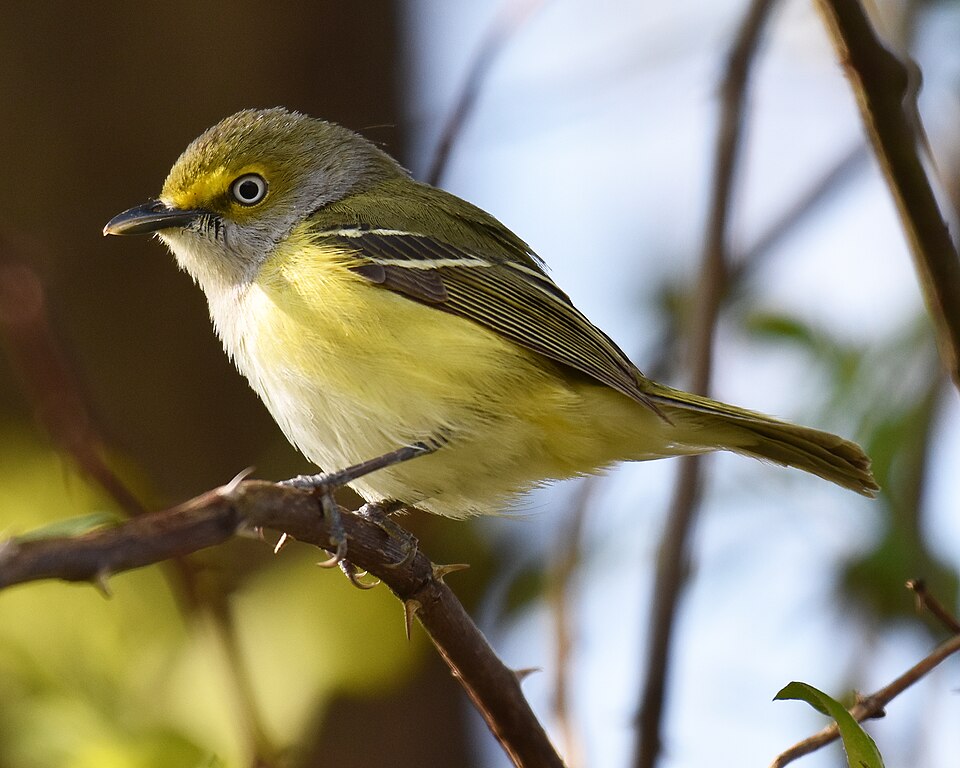
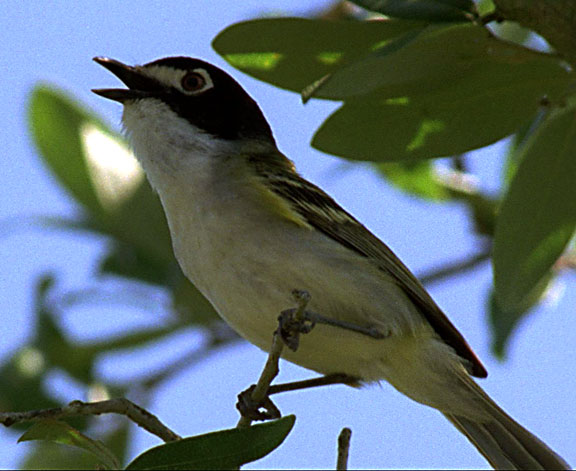
Adult Providence Vireos exhibit an olive-green coloration that serves as an effective camouflage among the leaves of their woodland habitats. Their underparts are a lighter shade, often appearing whitish or faintly yellow. One of the key field marks of Vireo approximans is the prominent white eye-ring, which gives the bird a spectacled appearance. Juvenile Providence Vireos tend to have a duller plumage compared to adults, with a less pronounced color contrast. While both sexes look remarkably similar, males may exhibit slightly brighter plumage, though this difference is subtle and often requires close observation. In terms of size, the Providence Vireo is on the smaller side of the spectrum for vireos, measuring approximately 12-14 centimeters in length with a wingspan of 20-22 centimeters. Its silhouette in flight is compact, with a short tail and rounded wings, which enables agile maneuvering through dense foliage. When perched, this vireo often assumes an upright posture, frequently flicking its wings and tail, a behavior that can help observers identify it from a distance. The Providence Vireo can be confused with other greenish vireos, such as the Red-eyed Vireo, but can be distinguished by its smaller size and the lack of a red eye.
Having trouble telling birds apart? Upload a photo to our bird identification tool for an instant species match.
Providence Vireo Habitat and Range
Preferred Habitat
The Providence Vireo thrives in a variety of woodland habitats, with a preference for deciduous and mixed forests. These birds are typically found at elevations ranging from sea level to about 1500 meters, depending on geographical location. In the eastern United States, they are commonly seen in the Appalachian Mountains, favoring areas with dense foliage and abundant insect life. During the breeding season, they select environments rich in undergrowth, which provides ample nesting sites and protection from predators. As the seasons change, the Providence Vireo may shift to more open woodlands or edges to take advantage of food availability. While they can adapt to suburban and rural areas with suitable tree cover, they are less frequently observed in heavily urbanized settings. Their habitat preference underscores their reliance on forested areas, making the preservation of these environments crucial for their survival.
Geographic Range
The Providence Vireo's breeding range encompasses a substantial portion of the eastern United States, including states such as Virginia, North Carolina, and Tennessee, extending north into southern Canada, primarily in Ontario and Quebec. During migration, these vireos travel through the southeastern United States, stopping in regions like Florida and the Gulf Coast before reaching their wintering grounds. The wintering range of the Providence Vireo includes parts of Central America, particularly in countries such as Belize, Guatemala, and Honduras, where they find suitable habitats and food sources. Migration corridors often follow the Appalachian Mountains and the Atlantic Flyway. Within their range, population densities can vary, with higher concentrations typically observed in areas offering optimal habitat conditions, including abundant food and nesting sites. The Providence Vireo's migratory behavior highlights its adaptability and the importance of conserving habitats across its range.
Want to know which birds visit your area? Browse our backyard birds by location guides for region-specific species lists.
What Does the Providence Vireo Eat?
The diet of the Providence Vireo primarily consists of insects and other small invertebrates, which it expertly gleans from foliage. Common prey items include caterpillars, beetles, and spiders, all of which are abundant in their forest habitats. During the breeding season, when the demand for protein is high, these vireos intensify their foraging efforts to feed their young. In the fall and winter, the diet diversifies to include small fruits and berries, such as those from dogwood and elderberry, providing essential nutrients and energy for their migratory journey. The Providence Vireo employs a variety of foraging techniques, often seen flitting from branch to branch, hovering briefly to snatch prey from leaves. This active foraging behavior is most pronounced during the early morning and late afternoon when insect activity peaks. The Providence Vireo's diet reflects its adaptability and the intricate balance of predator-prey interactions within its ecosystem.
Providence Vireo Behavior and Social Structure
The Providence Vireo exhibits a range of behaviors that are both fascinating and complex. Socially, these birds are largely solitary during the breeding season, fiercely defending their territories from intruders with vocal displays and occasional physical confrontations. The territorial song of the male, a series of melodious phrases, serves as both a mating call and a warning to rivals. Courtship involves typical Vireo displays, where a male presents food to the female as part of the pair-bonding process. Outside of the breeding season, Providence Vireos may join mixed-species flocks, which offers both protection from predators and increased foraging efficiency. Their response to potential threats includes alarm calls and evasive maneuvers, such as quick flights into denser cover. Daily activity patterns are influenced by the availability of food, with peak foraging typically occurring in the early morning and late afternoon. This species' behavior provides insight into its adaptability and the complex interactions within its environment.
Providence Vireo Nesting and Reproduction
Providence Vireos construct cup-shaped nests, typically positioned on horizontal branches of trees, at heights ranging from 2 to 12 meters above the ground. The nest materials include grass, bark strips, and spider silk, providing both strength and flexibility. The female primarily builds the nest, while the male may assist by gathering materials. A typical clutch consists of 3 to 4 eggs, which are whitish with sparse brown speckles. Both parents participate in incubation, which lasts approximately 12 to 14 days. Following hatching, the altricial young remain in the nest for about 11 to 13 days, during which both parents are actively involved in feeding and caring for them. Providence Vireos may produce one or two broods per season, depending on environmental conditions and food availability. Their nesting habits highlight their adaptability and the cooperative nature of parental care.
Providence Vireo Sounds and Vocalizations
The Providence Vireo is best known for its distinctive song, which consists of a series of melodious, repeated phrases. These phrases often rise and fall in pitch, creating a rhythmic pattern that is both pleasant and easily recognizable. The call notes are sharp and somewhat nasal, used primarily for communication between mates or during territorial disputes. Alarm calls are more abrupt and harsh, serving to alert other birds of potential danger. During the dawn chorus, the Providence Vireo's song stands out, contributing to the symphony of sounds that characterize its woodland habitat. The vocalizations of this species are integral to its social behavior and are a key aspect of its identification.
Interesting Facts About the Providence Vireo
- 1Providence Vireos can sing over 10 different song types, showcasing their vocal versatility.
- 2These vireos often use spider silk in their nests, enhancing the structure's durability and elasticity.
- 3The Providence Vireo migrates over 2500 kilometers each year, traveling from North America to Central America.
- 4Despite their small size, Providence Vireos play a significant role in controlling pest populations in forests.
- 5During migration, they are known to travel at night, navigating by the stars and Earth's magnetic field.
- 6The Providence Vireo's call has been described as similar to the sound of a squeaky hinge.
- 7They are often one of the first birds to vocalize in the morning, heralding the dawn with their song.
Providence Vireo Conservation Status
Currently, the Providence Vireo is not considered threatened, with a stable population trend according to IUCN assessments. However, habitat loss due to deforestation and urban development poses potential threats to its long-term stability. Conservation efforts focus on preserving large tracts of forested areas and promoting sustainable land-use practices. Historical population changes have been influenced by fluctuations in habitat availability, underscoring the importance of ongoing conservation initiatives. By maintaining healthy forest ecosystems, the Providence Vireo can continue to thrive, contributing to biodiversity and ecological balance.