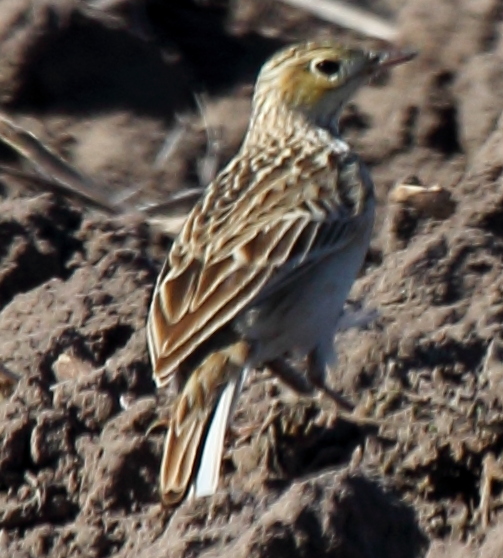
Puna Pipit
Anthus brevirostris
Order: Passeriformes / Family: Motacillidae

Wikimedia Commons
About the Puna Pipit
The Puna Pipit (Anthus brevirostris) is a remarkable bird species found predominantly in the high-altitude regions of the Andes in South America. Known for its resilience and adaptability, the Puna Pipit thrives in the harsh environments of the Puna grasslands, which stretch across Peru, Bolivia, and northern Chile. These areas, characterized by their cold temperatures and sparse vegetation, provide an ideal habitat for this species. Unlike many other pipits, the Puna Pipit has evolved to survive in these oxygen-poor environments, showcasing a fascinating example of adaptation in avian species. The ecological role of the Puna Pipit is significant within its habitat. As an insectivore, it helps control insect populations, contributing to the ecological balance of the grasslands. Its presence also supports the food web, serving as prey for larger birds of prey native to the region. This species exhibits seasonal behaviors, often seen in small flocks during the non-breeding season, which allows for better foraging success and predator avoidance. In breeding season, pairs establish territories where they raise their young. The Puna Pipit's significance extends beyond its ecological role, as it serves as an indicator species for environmental changes. Any fluctuations in its population can signal changes in the health of the Puna ecosystem. As climate change continues to impact high-altitude environments, monitoring the Puna Pipit provides valuable data for conservationists and ecologists working to preserve these unique habitats.
The Puna Pipit belongs to the family Motacillidae, within the order Passeriformes. These birds typically live average 3-4 years with a max recorded of 6 years..
How to Identify a Puna Pipit
The Puna Pipit can be identified by its medium size, measuring around 15 centimeters in length with a wingspan of approximately 25 centimeters. Its plumage is predominantly brown with subtle streaking on the upperparts, providing excellent camouflage against the dry grasses of its habitat. The underparts are lighter, often a pale buff color that blends seamlessly with its surroundings. A key distinguishing feature is its short, conical bill, which is an adaptation to its insectivorous diet. Males and females appear similar, making gender identification challenging without close observation. Juveniles resemble adults but tend to have slightly more streaking on their underparts. In flight, the Puna Pipit displays a distinctive silhouette with a steady, undulating flight pattern. It often perches on rocks or low shrubs, adopting a horizontal posture that allows it to scan for insects while staying alert to potential predators. The Puna Pipit can be confused with other pipits, such as the Correndera Pipit, but the latter typically exhibits more pronounced streaking and a longer bill. Observers should note the habitat and elevation when identifying this species, as the Puna Pipit is specifically adapted to high-altitude grasslands.
Having trouble telling birds apart? Upload a photo to our bird identification tool for an instant species match.
Puna Pipit Habitat and Range
Preferred Habitat
The Puna Pipit inhabits the Puna grasslands found at elevations ranging from 3,000 to 4,500 meters in the Andes. These grasslands are characterized by sparse vegetation, including tussock grasses and low shrubs. The Puna Pipit prefers open areas where it can forage for insects, often seen on gentle slopes and flat terrains. Seasonal habitat shifts occur, with the pipits moving slightly lower during the harshest winter months when food becomes scarce at higher altitudes. While primarily associated with rural and remote highland regions, the Puna Pipit occasionally ventures into less disturbed urban fringes, especially where natural grasslands persist. However, its presence in urban areas remains limited, as it relies heavily on the specific ecological conditions found in its native grasslands.
Geographic Range
The Puna Pipit is native to the high-altitude regions of the Andes in South America. Its breeding range includes countries such as Peru, western Bolivia, and northern Chile. During the breeding season, it is primarily found in the Puna grasslands of these regions, where it establishes territories and raises its young. In non-breeding seasons, it may move to slightly lower elevations but generally remains within the same geographical range. While there are no extensive migratory movements, some localized altitudinal migrations occur in response to seasonal changes in weather and food availability. Population density hotspots are concentrated in the central Andean regions, where the grassland habitats are most extensive and intact.
Want to know which birds visit your area? Browse our backyard birds by location guides for region-specific species lists.
What Does the Puna Pipit Eat?
The Puna Pipit's diet consists mainly of insects, which it forages from the ground among grasses and low shrubs. Its short bill is well-suited for snapping up a variety of invertebrates, including beetles, ants, and grasshoppers. During the breeding season, the pipit may increase its intake of protein-rich insects to support the nutritional needs of its developing young. In non-breeding seasons, the Puna Pipit's diet shifts to include a higher proportion of seeds and other plant material, especially when insect availability declines due to colder temperatures. The pipit employs a foraging technique that involves walking or hopping through the grass, pausing frequently to scan for movement and then darting forward to capture its prey. It often forages during the early morning and late afternoon when insects are most active.
Puna Pipit Behavior and Social Structure
The Puna Pipit exhibits a range of behaviors that reflect its adaptation to high-altitude environments. It is generally a solitary bird during the breeding season, with pairs establishing and defending territories where they build nests and raise their young. Territorial displays include song flights, where the male pipit ascends into the air while delivering a series of high-pitched notes before gliding back to the ground. Outside of the breeding season, the Puna Pipit becomes more sociable, forming small flocks that enhance foraging success and offer protection against predators. These loose flocks move together across the grasslands, often mixing with other small bird species. The pipit remains vigilant against predators, relying on its cryptic plumage and quick, low flight to evade capture. Daily activity patterns include periods of intense foraging interspersed with rest and preening. The Puna Pipit is most active during the cooler parts of the day, avoiding the midday heat typical of its high-altitude habitats.
Puna Pipit Nesting and Reproduction
The Puna Pipit constructs a cup-shaped nest on the ground, typically hidden within a tussock of grass or under a small shrub. The nest is made of fine grasses and lined with softer materials like feathers or wool to provide insulation against the cold. The female usually lays a clutch of three to four eggs, which are pale with fine speckling and blend well with the surrounding environment. Incubation, primarily performed by the female, lasts about 12 to 14 days. During this time, the male may assist by bringing food to the incubating female. Once hatched, the chicks are fed by both parents and fledge approximately 14 to 16 days after hatching. The Puna Pipit generally raises one brood per year, although in favorable conditions, a second brood is possible.
Puna Pipit Sounds and Vocalizations
The Puna Pipit's primary song is a series of high-pitched, melodious notes delivered in rapid succession during flight displays. These songs serve to establish territory and attract mates during the breeding season. Call notes are short and sharp, often described as 'tsee-tsee' or 'tzeet,' used for communication between flock members and to alert others of potential threats. The Puna Pipit's alarm call is a more urgent and repeated version of its call note, increasing in intensity when predators approach. During the dawn chorus, the Puna Pipit's song can be heard intermingling with those of other grassland species, creating a rich tapestry of sound that signals the start of a new day.
Interesting Facts About the Puna Pipit
- 1The Puna Pipit is one of the few pipit species adapted to high-altitude environments, thriving above 3,000 meters.
- 2Despite its small size, the Puna Pipit plays a crucial role in controlling insect populations in the Puna grasslands.
- 3The Puna Pipit's short bill is specifically adapted for its insectivorous diet, distinguishing it from other pipits.
- 4Puna Pipits often join mixed-species flocks outside of the breeding season, enhancing their foraging success.
- 5During the breeding season, male Puna Pipits perform song flights to establish territory and attract mates.
- 6The Puna Pipit's cryptic plumage provides excellent camouflage in its grassland habitat, aiding in predator avoidance.
- 7Climate change poses a potential threat to the Puna Pipit, as altering weather patterns may impact its high-altitude habitats.
Puna Pipit Conservation Status
The Puna Pipit is currently listed as Least Concern by the IUCN, with stable population trends reported across its range. However, habitat degradation poses a primary threat, as agricultural expansion and grazing pressure alter the Puna grasslands. Conservation efforts focus on preserving these habitats and maintaining the ecological integrity of the region. Monitoring programs are in place to track population changes and identify potential threats. Historical population changes have been relatively minor, but ongoing vigilance is necessary to ensure the Puna Pipit's continued survival in its unique high-altitude environment.