Slaty Vireo
Vireo brevipennis
Order: Passeriformes / Family: Vireonidae

Wikimedia Commons
About the Slaty Vireo
The Slaty Vireo, scientifically known as Vireo brevipennis, is a small passerine bird found primarily in the mountainous regions of Mexico. This species, part of the Vireonidae family, is known for its striking slate-gray plumage, which contrasts sharply with its white eye-ring. Despite its limited distribution, the Slaty Vireo plays a significant ecological role in its habitat, contributing to seed dispersal and insect control. It inhabits subtropical and tropical moist montane forests, often found between 1,500 and 3,000 meters in elevation. Primarily a resident bird, its presence is most notable in the Sierra Madre del Sur and the Trans-Mexican Volcanic Belt. The Slaty Vireo's ecological significance is underscored by its role as both a predator and a prey species, maintaining the balance within its ecosystem. During the breeding season, which occurs from March to July, this vireo becomes more conspicuous as it actively defends its territory and engages in elaborate courtship displays. Its song, a series of short, melodious phrases, resonates through its habitat, establishing its presence and warding off rival males. Outside the breeding season, the Slaty Vireo remains relatively sedentary, although some local movements in search of food have been observed. Its ability to thrive in a relatively narrow ecological niche highlights its adaptability and the importance of conserving its montane forest habitat. Human encroachment and habitat destruction pose significant threats to its population, necessitating targeted conservation efforts to ensure its continued survival.
The Slaty Vireo belongs to the family Vireonidae, within the order Passeriformes. These birds typically live average 6 years with a maximum recorded of 9 years..
How to Identify a Slaty Vireo
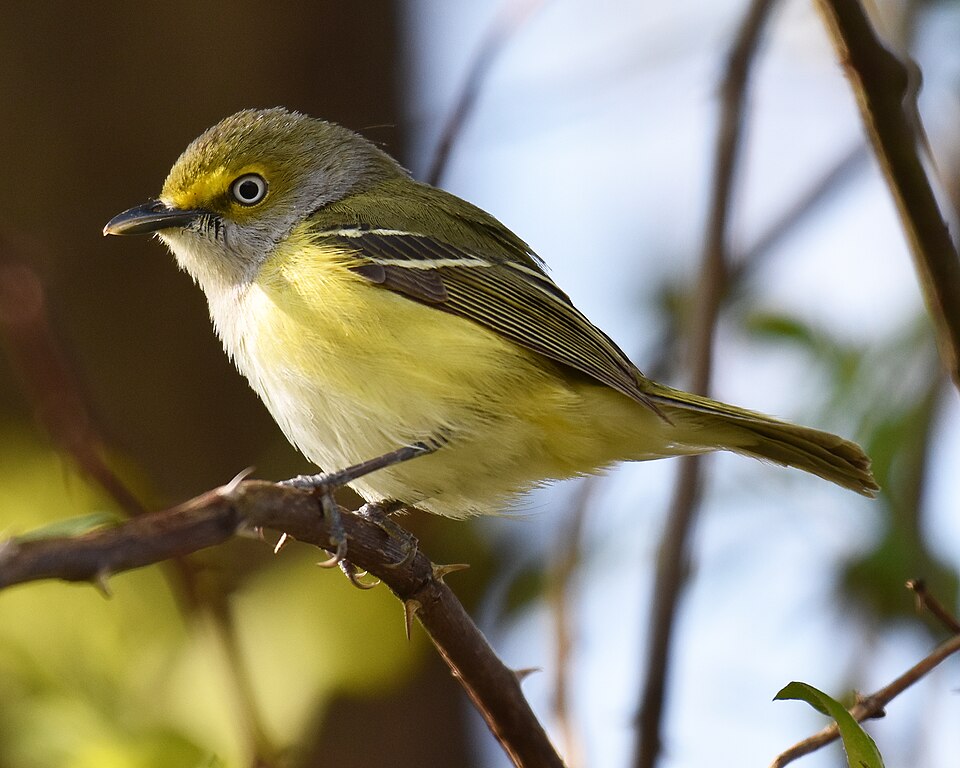
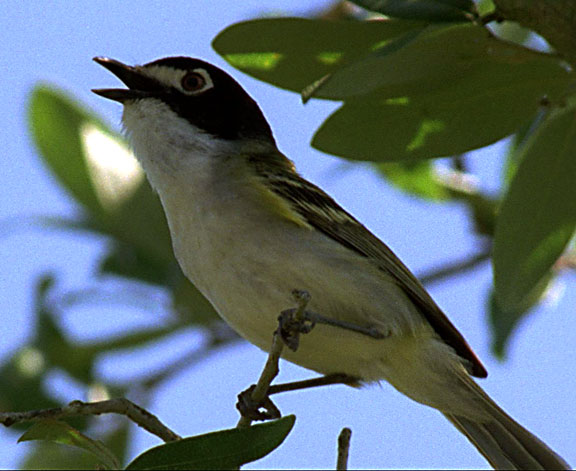
Identifying the Slaty Vireo in the field requires attention to several distinctive features. Adult Slaty Vireos possess a predominantly slate-gray plumage, with a subtle bluish tint that can be captivating in proper light. The pronounced white eye-ring is a key field mark, contrasting with its darker head and back, and is often the first clue to its identity. The underparts are lighter gray, almost blending with the environment. There is little sexual dimorphism in this species, meaning male and female Slaty Vireos appear similar, though males might exhibit slightly more intense coloration during the breeding season. Juveniles can be distinguished by their slightly duller plumage, lacking the full intensity of the adults. The Slaty Vireo's flight silhouette is compact and agile, characterized by short, rounded wings and a short tail. It often perches horizontally, maintaining a low profile in the dense foliage of its forest home. When compared to similar species, such as the Plumbeous Vireo, the Slaty Vireo's lack of wing bars and its solid gray body set it apart. Observers should also note its behavior, as it tends to be more reclusive, often found skirting through lower and mid-level vegetation rather than the canopy.
Having trouble telling birds apart? Upload a photo to our bird identification tool for an instant species match.
Slaty Vireo Habitat and Range
Preferred Habitat
The Slaty Vireo thrives in montane forest habitats, favoring subtropical and tropical moist montane environments. These forests, often shrouded in mist, provide the dense foliage and varied structure that the species requires. The Slaty Vireo is typically found between 1,500 and 3,000 meters in elevation, primarily inhabiting the Sierra Madre del Sur and the Trans-Mexican Volcanic Belt. Within these regions, it prefers primary and mature secondary forests, where the thick understory offers ample foraging opportunities and safe nesting sites. Seasonal habitat shifts are minimal, but during the breeding season, individuals may move slightly to find optimal nesting sites with adequate cover. Unlike some other vireo species, the Slaty Vireo is not commonly found in urban areas, as it requires the intricate forest structure that cities cannot provide. However, it may occasionally venture into more open areas adjacent to its primary habitat, particularly when foraging.
Geographic Range
The range of the Slaty Vireo is restricted to a relatively confined geographical area, making it a species of particular interest to birders and conservationists alike. It is endemic to Mexico, with its primary distribution along the Sierra Madre del Sur and the Trans-Mexican Volcanic Belt. The species does not migrate long distances, instead maintaining a year-round presence within its montane forest habitat. Its breeding range overlaps significantly with its overall range, as it does not undertake significant migratory movements. Population density is highest in areas where ideal habitat conditions are met, particularly in regions with a mix of mature forest and secondary growth. Despite its limited range, it is often considered locally common within suitable habitats. However, human activities such as logging and land conversion have fragmented its habitat, leading to concerns about localized population declines. Conservation efforts focus on protecting critical forest areas and maintaining connectivity between fragmented habitats to support the Slaty Vireo's continued survival.
Want to know which birds visit your area? Browse our backyard birds by location guides for region-specific species lists.
What Does the Slaty Vireo Eat?
The Slaty Vireo's diet consists primarily of insects and other small invertebrates, making it an important insectivore within its ecosystem. It employs a methodical foraging technique, gleaning prey from leaves and branches in the dense understory of its forest habitat. The vireo's diet varies seasonally, with an increased reliance on available fruits and berries during periods when insect prey is scarce. This dietary flexibility allows the Slaty Vireo to maintain its energy requirements throughout the year, even when environmental conditions fluctuate. During the breeding season, the demand for protein-rich food sources increases, as adults must provide for their young. The Slaty Vireo's feeding schedule is diurnal, with peak foraging activity occurring in the early morning and late afternoon when prey is most active. It typically catches prey ranging from small caterpillars to flying insects, which it captures with precision and agility. This bird's role as both a predator of insects and a consumer of fruits contributes to the control of insect populations and the dispersal of plant seeds, underscoring its ecological importance.
Slaty Vireo Behavior and Social Structure
The Slaty Vireo exhibits a range of behaviors that reflect its adaptation to life in dense montane forests. It is generally solitary or found in pairs, particularly during the breeding season when it becomes highly territorial. Males engage in vocal displays to establish and defend their territories, using their melodious songs to communicate with potential mates and deter rivals. Courtship displays involve both song and physical gestures, such as wing-flicking and tail-spreading, to attract females. Outside the breeding season, the Slaty Vireo may join mixed-species foraging flocks, allowing it to exploit different food resources and gain protection from predators. Its response to predators includes a combination of vocal alarms and evasive maneuvers, often retreating deeper into foliage to avoid detection. Daily activity patterns are diurnal, with periods of heightened activity during dawn and dusk. The Slaty Vireo's secretive nature and preference for dense cover make prolonged observation challenging, but patient birders can often catch glimpses of its intriguing behavior as it moves through its forest habitat.
Slaty Vireo Nesting and Reproduction
The nesting habits of the Slaty Vireo are intricately tied to its montane forest environment. This species constructs a cup-shaped nest, typically placed in a fork of a small tree or shrub, well concealed within dense foliage. The nest is crafted from a variety of materials, including grasses, leaves, and spider silk, which provide both strength and camouflage. The Slaty Vireo lays a clutch of 2 to 4 eggs, which are incubated primarily by the female for about 12 to 14 days. During this period, the male plays a crucial role in providing food and defending the nesting territory. Once the eggs hatch, both parents participate in feeding the young, delivering a steady supply of insects to the nestlings. The fledging period lasts approximately 11 to 14 days, after which the young leave the nest but remain dependent on the parents for several weeks. The Slaty Vireo typically raises one brood per year, although in optimal conditions, a second brood may be attempted. The choice of nesting site and the construction of the nest reflect the species' adaptation to its environment, ensuring that its young have the best chance of survival.
Slaty Vireo Sounds and Vocalizations
The vocalizations of the Slaty Vireo are a key aspect of its behavior, especially during the breeding season. Its primary song consists of a series of short, melodious phrases that are often repeated, creating a musical and rhythmic pattern. This song is both a territorial declaration and an invitation for potential mates. The pitch of the Slaty Vireo's song is clear, with a distinctive quality that sets it apart from other bird species in its range. In addition to its song, the Slaty Vireo produces call notes that are used for communication between mates and to alert others to potential threats. These calls are typically sharp and rapid, differing from the more melodic song. Alarm calls are more abrupt and can be heard when the bird is agitated or perceiving danger. During the dawn chorus, the Slaty Vireo joins other birds in filling the forest with sound, its song contributing to the rich acoustic tapestry of its habitat. The clarity and consistency of its vocalizations make it a reliable subject for auditory observation.
Interesting Facts About the Slaty Vireo
- 1The Slaty Vireo is endemic to Mexico, found nowhere else in the world, making it a target species for birders visiting the region.
- 2Despite its limited range, the Slaty Vireo is considered locally common where suitable habitat exists, showcasing its adaptability.
- 3The Slaty Vireo's song, while melodious, is distinct enough that experienced birders can identify it without visual confirmation.
- 4Unlike many vireo species, the Slaty Vireo does not migrate, remaining within its montane forest habitat year-round.
- 5The Slaty Vireo plays a crucial role in seed dispersal within its habitat, contributing to the regeneration of its forest ecosystem.
- 6Its lack of sexual dimorphism makes it challenging to distinguish males from females, even during the breeding season.
- 7The Slaty Vireo's preference for dense understory vegetation makes it a challenging bird to spot, often requiring patience and keen observation skills.
Slaty Vireo Conservation Status
The conservation status of the Slaty Vireo is currently listed as Least Concern by the IUCN, but this does not mean it is free from threats. Its population trend is relatively stable, although localized declines have been documented due to habitat loss and fragmentation. The primary threats to the Slaty Vireo include deforestation, land conversion for agriculture, and infrastructure development, all of which reduce its available habitat. Conservation efforts focus on preserving the montane forests it inhabits, with initiatives aimed at creating protected areas and promoting sustainable land-use practices. Historical population changes are not well documented, but ongoing monitoring is essential to detect any significant shifts. Supporting local conservation groups and raising awareness of the importance of montane forest ecosystems are critical steps in ensuring the survival of the Slaty Vireo. Continued research and habitat protection will help maintain the ecological balance and preserve this unique species for future generations.