Trilling Shrike-Babbler
Pteruthius aenobarbus
Order: Passeriformes / Family: Vireonidae

Wikimedia Commons
About the Trilling Shrike-Babbler
The Trilling Shrike-Babbler, scientifically known as Pteruthius aenobarbus, is a captivating member of the Vireonidae family found predominantly in the montane forests of Southeast Asia. These birds occupy an ecological niche that bridges the gap between the insectivorous and frugivorous species of these biodiverse regions. In the dense canopies of primary and secondary forests, they play a vital role in controlling insect populations while also engaging in seed dispersal. The Trilling Shrike-Babbler’s presence in regions such as Sumatra, Java, and the Malay Peninsula highlights their preference for humid, tropical climates, where they contribute to the intricate web of life. The bird's ecological role is underscored during the breeding season when its melodious trill serves as a territorial claim and a mate attraction mechanism. Unlike many species, the Trilling Shrike-Babbler is a sedentary bird, typically found year-round in its preferred habitats, though some altitudinal movements may occur in response to temperature changes. Their adaptability to various forest conditions, from pristine to slightly disturbed, underscores their resilience, although habitat destruction poses a looming threat. Ecologically, the Trilling Shrike-Babbler is a critical link in the chain of life, balancing insect populations and contributing to the health of forest ecosystems. It is also an indicator of forest health, as its presence often signals a well-functioning ecosystem. The bird's distinctive song, a series of rapid whistles, adds an auditory layer to its ecological significance, marking territory and facilitating social interactions. Seasonally, these birds are particularly vocal during the breeding months, engaging in complex songs that both define territory and attract mates. Understanding the Trilling Shrike-Babbler's role helps appreciate the subtleties of forest dynamics and the interconnectedness of species.
The Trilling Shrike-Babbler belongs to the family Vireonidae, within the order Passeriformes. These birds typically live average 6-8 years with a max recorded of 10 years..
How to Identify a Trilling Shrike-Babbler
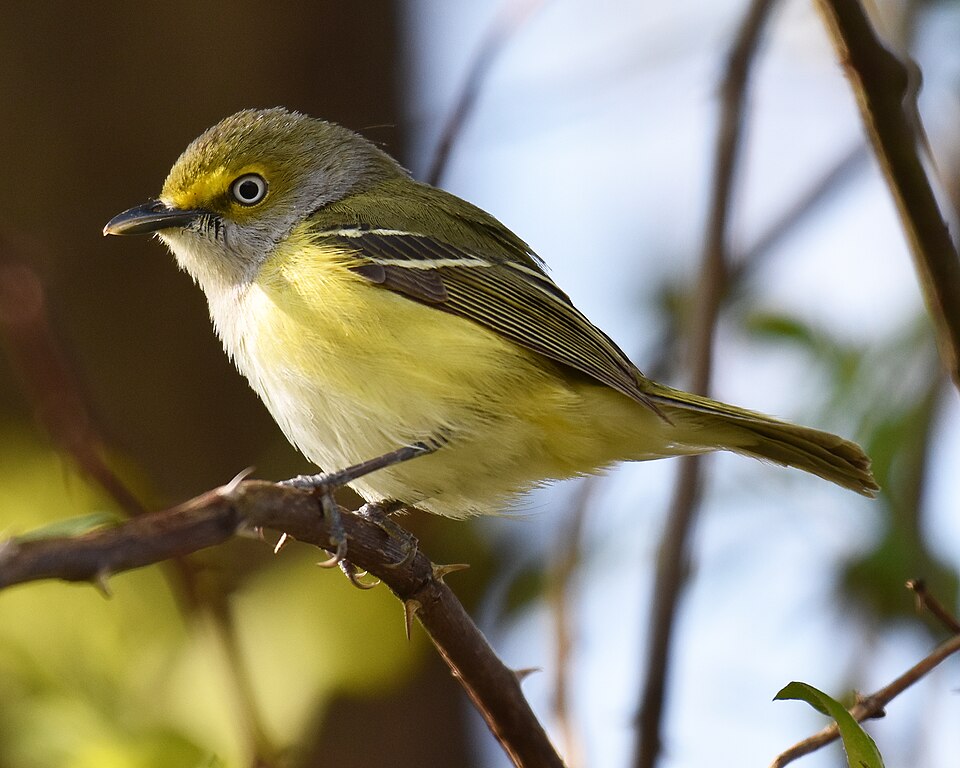
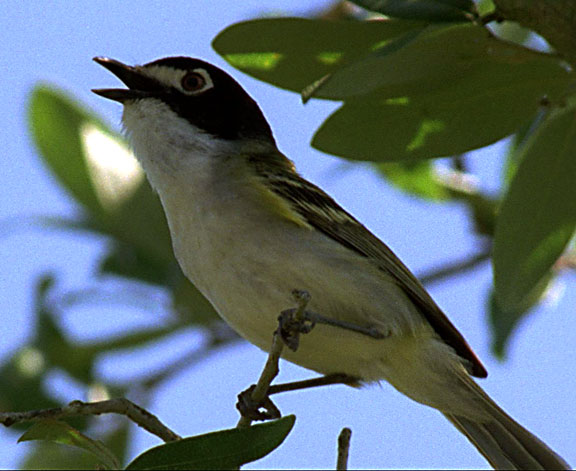
The Trilling Shrike-Babbler is a medium-sized songbird with striking, vivid plumage. The adult male displays a vibrant combination of colors, including a bright orange breast and a contrasting black head, which makes it unmistakable in its native habitat. Its back is a rich olive green, providing effective camouflage amidst the foliage. The wings exhibit a combination of olive, black, and white, with the distinctive white wing bar being a key identifying feature. Females and juveniles are slightly duller, with less pronounced color contrasts, but they still maintain the characteristic white wing bar. Juveniles may also show more muted, brownish tones compared to adults. The Trilling Shrike-Babbler can be confused with other shrike-babblers, but its unique combination of head pattern and song distinguishes it. In flight, it presents a compact silhouette with rapid wingbeats and a slightly undulating flight pattern. When perched, the bird often adopts an upright posture, scanning its surroundings with its keen vision. This posture, combined with its vocalizations, makes it a relatively easy bird to locate during field observations.
Having trouble telling birds apart? Upload a photo to our bird identification tool for an instant species match.
Trilling Shrike-Babbler Habitat and Range
Preferred Habitat
The Trilling Shrike-Babbler predominantly inhabits montane and submontane forests of Southeast Asia, thriving in elevations ranging from 800 to 2,400 meters. These habitats are typically characterized by dense canopies and a rich understory, providing ample foraging opportunities and nesting sites. The species shows a preference for primary forests but can also adapt to secondary growth areas, provided they maintain structural complexity. While primarily a forest dweller, the bird occasionally ventures into forest edges and clearings, particularly during foraging. Unlike many forest-dwelling birds, the Trilling Shrike-Babbler does not typically venture into urban areas, remaining a creature of the forest. Seasonal habitat shifts are minimal but may involve slight altitudinal movements in response to temperature and food availability changes.
Geographic Range
The range of the Trilling Shrike-Babbler extends across the montane regions of Southeast Asia, with populations primarily concentrated in Sumatra, Java, and parts of the Thai-Malay Peninsula. This region provides the cool, moist environments that the species favors. The bird is non-migratory, maintaining territories year-round, although some altitudinal movements may occur. Within these countries, it is most commonly found in protected areas where forest cover remains intact. In Sumatra and Java, dense populations exist in national parks and nature reserves, where conservation efforts help preserve their habitats. The Trilling Shrike-Babbler’s presence in these areas underscores its reliance on forest ecosystems and highlights the importance of habitat conservation to ensure its survival.
Want to know which birds visit your area? Browse our backyard birds by location guides for region-specific species lists.
What Does the Trilling Shrike-Babbler Eat?
The diet of the Trilling Shrike-Babbler consists mainly of insects and other small invertebrates, which it expertly gleans from foliage and branches. During the breeding season, when energy demands are high, the bird may increase its insect intake, targeting caterpillars, beetles, and spiders. Fruit also comprises a significant portion of its diet, especially outside of the breeding season when insects might be less abundant. The bird exhibits a versatile foraging technique known as 'hover-gleaning,' where it hovers briefly to pick insects from the undersides of leaves. This technique allows it to exploit food resources that other birds may overlook. The Trilling Shrike-Babbler typically forages in the lower to mid-canopy layers, where its keen eyesight and agile movements facilitate effective hunting.
Trilling Shrike-Babbler Behavior and Social Structure
The Trilling Shrike-Babbler displays a range of behaviors that highlight its adaptability and ecological role. It is primarily a solitary bird, although during the non-breeding season, it may form loose associations with mixed-species foraging flocks, which provides increased foraging efficiency and predator vigilance. Territorial during the breeding season, males vigorously defend their territories through song and display behaviors. Courtship involves complex vocalizations and a series of postures that showcase the bird's vibrant plumage to potential mates. Flocking behavior outside of breeding is less structured but serves as a means of social interaction and resource sharing. The bird's response to predators includes a range of alarm calls and evasive flight patterns, which are often coordinated with other species within mixed flocks. Activity patterns are diurnal, with peak foraging occurring in the early morning and late afternoon, aligning with insect activity.
Trilling Shrike-Babbler Nesting and Reproduction
Nesting for the Trilling Shrike-Babbler involves constructing small, cup-shaped nests made of twigs, moss, and leaves. These nests are typically located in dense foliage or sheltered tree forks, providing protection from predators and harsh weather. The typical clutch size ranges from two to four eggs, which are incubated by the female for about 12 to 14 days. Both parents play active roles in feeding and caring for the young, with fledging occurring approximately 14 to 16 days after hatching. The species may produce one to two broods per year, depending on environmental conditions and food availability. Parental roles are well-balanced, with both male and female participating in the defense and nurturing of their offspring, ensuring high survival rates during the vulnerable early life stages.
Trilling Shrike-Babbler Sounds and Vocalizations
The primary song of the Trilling Shrike-Babbler is a melodious trill, characterized by a rapid series of whistled notes that rise and fall in pitch. This song is used extensively during the breeding season for mate attraction and territorial defense. In addition to its song, the bird emits a variety of call notes, including sharp 'chip' sounds used in communication between mates and as alarm signals. The alarm calls are particularly important in alerting other birds to potential threats. During the dawn chorus, the Trilling Shrike-Babbler is one of the early vocalists, its song weaving through the forest soundscape with clarity and persistence, often compared to the sound of a flute.
Interesting Facts About the Trilling Shrike-Babbler
- 1The Trilling Shrike-Babbler's song is one of the most complex among shrike-babblers, with up to 20 different vocalizations documented.
- 2Despite being primarily insectivorous, the Trilling Shrike-Babbler plays a key role in seed dispersal due to its fruit-eating habits.
- 3These birds are known for their 'hover-gleaning' foraging technique, a behavior shared with very few other passerine species.
- 4Trilling Shrike-Babblers are part of a unique evolutionary group that bridges the traits of vireos and shrike-babblers.
- 5The species can be found at elevations as high as 2,400 meters, making it one of the higher-altitude dwellers in its range.
- 6Mixed-species flocking behavior helps the Trilling Shrike-Babbler increase its foraging efficiency by reducing competition.
- 7Juvenile Trilling Shrike-Babblers often display a more subdued plumage, allowing them to blend into their environment for protection.
Trilling Shrike-Babbler Conservation Status
The Trilling Shrike-Babbler is currently listed as Least Concern by the IUCN, but its population is suspected to be in decline due to ongoing habitat destruction. The primary threats to this species include deforestation for agriculture, logging, and infrastructure development, which reduce available habitat. Conservation efforts focus on protecting forested areas and promoting sustainable land use practices. Historical population data suggest that the species was more widespread before significant habitat loss began. Current conservation strategies include habitat restoration and the establishment of protected areas that safeguard crucial montane forest habitats.