Vireo magister
Vireo magister
Order: Passeriformes / Family: Vireonidae

Wikimedia Commons
About the Vireo magister
The Yellow-throated Vireo, scientifically known as Vireo magister, is a striking songbird renowned for its bright yellow throat and melodious voice. This species inhabits a range of forested environments, particularly favoring deciduous and mixed woodlands. Its presence plays a pivotal role in controlling insect populations, as it actively forages for insects, its primary food source. Yellow-throated Vireos are most commonly found in the southeastern United States, with populations extending as far north as Ontario, Canada, and as far south as Central America during winter migration. As a migratory bird, the Yellow-throated Vireo exhibits fascinating seasonal behaviors. During the breeding season, it is territorial, often returning to the same nesting sites each year. In contrast, its winter behavior is more nomadic, as it traverses various habitats to locate food. The Yellow-throated Vireo's vibrant coloration and distinctive song make it a favorite among birdwatchers, while its ecological role as an insectivore contributes to the health of forest ecosystems. Its adaptability to different forest types, including those affected by moderate disturbance, illustrates its resilience and importance within its native range.
The Vireo magister belongs to the family Vireonidae, within the order Passeriformes. These birds typically live unknown, possibly similar to other vireos at 5-7 years.
How to Identify a Vireo magister
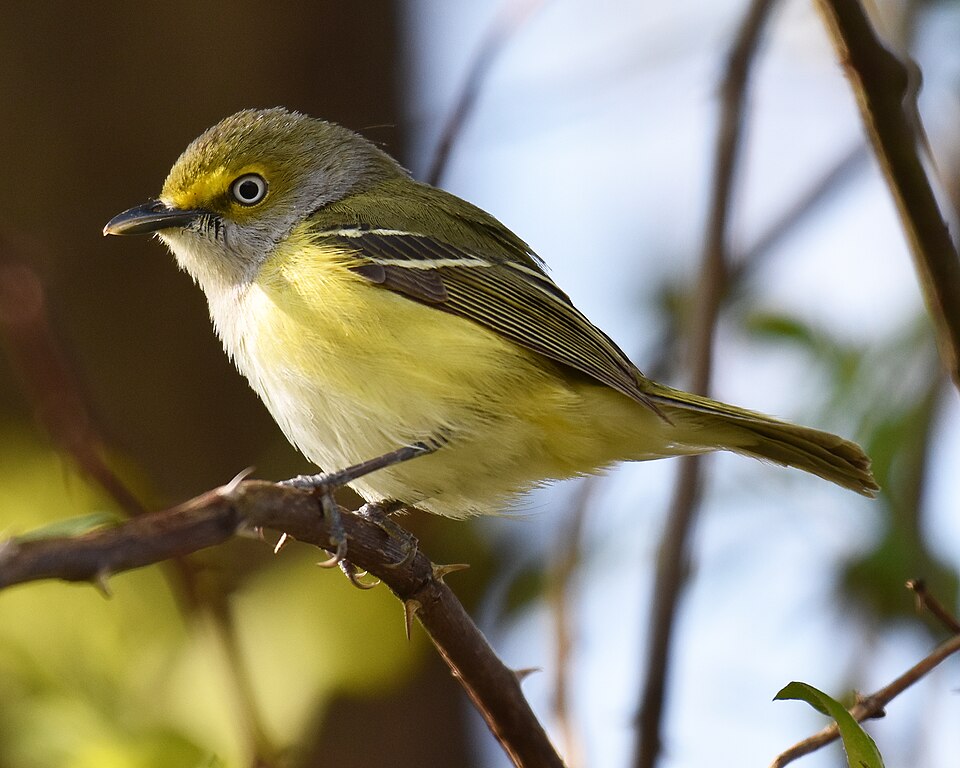
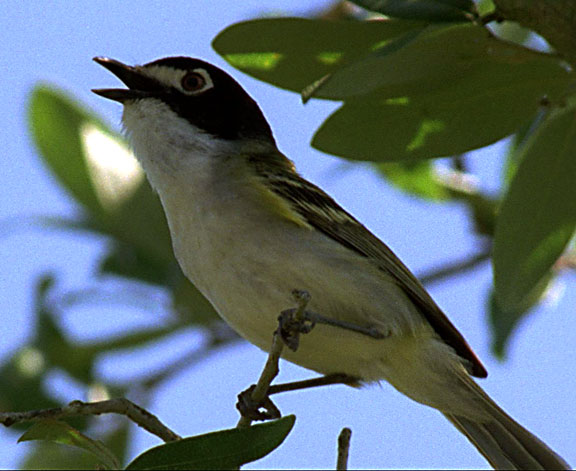
The adult Yellow-throated Vireo boasts a bright yellow throat and breast, which starkly contrasts with its olive-green back and white underparts. Its wings bear two white wing bars, a key feature for field identification. Juvenile vireos share similar color patterns but display more subdued tones, lacking the vivid yellow of adults. Males and females appear largely similar in plumage, though males may exhibit slightly brighter coloring during the breeding season. The Yellow-throated Vireo is often confused with the Pine Warbler or other vireo species, yet its thicker bill and deliberate movements help distinguish it. In flight, the Yellow-throated Vireo presents a compact silhouette, with a short tail and rounded wings. When perched, it often adopts an upright posture, allowing for clear observation of its striking throat patch. This posture, combined with its habit of singing from exposed branches, aids in its identification.
Having trouble telling birds apart? Upload a photo to our bird identification tool for an instant species match.
Vireo magister Habitat and Range
Preferred Habitat
The Yellow-throated Vireo inhabits deciduous and mixed forests, preferring areas with open understories. It is commonly found in oak, maple, and hickory woodlands, thriving at elevations ranging from sea level to 1,500 meters. During migration, it may also appear in shrubby or edge habitats, seeking food. While it primarily occupies rural forests and woodland edges, it can adapt to suburban areas with mature tree cover. Seasonal habitat shifts occur, with wintering populations moving to tropical forests in Central America.
Geographic Range
Breeding occurs across the eastern United States, from the Great Lakes to the Gulf Coast, with significant densities in the Appalachian Mountains. In winter, the Yellow-throated Vireo migrates to Central America, including countries like Mexico, Belize, and Costa Rica. Migration routes often follow the Mississippi Flyway, providing ample stopover sites for resting and feeding. Populations are denser in southeastern regions, where optimal habitats abound. Outside the breeding season, it becomes a more sporadic visitor, with less predictable sightings.
Want to know which birds visit your area? Browse our backyard birds by location guides for region-specific species lists.
What Does the Vireo magister Eat?
Primarily insectivorous, the Yellow-throated Vireo consumes a variety of insects, including caterpillars, beetles, and spiders. It employs a patient, deliberate foraging technique, gleaning prey from leaves and branches. The vireo's diet shifts to include more fruit in the late summer and fall, taking advantage of seasonal abundance. Small fruits and berries become important secondary food sources during migration. Feeding occurs throughout the day, with peaks in activity during early morning and late afternoon, coinciding with insect activity.
Vireo magister Behavior and Social Structure
Yellow-throated Vireos are known for their solitary nature during the breeding season, establishing territories and defending them with persistent songs. Males perform courtship displays, often involving song and flight maneuvers. While generally solitary, they may join mixed-species flocks during migration and winter. Their response to predators includes vocal alarm calls and evasive flights. Daily activity peaks at dawn and dusk, with foraging interspersed with periods of vocalization and rest.
Vireo magister Nesting and Reproduction
Nests are constructed in the forks of tree branches, often 3-10 meters above the ground. The nest is cup-shaped, made of grass, bark strips, and spider silk, camouflaged with moss and lichen. Clutch size ranges from 3 to 5 eggs, with an incubation period of 12-14 days. Both parents share incubation duties and feeding of the young. Fledging occurs approximately 12-14 days after hatching, with one to two broods typically raised per year.
Vireo magister Sounds and Vocalizations
The primary song of the Yellow-throated Vireo consists of a series of melodious phrases, each with a distinct pause, resembling a slow, deliberate conversation. Call notes are short and sharp, often used in communication between mates. Alarm calls are harsher, serving to alert others to potential danger. During the dawn chorus, its song stands out for its clarity and repetition, providing a distinctive soundtrack to the forest.
Interesting Facts About the Vireo magister
- 1The Yellow-throated Vireo's song can be heard from over 100 meters away, making it a prominent voice in its habitat.
- 2During migration, the Yellow-throated Vireo can cover distances of over 2,000 kilometers between breeding and wintering grounds.
- 3This vireo species often returns to the same nesting site year after year, exhibiting strong site fidelity.
- 4The Yellow-throated Vireo's nest construction includes the use of spider silk, which adds strength and flexibility to the structure.
- 5Its diet shift to include fruit in the fall helps it build fat reserves necessary for long migratory flights.
- 6Yellow-throated Vireos are known for their deliberate foraging style, rarely rushing as they search for insects among foliage.
- 7Despite their vibrant coloration, Yellow-throated Vireos can be surprisingly difficult to spot high in the forest canopy.
Vireo magister Conservation Status
The Yellow-throated Vireo is currently listed as Least Concern by the IUCN, with populations considered stable. While habitat loss poses a threat, its adaptability to various forest types aids its resilience. Conservation efforts focus on preserving mature woodland habitats and maintaining migration corridors. Historical population trends have shown periodic fluctuations, but current numbers remain healthy and widespread across suitable habitats.