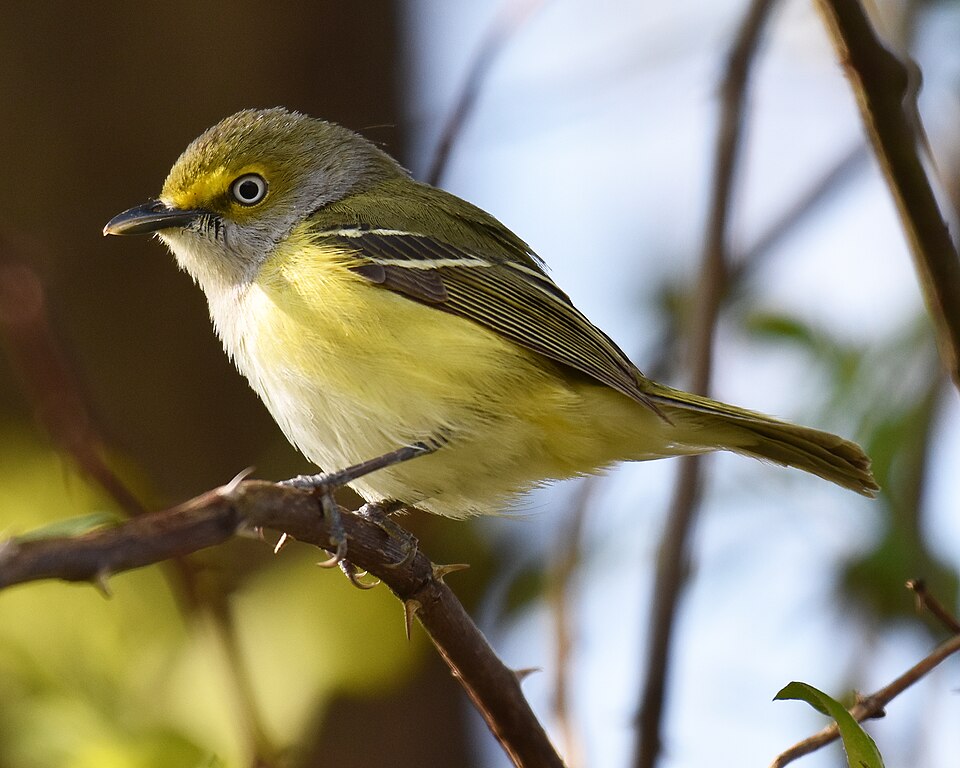
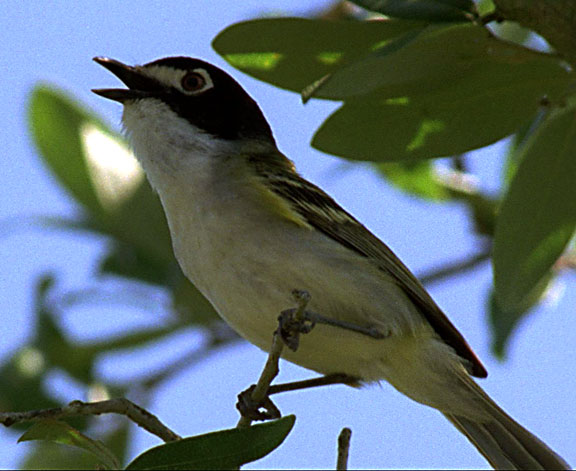
Vireo musicus
Vireo musicus
Order: Passeriformes / Family: Vireonidae
About the Vireo musicus
The Vireo musicus, commonly known simply as the Vireo, is a captivating songbird belonging to the Vireonidae family. This bird is noted for its melodious song and vibrant olive-green plumage. Typically measuring around 12 cm in length, the Vireo musicus is a medium-sized passerine that holds a significant place in its ecosystem as an insect predator and pollinator. Its primary habitats include deciduous and mixed woodlands, where it often resides in the canopy or mid-story layers. During the breeding season, which spans from late spring to early summer, the Vireo musicus is found in various regions across North America, notably in the eastern United States and southern Canada. By contrast, its wintering grounds extend into Central America, demonstrating its migratory nature.
The ecological role of the Vireo musicus is multifaceted. As an insectivore, it plays a pivotal role in controlling insect populations, particularly caterpillars and beetles, which are prevalent in forested areas. This dietary preference helps maintain the ecological balance within its habitat. Additionally, the Vireo contributes to seed dispersal through its consumption of fruit, aiding in forest regeneration. Its presence in diverse woodland environments also serves as an indicator of healthy ecosystems. The Vireo's ability to adapt to different environments, including urban green spaces, underscores its ecological versatility.
Throughout the year, the Vireo musicus exhibits distinct seasonal behaviors. During the breeding season, males engage in elaborate courtship displays, using their songs to establish territories and attract mates. These vocalizations are integral to their reproductive success, as they signal the health and vitality of the singer. As autumn approaches, the Vireo undertakes long migratory journeys, traveling thousands of kilometers to reach its wintering grounds. Along these migratory routes, the Vireo musicus relies on stopover habitats to rest and refuel, highlighting the importance of conserving these areas.
In terms of conservation, the Vireo musicus faces several challenges, including habitat loss and fragmentation. Urban development and deforestation pose significant threats to its breeding and feeding grounds. Conservation efforts are thus crucial to ensure the survival of this species. Monitoring population trends and safeguarding critical habitats are essential strategies to protect the Vireo musicus for future generations. Through comprehensive conservation measures, the Vireo musicus can continue to thrive and enchant birdwatchers and nature enthusiasts alike with its charming presence and mellifluous song.
The Vireo musicus belongs to the family Vireonidae, within the order Passeriformes. These birds typically live average 4 years, with a maximum recorded of 6 years..
How to Identify a Vireo musicus
The Vireo musicus is characterized by its olive-green upperparts and white underparts, making it a distinctive species among North American songbirds. Adult males and females share similar plumage, though males may appear slightly more vibrant during the breeding season. The bird's crown and nape are often tinged with a hint of gray, providing subtle contrast against the brighter olive-green back. Notably, the Vireo features two pale wing bars that stand out against its darker wings, aiding in identification.
Juvenile Vireos resemble adults but tend to have duller plumage, lacking the full intensity of color seen in mature individuals. These young birds may also exhibit a more subdued version of the adult's vocal repertoire. In flight, the Vireo musicus presents a compact silhouette, with short, rounded wings and a slightly rounded tail. Its flight appears direct and purposeful, often interspersed with brief glides.
Confusion may arise when identifying the Vireo musicus alongside similar species, such as the Red-eyed Vireo. However, the Vireo musicus can be distinguished by its smaller size and the lack of the red eye that characterizes its cousin. Additionally, the Vireo tends to adopt an upright posture when perched, frequently seen actively gleaning insects from foliage. Observing these behaviors and physical characteristics can assist birders in accurately identifying this melodious songbird.
Having trouble telling birds apart? Upload a photo to our bird identification tool for an instant species match.
Vireo musicus Habitat and Range
Preferred Habitat
The Vireo musicus primarily inhabits deciduous and mixed woodlands, favoring areas with dense foliage and abundant insect life. This preference includes forests with a rich understory, where it can forage efficiently. It is commonly found at elevations ranging from sea level to approximately 1500 meters, although it is most prevalent in lowland forests.
During the breeding season, the Vireo musicus seeks out mature forests in the eastern United States and southern Canada, thriving in regions such as the Appalachian Mountains and the Great Lakes area. As autumn approaches, the Vireo migrates to its wintering grounds in Central America, occupying tropical and subtropical forests. This seasonal shift in habitat underscores the bird's adaptability to different environmental conditions.
While primarily a forest-dweller, the Vireo musicus can also be found in urban parks and gardens, provided these areas offer sufficient tree cover and food sources. This adaptability to urban environments highlights its resilience in the face of habitat encroachment and fragmentation.
Geographic Range
The breeding range of the Vireo musicus extends across the eastern United States and southern Canada, with notable populations in the Appalachian Mountains, the Great Lakes, and the Mississippi River basin. During the breeding season, these areas provide the dense woodland habitats the Vireo requires for nesting and foraging.
In winter, the Vireo musicus migrates southward to Central America, with its wintering range spanning countries such as Mexico, Guatemala, and Honduras. These tropical regions offer the warm temperatures and abundant food supply necessary for the Vireo's survival during the colder months.
Migration corridors for the Vireo musicus are well-established, with birds traveling along the Mississippi Flyway and the Atlantic Flyway. These routes provide crucial stopover habitats where the Vireo can rest and refuel during its long journey. Population density tends to be higher in regions where suitable habitats intersect with these migratory paths, highlighting the importance of conserving these critical areas.
Want to know which birds visit your area? Browse our backyard birds by location guides for region-specific species lists.
What Does the Vireo musicus Eat?
The diet of the Vireo musicus predominantly consists of insects, making it an essential predator within its ecosystem. It primarily feeds on caterpillars, beetles, and other small arthropods, which it gleans from leaves and branches. This insectivorous diet helps control pest populations in forested areas, contributing to the overall health of the ecosystem.
In addition to insects, the Vireo musicus supplements its diet with fruit, particularly during the fall migration and winter months. Berries from plants such as elderberry and dogwood serve as vital food sources when insects are scarce. This dietary flexibility allows the Vireo to thrive across different habitats and seasons.
The Vireo employs a foraging technique known as foliage gleaning, where it moves methodically through the canopy, searching for prey. It typically forages alone or in small groups, maintaining a keen eye for movement among the leaves. Feeding occurs throughout the day, with peaks in activity during the early morning and late afternoon when insects are most active.
Vireo musicus Behavior and Social Structure
The Vireo musicus exhibits a range of intriguing behaviors, reflecting its adaptability and social nature. During the breeding season, males establish territories through vocal displays, using their songs to ward off rivals and attract mates. These territories are fiercely defended, with males engaging in aerial chases and vocal duels to maintain their boundaries.
Courtship in the Vireo musicus involves both song and physical displays. Males perform a series of flights and wing-fluttering displays to capture the attention of females. Once paired, the Vireo musicus remains monogamous throughout the breeding season, with both partners participating in nest building and chick rearing.
Outside the breeding season, the Vireo musicus becomes more social, often seen in mixed-species flocks during migration. This flocking behavior provides increased protection from predators, as the presence of multiple eyes and ears reduces the likelihood of surprise attacks. In the face of predators, the Vireo musicus relies on alarm calls to alert others and may engage in mobbing behavior to drive away threats.
Vireo musicus Nesting and Reproduction
The nesting habits of the Vireo musicus are a testament to its resourcefulness and adaptability. Nests are typically constructed in the forks of tree branches, often at heights ranging from 1 to 5 meters above the ground. The Vireo constructs a cup-shaped nest using a variety of materials, including grass, bark strips, and spider silk, which provides strength and flexibility.
A typical clutch consists of 3-5 eggs, which are incubated by both parents for approximately 12-14 days. The eggs are white with faint brown speckling, providing some camouflage against potential predators. After hatching, the chicks remain in the nest for about 10-12 days before fledging.
Both parents share the responsibility of feeding and caring for the young, ensuring a steady supply of insects and fruit. The Vireo musicus typically raises one brood per year, although in some cases, a second brood may be attempted if conditions are favorable. This cooperative approach to parenting enhances the likelihood of successful fledging and survival of the offspring.
Vireo musicus Sounds and Vocalizations
The song of the Vireo musicus is a series of clear, melodious phrases, often described as repetitive and cheerful. These phrases consist of 3-5 notes, delivered with a rhythmic cadence that can be likened to the sound of a wheezy whistle. The song serves multiple purposes, including territory establishment and mate attraction.
In addition to its primary song, the Vireo musicus produces various call notes and alarm calls. These include sharp 'chip' notes used to maintain contact with mates and alert conspecifics to potential threats. During the dawn chorus, the Vireo is particularly vocal, contributing to the symphony of sounds that greet the morning.
Compared to other songbirds, the Vireo's vocalizations are distinctive for their clarity and consistency, allowing birders to easily identify this species by ear. The bird's ability to vary its song subtly adds complexity to its vocal repertoire, enhancing its communication capabilities.
Interesting Facts About the Vireo musicus
- 1The Vireo musicus can sing over 20 different song variations, showcasing its vocal range and adaptability.
- 2Despite its small size, the Vireo musicus can migrate over 2,000 miles from its breeding to wintering grounds.
- 3The Vireo musicus was first described scientifically in the early 19th century, highlighting its longstanding recognition among ornithologists.
- 4Unlike many songbirds, both male and female Vireo musicus participate in singing, albeit with some differences in frequency and volume.
- 5The Vireo musicus often builds its nest using spider silk, which provides flexibility and strength to withstand winds and rain.
- 6In mixed-species flocks, the Vireo musicus benefits from the 'many eyes' effect, enhancing its ability to detect predators.
- 7The Vireo musicus can consume up to 50% of its body weight in insects daily during the breeding season, underscoring its role in pest control.
Vireo musicus Conservation Status
The Vireo musicus currently holds a conservation status of Least Concern according to the IUCN Red List, indicating a relatively stable population. However, certain factors threaten its habitat, primarily deforestation and urbanization, leading to habitat loss and fragmentation. Conservation efforts focus on preserving critical habitats along the Vireo's migratory routes and wintering grounds. Initiatives include reforestation projects and the establishment of protected areas to ensure suitable breeding and feeding environments. Historically, the Vireo musicus population has experienced fluctuations, influenced by changes in land use and climate conditions. Ongoing monitoring and research are essential to understanding these dynamics and implementing effective conservation strategies. By raising awareness and promoting habitat conservation, the Vireo musicus can continue to thrive across its range.