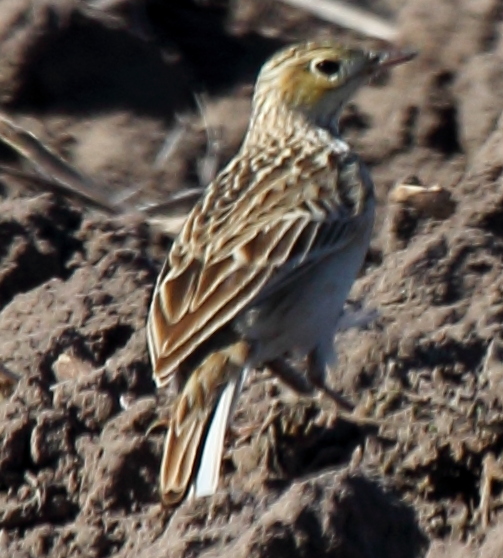
Western Yellow Wagtail
Motacilla flava
Order: Passeriformes / Family: Motacillidae

Wikimedia Commons
About the Western Yellow Wagtail
The Western Yellow Wagtail, scientifically known as Motacilla flava, is a small passerine bird renowned for its striking appearance and agile foraging habits. This species inhabits a range of open habitats across Europe and Asia, with a strong preference for wet meadows, agricultural fields, and riverbanks. The Western Yellow Wagtail is of significant ecological importance due to its role as an insectivore, helping control pest populations in agricultural areas.
In terms of distribution, the Western Yellow Wagtail is primarily a Eurasian species. It breeds across a broad swath of Europe, extending into parts of Asia, with populations reaching as far east as northwest China and Mongolia. During the non-breeding season, these birds undertake long migrations to sub-Saharan Africa, where they spend the winter months in warm climates. This migratory behavior underscores their adaptability and resilience in the face of environmental changes.
Ecologically, the Western Yellow Wagtail plays a crucial role in the ecosystems it inhabits. As a highly active insectivore, it feeds on a variety of insects, including beetles, flies, and caterpillars, thereby helping to maintain the balance of insect populations. It is particularly beneficial to farmers, as it aids in the natural control of agricultural pests. The Western Yellow Wagtail also contributes to the food web, serving as prey for larger birds of prey, thus supporting biodiversity.
During the breeding season, which typically spans from April to August, Western Yellow Wagtails exhibit strong territorial behavior. Males are known for their vibrant displays and vocalizations, which serve to attract mates and establish territory boundaries. This period is characterized by increased activity and visibility, as the birds engage in courtship and nesting activities. Overall, the Western Yellow Wagtail is a vital component of the habitats it occupies, reflecting the intricate interconnectedness of avian and terrestrial ecosystems.
The Western Yellow Wagtail belongs to the family Motacillidae, within the order Passeriformes. These birds typically live typically 3-5 years, with a maximum recorded of 10 years..
How to Identify a Western Yellow Wagtail
The Western Yellow Wagtail is a small bird, measuring approximately 15-16 centimeters in length with a wingspan of 22-28 centimeters. Its striking yellow plumage is the most distinctive field mark, with the intensity of the yellow varying among the different subspecies. Adult males typically have a bright yellow underside, an olive-green back, and a gray head with a subtle eye stripe. Females and juveniles, while similar in appearance, often exhibit duller plumage with less pronounced gray on the head.
Juvenile Western Yellow Wagtails can be distinguished by their paler yellow underparts and more pronounced streaking on the upperparts. This streaked appearance can sometimes lead to confusion with similar species, such as the Citrine Wagtail, which has a more yellowish head and lacks the olive-green back.
The flight silhouette of the Western Yellow Wagtail is characterized by its agile and buoyant flight pattern, often accompanied by a distinctive undulating motion. When perching, these birds are frequently observed bobbing their tails, a behavior that is a hallmark of the wagtail family. This tail-bobbing behavior, combined with their vivid coloration, makes them relatively easy to identify in the field.
Having trouble telling birds apart? Upload a photo to our bird identification tool for an instant species match.
Western Yellow Wagtail Habitat and Range
Preferred Habitat
The Western Yellow Wagtail thrives in a variety of open habitats, predominantly favoring wet meadows, marshes, and agricultural fields. These birds are commonly found at low elevations, although they may also inhabit higher altitudes during migration. Their presence is particularly notable in areas with abundant insect life, which provides a rich food source.
During the breeding season, Western Yellow Wagtails often select habitats with proximity to water, as these locations support diverse insect populations. In contrast, during migration and wintering, they adapt to a broader range of environments, including savannas and grasslands in sub-Saharan Africa. While they are not typically urban birds, they can occasionally be found in urban parks and gardens, especially when these areas offer suitable foraging opportunities.
Geographic Range
The breeding range of the Western Yellow Wagtail extends across much of Europe and into parts of Asia, with significant populations found in countries such as the United Kingdom, France, Germany, and Russia. In Asia, they breed as far east as Mongolia and northern China. These birds are highly migratory, undertaking long journeys to their wintering grounds in sub-Saharan Africa.
During migration, Western Yellow Wagtails travel through a variety of corridors, including the Mediterranean basin, the Middle East, and parts of Central Asia. They are commonly observed in dense flocks, which can include hundreds of individuals moving together across vast distances.
In their wintering range, Western Yellow Wagtails are widely distributed across sub-Saharan Africa, from Senegal and Nigeria in the west to Ethiopia and Kenya in the east. This extensive range underscores their adaptability and the importance of conserving diverse habitats along their migratory routes.
Want to know which birds visit your area? Browse our backyard birds by location guides for region-specific species lists.
What Does the Western Yellow Wagtail Eat?
The diet of the Western Yellow Wagtail primarily consists of insects and other small invertebrates. They exhibit a strong preference for terrestrial insects such as beetles, flies, and caterpillars, which they actively pursue by foraging on the ground. During the breeding season, when insect abundance peaks, they feed more intensively on these prey items to support the high energy demands of nesting and rearing young.
In addition to terrestrial insects, Western Yellow Wagtails may also consume aquatic insects, particularly in wetland habitats where such prey is abundant. Their foraging technique involves quick, darting movements, often accompanied by tail-bobbing, which assists in flushing out hidden prey.
Seasonal diet changes are influenced by prey availability, with a shift to more diverse food sources during migration and wintering. In these periods, they may consume small seeds and berries to supplement their insect diet. This dietary flexibility allows them to thrive in various environments throughout the year.
Western Yellow Wagtail Behavior and Social Structure
Western Yellow Wagtails exhibit a range of fascinating behaviors that are integral to their survival and reproductive success. Socially, they are often seen in loose flocks outside of the breeding season, which can include mixed-species gatherings with other wagtail and pipit species. This flocking behavior provides increased vigilance against predators and enhances foraging efficiency.
During the breeding season, Western Yellow Wagtails are territorial, with males establishing and defending territories through vocalizations and visual displays. Courtship involves elaborate aerial displays, where males showcase their agility and vibrant plumage to attract females. These displays are accompanied by a series of calls that serve to reinforce pair bonds and deter rival males.
In response to predators, Western Yellow Wagtails rely on their agility and speed to evade capture. They often take flight at the first sign of danger, using their undulating flight pattern to escape. Daily activity patterns typically involve foraging during the cooler parts of the day, with peak activity occurring in the early morning and late afternoon. During the hottest parts of the day, they may seek shade or rest in taller vegetation.
Western Yellow Wagtail Nesting and Reproduction
The nesting habits of the Western Yellow Wagtail are characterized by their preference for ground-level sites, often in open fields or meadows. Nests are typically constructed in a shallow depression on the ground, concealed by grasses or low vegetation to provide protection from predators.
Nesting materials include a variety of natural fibers, such as grass stems, rootlets, and moss, which are woven into a cup-shaped structure. The female primarily constructs the nest, although the male may assist in gathering materials. The clutch size ranges from four to six eggs, with incubation lasting approximately 11 to 13 days.
Both parents share in the responsibility of feeding and caring for the young, which fledge about 12 to 14 days after hatching. The Western Yellow Wagtail may raise two or even three broods per year, depending on environmental conditions and food availability. Parental roles are well-defined, with the male often taking on more territorial defense and the female focusing on nurturing the offspring.
Western Yellow Wagtail Sounds and Vocalizations
The primary song of the Western Yellow Wagtail is a series of cheerful, high-pitched notes, often described as a rapid 'tsree-tsree-tsree.' This rhythmic and melodic song is typically delivered from a perch or during flight displays, serving to establish territory and attract mates.
In addition to their song, Western Yellow Wagtails produce a variety of call notes, including a distinctive 'chit' or 'tsip' sound, used for communication with other wagtails or to signal alarm. These calls are especially prominent during the breeding season, when vocal interactions are frequent.
The alarm call is a sharp, repetitive 'zreep,' which alerts others to potential threats. During the dawn chorus, males are particularly vocal, contributing to the vibrant soundscape of their habitats. Their vocalizations, while not as complex as some songbirds, play a crucial role in their social and reproductive behaviors.
Interesting Facts About the Western Yellow Wagtail
- 1The Western Yellow Wagtail is known to migrate over 5,000 kilometers from its breeding grounds to its wintering sites in Africa.
- 2There are numerous subspecies of the Western Yellow Wagtail, each with slight variations in plumage and coloration.
- 3Western Yellow Wagtails are often found in association with grazing livestock, as the animals help stir up insects that the birds feed on.
- 4Despite their small size, Western Yellow Wagtails are highly territorial during the breeding season, defending their area vigorously.
- 5These wagtails can adapt to a wide range of environments, from wetlands to grasslands, showcasing their ecological versatility.
- 6Western Yellow Wagtails have a unique tail-bobbing behavior that is believed to help them spot and flush out prey.
- 7During migration, Western Yellow Wagtails can form large flocks, sometimes numbering in the hundreds, providing a spectacular sight.
Western Yellow Wagtail Conservation Status
The Western Yellow Wagtail is currently listed as Least Concern by the IUCN, with populations generally stable across much of its range. However, certain regional populations have experienced declines due to habitat loss and agricultural intensification, which reduce available nesting and foraging sites. Primary threats include changes in agricultural practices, such as increased pesticide use, which can reduce insect availability, and the conversion of natural habitats into urban or industrial areas. Conservation efforts focus on protecting key habitats, promoting sustainable agricultural practices, and monitoring population trends to ensure long-term viability. Historically, the Western Yellow Wagtail has maintained a relatively stable population, thanks to its adaptability and wide distribution. Continued conservation efforts are essential to mitigate potential future threats and preserve the ecological role of this vibrant species.