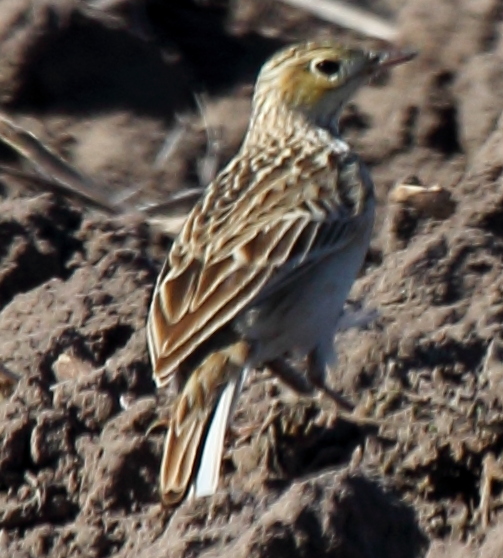
White-browed Wagtail
Motacilla maderaspatensis
Order: Passeriformes / Family: Motacillidae

Wikimedia Commons
About the White-browed Wagtail
The White-browed Wagtail, scientifically named Motacilla maderaspatensis, is a conspicuous and widely recognized member of the Motacillidae family. Found predominantly in the Indian subcontinent, this bird is a familiar sight near water bodies in both urban and rural environments. The species exhibits a remarkable adaptability to various habitats, from city parks and gardens to rural riversides and lakeshores. Its presence is often indicated by its characteristic tail-wagging motion, a behavior that has intrigued ornithologists and bird enthusiasts alike. Ecologically, the White-browed Wagtail plays a significant role as an insectivorous bird, helping to control insect populations, particularly in areas close to water. The bird's diet mainly consists of aquatic and terrestrial insects, which it adeptly catches using its agile movements. Its foraging behavior is aided by its slender build and nimble legs, allowing it to navigate through different terrains with ease. During breeding season, the White-browed Wagtail becomes a lively participant in the ecosystem, engaging in intricate courtship displays and territorial behaviors. Its breeding activities are closely tied to the monsoon season in regions like India, where water levels rise, providing a rich supply of food for raising young. Throughout the year, the White-browed Wagtail remains an emblematic presence in its native regions, contributing to the local biodiversity and offering bird watchers a delightful subject for observation. As a native species, its distribution highlights the biodiversity of the Indian subcontinent, reflecting the diverse habitats that characterize this part of the world. Its adaptability and resilience make it a species of interest for conservationists, as it thrives in areas where human activity and natural habitats intersect.
The White-browed Wagtail belongs to the family Motacillidae, within the order Passeriformes. These birds typically live 6-8 years with a maximum recorded of 12 years.
How to Identify a White-browed Wagtail
The White-browed Wagtail is a medium-sized bird, measuring around 21 centimeters in length. Its most distinctive feature is the bold white stripe above its eye, known as the eyebrow, which contrasts sharply with its otherwise black and white plumage. Adult birds display a striking black back, head, and throat, while their underparts are predominantly white. The long, black tail, edged with white, is constantly in motion, wagging up and down-a characteristic trait of wagtails. Juvenile White-browed Wagtails have a duller appearance, with a more muted grayish-brown plumage as opposed to the stark black of the adults. They still exhibit the signature white eyebrow, though it may be less pronounced in younger birds. Males and females appear similar, but closer observation might reveal slightly brighter plumage in males, particularly during the breeding season. This species can be confused with other wagtails, such as the Grey Wagtail or the Pied Wagtail, but it is distinct in its larger size and the absence of yellow tones. In flight, the White-browed Wagtail exhibits a graceful silhouette, with its long tail and wings creating an elegant profile. When perched, it typically favors exposed spots like rocks or posts near water, offering clear views of its striking coloration.
Having trouble telling birds apart? Upload a photo to our bird identification tool for an instant species match.
White-browed Wagtail Habitat and Range
Preferred Habitat
The White-browed Wagtail primarily inhabits freshwater environments, such as rivers, lakes, and ponds. It is often seen in open areas where water is present, taking advantage of the rich foraging opportunities these habitats provide. In the Indian subcontinent, it can be found from the lowlands to elevations of up to 2,000 meters in the Himalayan foothills. Unlike many birds that prefer densely wooded areas, the White-browed Wagtail thrives in habitats with less vegetation, making it a common sight in urban areas where parks and gardens intersect with water features. Its adaptability allows it to occupy both rural and urban landscapes, and it can even be found in agricultural fields where irrigation creates suitable conditions. Seasonal shifts in habitat are minimal for this species, as it largely remains in its chosen territories year-round, provided that water sources are available. The bird's preference for semi-open habitats makes it an important presence in many human-modified landscapes, where it contributes to the ecological balance.
Geographic Range
The White-browed Wagtail is native to the Indian subcontinent, with its range extending across India, Bangladesh, Pakistan, Nepal, and Sri Lanka. It is a resident species, meaning it does not undertake significant migratory movements and can be found in its range throughout the year. This bird favors areas with abundant water, making it a reliable presence along rivers and lakes in both rural and urban settings. While it remains widespread across its range, certain areas such as the Ganges River basin in India are noted for particularly high population densities. These hotspots provide ideal conditions for the White-browed Wagtail, with ample food resources and suitable nesting sites. As a non-migratory species, its movements are generally limited to local dispersals, where individuals may shift slightly in response to seasonal changes in water availability or food supply. Overall, the White-browed Wagtail's range highlights its adaptability and resilience in a variety of environments within the Indian subcontinent.
Want to know which birds visit your area? Browse our backyard birds by location guides for region-specific species lists.
What Does the White-browed Wagtail Eat?
The diet of the White-browed Wagtail predominantly consists of insects, with a preference for those found near water. Aquatic insects such as mayflies, dragonflies, and caddisflies form a substantial part of its diet, particularly during the breeding season when insect abundance is high. Terrestrial insects, including ants, beetles, and grasshoppers, also feature prominently in its diet. The White-browed Wagtail employs an active foraging technique, often seen hopping along the ground or near the water's edge, capturing insects with precision. This bird's foraging is a diurnal activity, largely concentrated during the day when insects are most active. Seasonal variations in diet are influenced by changes in insect availability, with a shift to different prey types as conditions dictate. The bird's slender bill is well-suited for picking insects from the ground, while its agile movements allow it to pursue flying insects with ease. This dietary adaptability ensures that the White-browed Wagtail remains a successful forager across various conditions throughout the year.
White-browed Wagtail Behavior and Social Structure
The White-browed Wagtail displays a range of intriguing behaviors, many of which are associated with its social structure and territoriality. These birds are typically observed alone or in pairs, particularly during the breeding season when they exhibit strong territorial instincts. Males engage in elaborate courtship displays, involving aerial chases and calls, to attract females and establish dominance over their chosen territory. The White-browed Wagtail is known for its characteristic tail-wagging behavior, which is thought to play a role in communication, possibly signaling territory ownership or alertness to potential threats. Outside of the breeding season, these wagtails may gather in small flocks, especially around abundant food sources or communal roosting sites. Their response to predators involves quick, agile flight and loud calls to alert others of the danger. Daily activities are largely diurnal, with peak activity occurring in the early morning and late afternoon, aligning with insect activity levels. Throughout the day, they can be seen foraging along water edges or resting in open, sunlit areas.
White-browed Wagtail Nesting and Reproduction
The nesting habits of the White-browed Wagtail are closely tied to the presence of water, with nests typically located near rivers, lakes, or ponds. These birds construct cup-shaped nests using a variety of materials such as grass, twigs, and mud, which they skillfully weave together to create a secure structure. Nests are often built on ledges, under bridges, or in crevices, providing some protection from predators and environmental elements. The typical clutch size ranges from three to five eggs, with both parents sharing incubation duties over a period of 12 to 14 days. Once hatched, the chicks are cared for by both parents, who diligently provide food and protection until the young are ready to fledge, usually around 14 to 16 days after hatching. The White-browed Wagtail may raise two broods per year, depending on environmental conditions and food availability. Parental investment is significant, with both male and female participating equally in the raising of their young.
White-browed Wagtail Sounds and Vocalizations
The White-browed Wagtail is known for its clear, melodious song, which consists of a series of sweet, repetitive chirps and trills. This song is most often heard during the breeding season, as males use it to attract mates and establish territories. In addition to its primary song, the bird produces a variety of call notes, including sharp, metallic 'chik' sounds used for communication between individuals. Alarm calls are louder and more urgent, serving to warn other birds of potential threats. The dawn chorus of the White-browed Wagtail is a delightful cacophony, with birds joining others in the vicinity to announce their presence as day breaks. Compared to other wagtails, the White-browed Wagtail's vocalizations are more musical and varied, adding a charming auditory dimension to its presence near water bodies.
Interesting Facts About the White-browed Wagtail
- 1The White-browed Wagtail is the largest species of wagtail, with a length of up to 21 centimeters.
- 2It is known for its striking black and white plumage, which contrasts with other more colorful wagtail species.
- 3The bird's distinctive tail-wagging behavior is thought to help flush insects from hiding, making them easier to catch.
- 4White-browed Wagtails often build their nests under human structures, like bridges, benefiting from added protection.
- 5Despite being a non-migratory species, the White-browed Wagtail can travel locally in search of food or nesting sites.
- 6This wagtail's song is one of the most melodious among its relatives, often described as sweet and musical.
- 7The presence of a White-browed Wagtail often indicates a healthy, insect-rich environment, underscoring its ecological importance.
White-browed Wagtail Conservation Status
The White-browed Wagtail is currently listed as Least Concern on the IUCN Red List, with a stable population trend. This bird has shown resilience in the face of habitat changes, largely due to its adaptability to both urban and rural environments. Despite the pressures of urbanization and habitat degradation, the species thrives in areas where water bodies remain intact. Conservation efforts in the region focus on preserving wetlands and water quality, which are critical to the wagtail's habitat. Historically, the population has remained robust, although localized declines can occur due to pollution or significant habitat alteration. Continued monitoring and habitat protection are essential to ensure the long-term stability of the White-browed Wagtail population.