
White-eared Barbet
Stactolaema leucotis
Order: Piciformes / Family: Lybiidae

Wikimedia Commons
About the White-eared Barbet
The White-eared Barbet (Stactolaema leucotis) is an avian species that plays a crucial role in the biodiversity of East African forests. This bird is a member of the Lybiidae family and is primarily found in the highland forests of Kenya, Tanzania, and Uganda. Its presence in these regions is not just a visual delight but also an ecological necessity, as it helps in seed dispersal and the maintenance of forest dynamics. The White-eared Barbet is often observed in montane forests, where it inhabits altitudes ranging from 1,200 to 2,400 meters. These elevations provide the barbet with a unique forest ecosystem rich in fruiting trees, which are essential for its diet.
In the ecological web, White-eared Barbets act as effective seed dispersers, aiding in forest regeneration. They consume a variety of fruits and, through their droppings, contribute to the spread of seeds across the forest floor. This interaction is vital for maintaining the genetic diversity of forest plants. Additionally, they serve as prey for larger birds of prey, thus forming a link in the food chain. The White-eared Barbet's year-round presence in these regions also supports the complex interplay of seasonal fruiting cycles and bird migration patterns.
Seasonally, the White-eared Barbet's behavior reflects the changing availability of resources. During the rainy season, when fruit is abundant, these birds are more active and can be seen foraging in mixed-species flocks. This period also aligns with their breeding season, suggesting a link between food availability and reproductive activity. Conversely, during the dry season, their activity may decrease slightly as they adapt to the reduced availability of food. Their adaptability to seasonal changes highlights their resilience and importance in the ecosystem.
The White-eared Barbet belongs to the family Lybiidae, within the order Piciformes. These birds typically live typically 6-8 years, with some individuals living up to 10 years..
How to Identify a White-eared Barbet
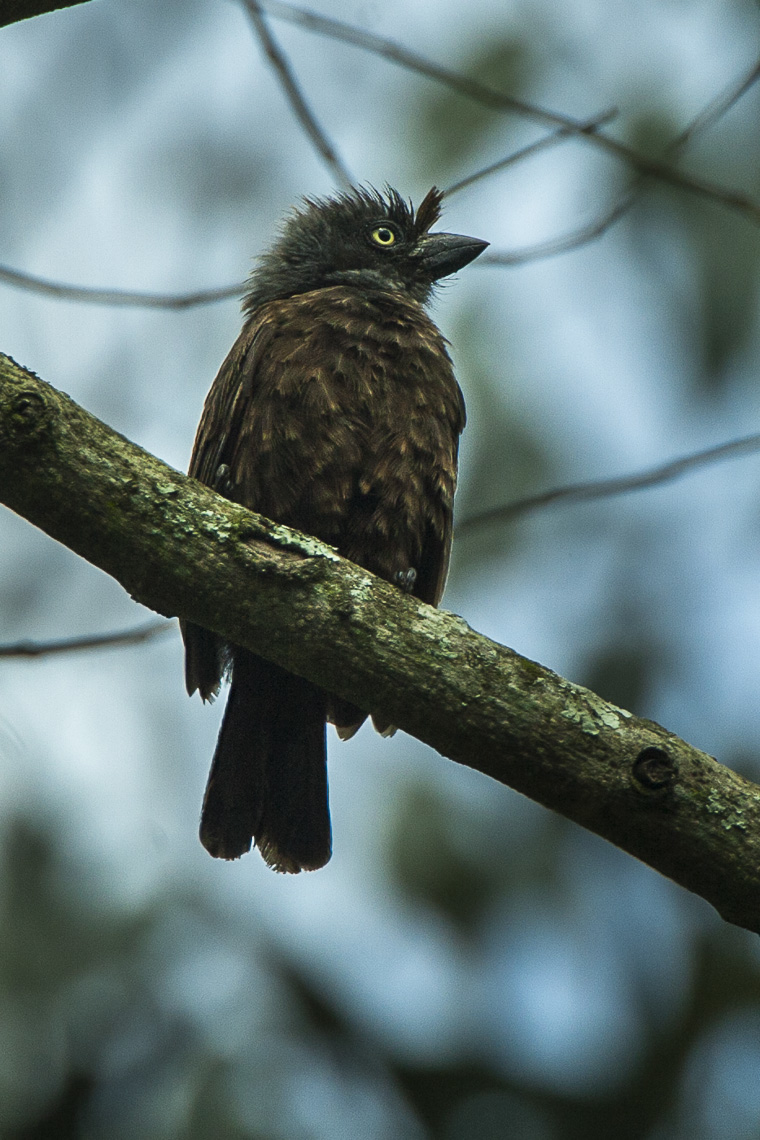
The White-eared Barbet is a medium-sized bird characterized by its robust body and short tail. Its most distinguishing feature is the prominent white patch surrounding its ear coverts, providing a stark contrast against its mostly green plumage. The bird's back and wings are a rich olive-green, while its underparts are paler with a slight yellowish tinge. Adults also display a distinct black crown and nape, adding to its striking appearance.
Juvenile White-eared Barbets can be identified by their duller plumage, lacking the pronounced white ear patches of adults. Instead, they exhibit more muted tones, which gradually develop into the adult coloration as they mature. There is little sexual dimorphism in this species, making it difficult to differentiate between males and females based solely on plumage.
In flight, the White-eared Barbet's silhouette is compact, with a rapid wingbeat typical of barbets. When perched, it maintains an upright posture, often seen on branches within the forest canopy. Confusion with similar species, such as the Green Barbet, can occur; however, the White-eared Barbet's unique ear patch and vocalizations help in correct identification.
Having trouble telling birds apart? Upload a photo to our bird identification tool for an instant species match.
White-eared Barbet Habitat and Range
Preferred Habitat
The White-eared Barbet predominantly inhabits montane and submontane forests, thriving at elevations between 1,200 and 2,400 meters. These forests, rich in fruiting trees, provide the necessary resources for their diet. Within these habitats, they are most commonly found in the upper canopy, where they forage for fruits.
While they are primarily forest dwellers, White-eared Barbets can occasionally be spotted in adjacent disturbed areas, such as forest edges and clearings, particularly where fruiting trees are present. Unlike some other barbet species, they tend to avoid highly urbanized areas, though they may venture into rural gardens that mimic their natural habitat.
The White-eared Barbet's habitat preferences remain relatively stable throughout the year, with no significant seasonal shifts. However, local movements may occur in response to changes in fruit availability, especially during the dry season when resources in primary forests become scarce.
Geographic Range
The White-eared Barbet's range extends across several East African countries, with a strong presence in Kenya, Tanzania, and Uganda. Within these nations, their distribution is largely confined to forested regions, particularly in the highlands where suitable habitats are abundant.
In Kenya, they are commonly found in the Aberdare Range and the Mount Kenya forests. In Tanzania, the Eastern Arc Mountains and the Uluguru Mountains provide ideal environments for these birds. Uganda hosts populations in the Rwenzori Mountains and Bwindi Impenetrable National Park, where dense forest cover supports their lifestyle.
The White-eared Barbet is a non-migratory species, maintaining its range year-round. While some local dispersal may occur in search of food, particularly in response to seasonal variations in fruiting, their overall range remains consistent. Population densities are generally higher in areas with extensive forest cover, where their ecological needs are best met.
Want to know which birds visit your area? Browse our backyard birds by location guides for region-specific species lists.
What Does the White-eared Barbet Eat?
The White-eared Barbet primarily feeds on a diet of fruits and berries, which are abundant in their forest habitats. They show a preference for figs, which are a staple in their diet, along with other fruiting trees like guava and mulberry. This frugivorous diet is complemented occasionally by insects, particularly during the breeding season when protein demands increase.
Seasonal changes can affect the barbet's diet, with a heavier reliance on insects during periods when fruit is less available. Their foraging technique involves moving methodically through the tree canopy, using their strong beaks to pluck fruits, which they often swallow whole. This behavior not only satisfies their nutritional needs but also aids in seed dispersal.
White-eared Barbets typically forage during the cooler parts of the day, such as early morning and late afternoon, to avoid the midday heat. Their ability to exploit different food sources allows them to thrive in diverse forest environments, making them integral to the ecological balance of their habitats.
White-eared Barbet Behavior and Social Structure
White-eared Barbets exhibit a fascinating array of behaviors that reflect their adaptability and social nature. These birds are often seen in pairs or small family groups, maintaining close-knit social structures which aid in foraging and territory defense.
Territorial behavior is pronounced, with pairs vigorously defending their feeding and nesting areas against intruders. Vocalizations play a significant role in these interactions, as their calls are used to communicate presence and assert dominance. During the breeding season, courtship displays become more evident. Males may perform aerial displays and present food items to females as part of their mating ritual.
Their daily activity patterns demonstrate adaptability to environmental conditions. White-eared Barbets are diurnal, with peak activity during the cooler parts of the day. When faced with potential predators, they rely on their agility and flight capabilities to escape, often seeking refuge in dense foliage. Despite their social tendencies, they do not form large flocks, preferring the company of a few individuals within their territory.
White-eared Barbet Nesting and Reproduction
Nesting for the White-eared Barbet is a process that underscores their resourcefulness and adaptability. They are cavity nesters, often utilizing natural tree cavities or old woodpecker holes to lay their eggs. When suitable cavities are scarce, they are capable of excavating their own nests in softwood trees.
The typical clutch size ranges from two to four eggs, and both parents share responsibilities in incubating the eggs. The incubation period lasts approximately 14 to 18 days, after which the chicks hatch. Both male and female barbets play active roles in feeding and caring for the young, ensuring a balanced distribution of parental duties.
Fledging occurs about 30 to 35 days after hatching, with young birds remaining under parental care for a short period post-fledging. The species usually raises one to two broods per year, depending on environmental conditions and resource availability. Nesting success is closely linked to the availability of nesting sites and the abundance of food during the breeding season.
White-eared Barbet Sounds and Vocalizations
The White-eared Barbet is notably vocal, with a repertoire of sounds that includes their primary song, a series of deep, resonant notes delivered in a rhythmic pattern. This song is often likened to the sound of a distant drum, creating a soothing and persistent backdrop in their forested habitats.
Apart from their song, they produce a variety of call notes used for communication among individuals, especially during territorial disputes or when alerting to the presence of predators. These calls are typically sharp and short, differing from the more melodic songs used in courtship.
During the dawn chorus, White-eared Barbets are among the first to vocalize, marking their presence within the forest canopy. Their calls are integral to maintaining territory boundaries and establishing social bonds within their groups.
Interesting Facts About the White-eared Barbet
- 1White-eared Barbets can consume fruits nearly 1.5 times the size of their beak, showcasing their strong feeding adaptations.
- 2Despite their small size, White-eared Barbets play a vital role in seed dispersal, influencing forest composition and diversity.
- 3The species' vocalizations can be heard over 500 meters away, making them one of the more audible forest birds.
- 4White-eared Barbets have a symbiotic relationship with fruiting trees, which rely on them for seed dispersal and regeneration.
- 5Their nesting cavities are often reused by other bird species, contributing to the ecosystem's nesting site availability.
White-eared Barbet Conservation Status
Currently classified as Least Concern by the IUCN, the White-eared Barbet enjoys a stable population across its range. However, ongoing threats such as habitat destruction and deforestation pose significant risks to their habitats. The conversion of forest lands to agriculture and urban development continues to challenge their existence. Conservation efforts focus on protecting forest habitats and promoting sustainable land use practices. In regions like the Eastern Arc Mountains, conservation initiatives aim to preserve biodiversity hotspots that support the White-eared Barbet and other endemic species. Historical population trends indicate that while local declines have occurred due to habitat loss, the overall population remains relatively stable. Increased awareness and targeted conservation measures are essential to ensure that habitats remain intact and continue to support healthy barbet populations.
Other Lybiidae Species


Birds Similar to the White-eared Barbet
These species are often confused with the White-eared Barbet due to similar appearance or overlapping range.

