
White-naped Xenopsaris
Xenopsaris albinucha
Order: Passeriformes / Family: Cotingidae

Wikimedia Commons
About the White-naped Xenopsaris
The White-naped Xenopsaris (Xenopsaris albinucha) is a small, subtly colored bird belonging to the family Cotingidae. This species is endemic to South America, where it frequents open woodlands, savannas, and semi-arid regions. Its geographical distribution spans from eastern Bolivia and southern Brazil to northern Argentina, including parts of Paraguay and Uruguay. The bird's presence in these areas highlights its adaptation to diverse environmental conditions. White-naped Xenopsaris play a significant role in their ecosystem by contributing to insect population control, primarily feeding on small invertebrates. The species exhibits seasonal behaviors, notably during breeding seasons, when it becomes more vocal and visible. During winter months, they may shift habitats, searching for warmer areas that offer abundant food sources. Ecologically, this bird contributes not only as a predator of insects but also potentially aids in seed dispersal through its varied diet. The subtle beauty of the White-naped Xenopsaris reflects its understated ecological importance in maintaining the balance of its natural habitats.
The White-naped Xenopsaris belongs to the family Cotingidae, within the order Passeriformes. These birds typically live average 5-7 years with a maximum recorded of 10 years..
How to Identify a White-naped Xenopsaris
The White-naped Xenopsaris is notable for its distinct white nape, which contrasts sharply with its otherwise muted plumage. Adults exhibit a grayish-brown back, with a paler underbelly that ranges from buff to white. The head features a striking white patch, giving the bird its name. Juveniles resemble adults but may display a slightly duller plumage. Males and females are similar in appearance, though some subtle differences might be noted in the intensity of the nape coloration during the breeding season. In flight, the Xenopsaris presents a slender silhouette with rapid wing beats. Its perching posture is upright, often seen on exposed branches, making it easier to spot. While similar in size and habitat preference to other small passerines, the white nape serves as a reliable field mark to distinguish it from potential lookalikes.
Having trouble telling birds apart? Upload a photo to our bird identification tool for an instant species match.
White-naped Xenopsaris Habitat and Range
Preferred Habitat
White-naped Xenopsaris favor open woodlands and savanna regions, thriving in habitats where scattered trees and shrubs provide ample perching opportunities. They are often found at elevations ranging from sea level to about 1,500 meters. These birds prefer semi-arid areas but can adapt to more humid locales during certain times of the year. Seasonal movements may lead them to slightly different habitats as they track insect prey and optimal conditions. Although primarily occupying rural settings, they occasionally venture into urban edges, especially when natural habitats are nearby.
Geographic Range
The breeding range of the White-naped Xenopsaris extends across eastern Bolivia, southern Brazil, and into Paraguay, Uruguay, and northern Argentina. The species is non-migratory but may undertake short movements in response to climate and food availability, making it somewhat nomadic within its range. It is more densely populated in regions where open and semi-arid habitats are prevalent, such as the Gran Chaco and parts of the Cerrado biome. While not known for long-distance migration, their distribution suggests adaptability to a variety of local conditions.
Want to know which birds visit your area? Browse our backyard birds by location guides for region-specific species lists.
What Does the White-naped Xenopsaris Eat?
The diet of the White-naped Xenopsaris primarily consists of insects, which they capture through agile foraging maneuvers. They are adept at gleaning prey from leaves and branches, often observed sallying out from perches to snatch flying insects mid-air. Seasonal variations in prey availability may influence dietary shifts, potentially including small fruits and seeds during scarce periods. Their foraging typically occurs throughout the day, with peak activity in the early morning and late afternoon when insect activity is highest.
White-naped Xenopsaris Behavior and Social Structure
In terms of social structure, White-naped Xenopsaris are generally solitary or found in pairs, especially during the breeding season. They exhibit territorial behaviors, with males often singing to establish and defend their territory. Courtship involves a series of vocalizations and displays, with males showcasing their white nape prominently. While not known for forming large flocks, they occasionally join mixed-species foraging groups. When faced with predators, they rely on their agile flight and cryptic plumage to evade capture. Their daily routine includes periods of active foraging interspersed with rest during the hottest parts of the day.
White-naped Xenopsaris Nesting and Reproduction
The White-naped Xenopsaris constructs its nest as a small, cup-shaped structure made from twigs, grasses, and other plant materials. Nests are typically placed in the fork of a tree branch, usually at a moderate height to avoid ground predators. The clutch size ranges from two to three eggs, with the incubation period lasting approximately two weeks. Both parents participate in feeding the chicks, which fledge around two weeks after hatching. Generally, one to two broods are produced per year, depending on environmental conditions.
White-naped Xenopsaris Sounds and Vocalizations
The primary song of the White-naped Xenopsaris is a series of soft, melodious whistles that carry a rhythmic quality. These tunes are often repeated and serve as both a territorial and mating call. Their calls include sharper, more abrupt notes used as alarm signals when predators are near. White-naped Xenopsaris participate in the dawn chorus, their songs blending harmoniously with other avian species, creating a vibrant soundscape in their habitat.
Interesting Facts About the White-naped Xenopsaris
- 1The White-naped Xenopsaris is one of the few species in the Cotingidae family that prefers open woodlands over dense forests.
- 2Despite their small size, White-naped Xenopsaris can travel considerable distances to find food, showcasing their adaptability.
- 3Their subtle plumage serves as effective camouflage against predators in the semi-arid environments they inhabit.
- 4White-naped Xenopsaris have been observed using artificial structures as perches, indicating a level of adaptability to human presence.
- 5Their presence in mixed-species flocks suggests they play a social role in the broader avian community of their region.
- 6The species' name 'xenopsaris' derives from the Greek words for 'stranger' and 'sparrow,' hinting at its unique niche.
- 7Although their song is not as loud as other cotingas, it remains a crucial tool for territory establishment and mate attraction.
White-naped Xenopsaris Conservation Status
Currently, the White-naped Xenopsaris is listed as a species of Least Concern by the IUCN, with stable population trends. However, habitat destruction due to agricultural expansion and deforestation poses significant threats. Conservation efforts focus on habitat preservation within their range, particularly in regions with rapid land-use changes. Historically, populations have fluctuated with habitat availability, underscoring the need for continued monitoring and conservation initiatives.
Other Cotingidae Species


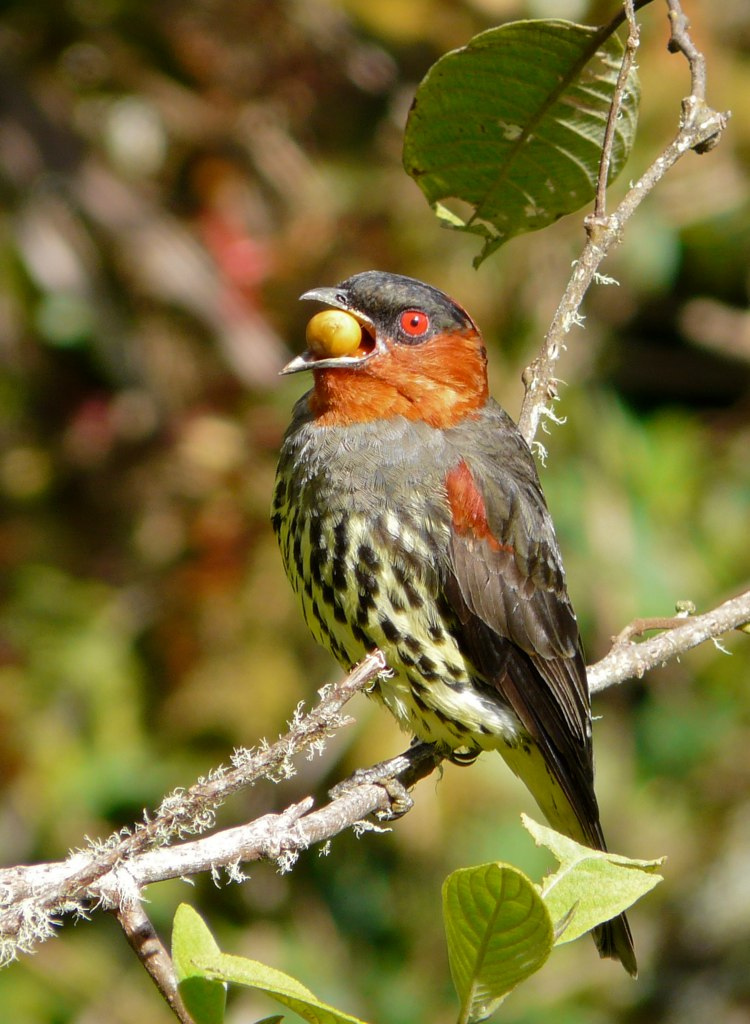

Birds Similar to the White-naped Xenopsaris
These species are often confused with the White-naped Xenopsaris due to similar appearance or overlapping range.

