
White-throated Laughingthrush
Garrulax albogularis
Order: Passeriformes / Family: Leiothrichidae

Wikimedia Commons
About the White-throated Laughingthrush
The White-throated Laughingthrush (Garrulax albogularis) is a captivating bird species belonging to the family Leiothrichidae. It is primarily found in the lush, temperate forests of the Himalayan region, extending through countries such as India, Nepal, Bhutan, and parts of China. This bird is particularly abundant in subtropical or tropical moist montane forests, where its energetic and boisterous behavior adds vibrancy to the ecosystem. The White-throated Laughingthrush plays a crucial role in seed dispersal, as it feeds on various fruits and berries, thus contributing to forest regeneration.
The bird exhibits a strong affinity for social living, often seen in large flocks ranging from 10 to 40 individuals. These flocks can be quite vocal, and their coordinated movements through the forest understory are a testament to their complex social structures. Seasonal behaviors of the White-throated Laughingthrush include altitudinal migration, where they descend to lower elevations during the colder months. This seasonal movement is crucial for their survival as it allows them to access food resources that may become scarce at higher elevations during winter.
Ecologically, the White-throated Laughingthrush is significant as a bioindicator species. Its presence often signifies a healthy forest environment, as it relies on a diverse array of plant and insect life for sustenance. Conservation efforts focusing on preserving their natural habitats indirectly support a wide range of other species within the same ecosystem. The bird's melodious calls contribute to the acoustic landscape of the forest, enhancing the auditory experience of these rich ecosystems.
The White-throated Laughingthrush belongs to the family Leiothrichidae, within the order Passeriformes. These birds typically live average 8 years, with a max recorded at 12 years..
How to Identify a White-throated Laughingthrush
The White-throated Laughingthrush is a medium-sized songbird characterized by its striking white throat, which contrasts sharply with its dark brown upper parts and pale gray underparts. This distinctive feature makes it relatively easy to identify in the field. Adults typically have a length of about 26 to 28 cm, with a robust body and short, rounded wings. The tail is long and often held in a slightly cocked position when perching.
Juvenile White-throated Laughingthrushes resemble adults but may exhibit duller plumage and a less conspicuous white throat patch. Males and females are similar in appearance, with no significant sexual dimorphism in plumage or size, making it challenging to distinguish between the sexes through visual observation alone.
In flight, the White-throated Laughingthrush appears as a compact silhouette with rapid wingbeats and short glides. Its perching posture is upright, often seen in small groups, scanning the surroundings for food. While confusion with similar species is possible, the combination of its white throat and distinctive vocalizations typically aids in accurate identification.
Having trouble telling birds apart? Upload a photo to our bird identification tool for an instant species match.
White-throated Laughingthrush Habitat and Range
Preferred Habitat
The White-throated Laughingthrush inhabits a range of forested environments, predominantly those characterized by dense undergrowth and high humidity. It is often found in the temperate and subtropical forests of the Himalayan foothills, thriving at elevations between 1,200 and 3,500 meters. Within this range, the bird favors areas with abundant vegetation, including bamboo thickets and rhododendron forests.
Seasonal habitat shifts are notable in the White-throated Laughingthrush's life cycle. During winter, it descends to lower altitudes where the climate is milder and food availability is more consistent. While primarily a bird of rural and wild areas, it occasionally ventures into semi-urban regions, particularly in search of food. However, it remains largely absent from densely populated urban centers.
Geographic Range
The breeding range of the White-throated Laughingthrush spans the extensive Himalayan region. It is found from the eastern parts of Afghanistan, through the northern reaches of India, including Himachal Pradesh and Uttarakhand, extending into Nepal, Bhutan, and the southern parts of Tibet in China. In these regions, it occupies forested areas that provide ample cover and feeding opportunities.
The bird does not exhibit long-distance migratory behavior, but rather engages in altitudinal migration. During the colder months, populations may move to lower elevations within the same geographical regions to escape harsh weather conditions and find more abundant food sources. Population density is highest in undisturbed forest habitats where human encroachment is minimal, though it can also be found in secondary forests and larger gardens at lower elevations.
Want to know which birds visit your area? Browse our backyard birds by location guides for region-specific species lists.
What Does the White-throated Laughingthrush Eat?
The diet of the White-throated Laughingthrush is diverse, reflecting its adaptability and the seasonal availability of food. Primarily, it feeds on a mixture of fruits, berries, and insects, which it forages within the thick understory of its forest habitat. The bird shows a preference for soft fruits and berries, which provide essential nutrients and hydration.
Insect consumption increases during the breeding season, when protein demand is higher to support egg production and chick rearing. The White-throated Laughingthrush uses its bill to probe into leaf litter and bark crevices, capturing beetles, caterpillars, and other small arthropods. Its foraging technique involves both visual and auditory cues, facilitating efficient prey location.
Seasonal shifts in diet are evident, as the bird adjusts its feeding habits to the availability of different food sources throughout the year. During the winter, when insects become scarce, it relies more heavily on available fruits and seeds to sustain itself.
White-throated Laughingthrush Behavior and Social Structure
The White-throated Laughingthrush displays a highly sociable nature, often forming large, noisy flocks. These flocks, composed of family groups and unrelated individuals, communicate through an array of vocalizations. The bird's social structure is complex, and flock members engage in cooperative activities such as allopreening and group foraging.
Territorial behavior is less pronounced in this species compared to others, as it tends to roam widely in search of food. However, during the breeding season, pairs may exhibit some territoriality around nesting sites. Courtship displays include mutual preening and synchronized movements, which strengthen pair bonds.
The White-throated Laughingthrush is diurnal, with peak activity occurring during the early morning and late afternoon. It is vigilant against predators, relying on its acute vision and the protection offered by dense foliage. When threatened, the flock may produce alarm calls and engage in mobbing behavior to deter potential predators.
White-throated Laughingthrush Nesting and Reproduction
White-throated Laughingthrushes construct their nests in dense shrubs or low trees, typically at heights ranging from 1 to 5 meters above the ground. The nest is an open cup structure, meticulously woven from twigs, leaves, and grasses, providing both stability and camouflage.
A typical clutch consists of 2 to 4 eggs, which are pale blue with darker speckles. Both parents participate in incubation, which lasts approximately 13 to 15 days. After hatching, the chicks remain in the nest for another 12 to 15 days before fledging. Parental care is extensive, with both adults feeding the young and keeping the nest clean.
Usually, the pair raises one brood per breeding season, though conditions may permit a second brood if food resources are abundant. The choice of nesting site is crucial, as it must offer protection from predators and harsh weather.
White-throated Laughingthrush Sounds and Vocalizations
The primary song of the White-throated Laughingthrush is a melodious series of clear, whistled notes that can carry over considerable distances in its forest habitat. The rhythm is lively and the pitch varies, producing a complex and pleasing auditory experience. Call notes are shorter and more abrupt, often used for communication within the flock.
Alarm calls are harsh and more rapid, serving as a warning signal to flock members of potential threats. During the dawn chorus, the bird's vocalizations are particularly pronounced, contributing to the vibrant soundscape of the forest. The song's quality can be likened to a series of flute-like whistles, both soothing and evocative of its natural habitat.
Interesting Facts About the White-throated Laughingthrush
- 1The White-throated Laughingthrush can form flocks of up to 40 individuals, enhancing its foraging efficiency.
- 2This bird's melodious calls are not only a form of communication but also play a role in maintaining social bonds.
- 3Unlike many bird species, White-throated Laughingthrushes show little sexual dimorphism, making males and females difficult to tell apart.
- 4The species is known for performing 'anting,' a behavior where it uses ants to clean its feathers of parasites.
- 5White-throated Laughingthrushes are known to participate in mixed-species foraging flocks, reducing individual predation risk.
- 6The bird's range includes some of the most biodiverse regions on the planet, contributing to its ecological importance.
- 7Despite its sociable nature, the White-throated Laughingthrush maintains specific breeding territories during the nesting season.
White-throated Laughingthrush Conservation Status
According to the IUCN Red List, the White-throated Laughingthrush is currently classified as a species of Least Concern, with stable population trends. Despite this, ongoing habitat destruction, mainly through deforestation and land conversion for agriculture, poses potential threats to its habitat. Conservation efforts focus on preserving forest ecosystems and establishing protected areas to ensure the long-term survival of this species. Historical data suggests that while some regional populations have declined due to habitat loss, others have remained stable or even increased in forested areas with effective habitat management. Efforts such as community-based forest management and awareness programs are crucial in maintaining the balance between human activity and the conservation of this species' habitat.
Other Leiothrichidae Species

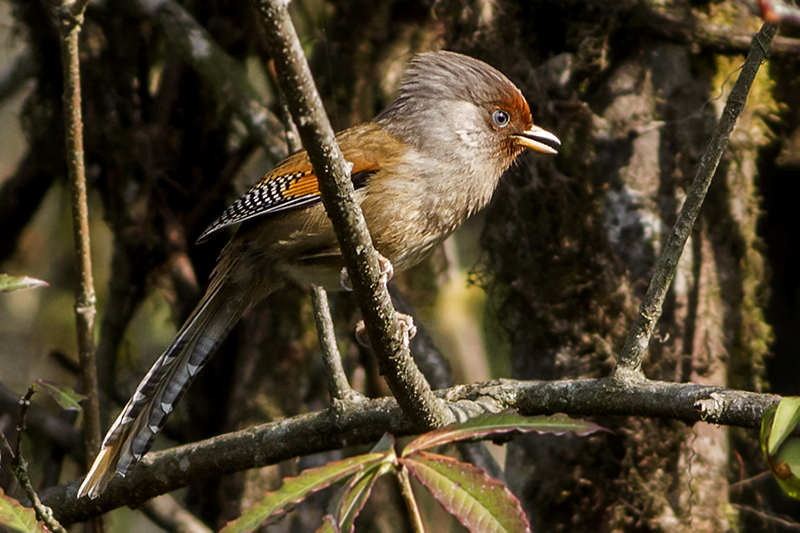

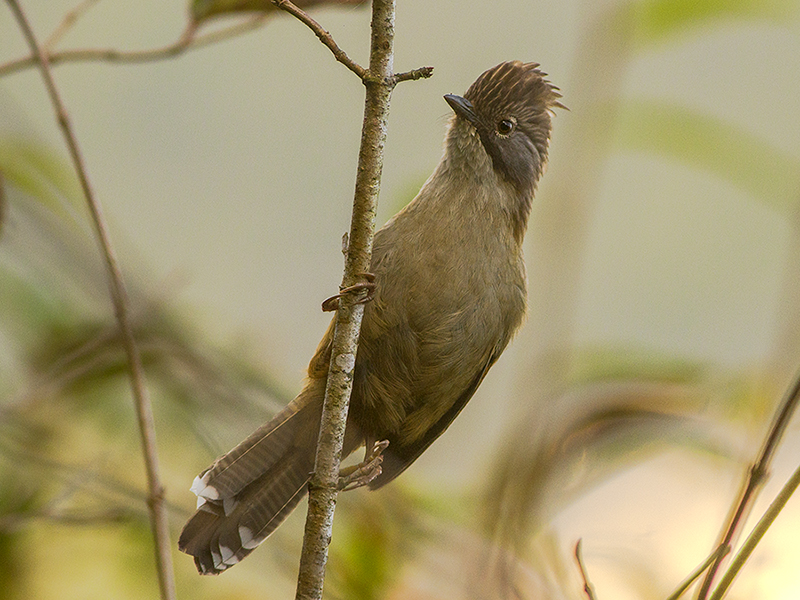
Birds Similar to the White-throated Laughingthrush
These species are often confused with the White-throated Laughingthrush due to similar appearance or overlapping range.

