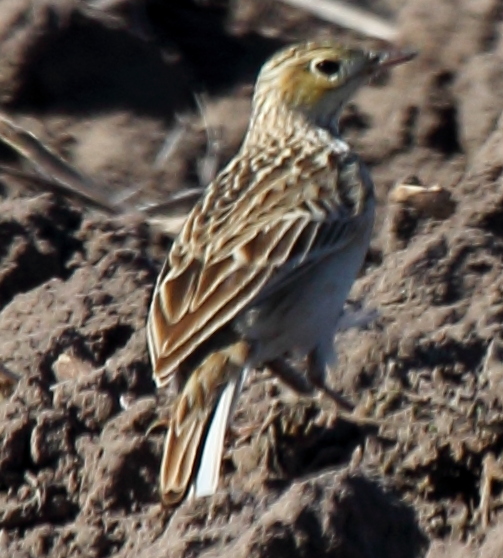
Yellow-breasted Pipit
Anthus chloris
Order: Passeriformes / Family: Motacillidae

Wikimedia Commons
About the Yellow-breasted Pipit
The Yellow-breasted Pipit, Anthus chloris, is a captivating songbird belonging to the family Motacillidae. This species is endemic to southern Africa, predominately inhabiting the high-altitude grasslands of South Africa, particularly in regions like the Drakensberg and Lesotho Highlands. The Yellow-breasted Pipit plays a crucial role in the ecosystem, acting as both a predator and prey within its habitat. Its presence indicates healthy grassland environments, as it relies on the abundance of insects and a specific range of plant life to thrive. During the breeding season, from September to February, its melodious song and vibrant plumage become more pronounced, serving as both a courtship display and a means of territorial defense. The ecological significance of Anthus chloris cannot be overstated, as it contributes to insect population control while also being a food source for larger predators. Seasonal behaviors of the Yellow-breasted Pipit include altitudinal migration, where the bird moves to lower elevations during colder months, thus ensuring access to food and favorable conditions year-round. As a species adapted to high-altitude grasslands, it is sensitive to environmental changes, making it a valuable indicator species for monitoring ecological health in its native regions.
The Yellow-breasted Pipit belongs to the family Motacillidae, within the order Passeriformes. These birds typically live average 4 years with a maximum recorded of 6 years.
How to Identify a Yellow-breasted Pipit
The Yellow-breasted Pipit is easily identified by its vibrant yellow breast, which contrasts sharply with its otherwise brown and streaked upperparts. Adult plumage features a distinct yellow face and throat, with a white belly and undertail that highlight its bright breast. Juveniles tend to be more subdued in color, lacking the intense yellow of adults, and often display more pronounced streaking on their backs and flanks. Males and females are similar in appearance, though males may exhibit slightly brighter plumage during the breeding season. This species can be confused with the African Pipit, but the latter has a less pronounced yellow coloring and more uniform streaking. In flight, the Yellow-breasted Pipit shows a slender silhouette with a characteristic undulating flight pattern. When perched, it often adopts an upright posture, showcasing its striking yellow breast prominently.
Having trouble telling birds apart? Upload a photo to our bird identification tool for an instant species match.
Yellow-breasted Pipit Habitat and Range
Preferred Habitat
The Yellow-breasted Pipit thrives in high-altitude grasslands, particularly those ranging from 1,500 to 3,000 meters above sea level. These grasslands, found in the Drakensberg and Lesotho Highlands, provide the open landscapes and abundant insect life this species requires. During the breeding season, they prefer areas with dense ground cover for nesting, while in the non-breeding season, they may be found in slightly more open areas. Although primarily associated with rural landscapes, the Yellow-breasted Pipit occasionally ventures into semi-urban areas where suitable grassland patches exist. Seasonal habitat shifts occur, with the pipit descending to lower elevations during winter months to avoid harsh weather conditions and maintain access to food resources.
Geographic Range
The breeding range of the Yellow-breasted Pipit is confined to the high-altitude grasslands of South Africa, particularly the Drakensberg mountain range and Lesotho Highlands. It is a resident species, but it exhibits local movements in response to seasonal changes in climate and food availability. During the winter months, this pipit may migrate to lower elevations within its range, thus avoiding the harshest of weather conditions. The population density is highest in regions where grassland habitats remain intact and undisturbed. While it is not a migratory bird in the traditional sense, its altitudinal movements are crucial for its survival and continued presence in these regions.
Want to know which birds visit your area? Browse our backyard birds by location guides for region-specific species lists.
What Does the Yellow-breasted Pipit Eat?
The Yellow-breasted Pipit's diet primarily consists of insects, which it hunts through an active foraging technique called 'gleaning.' This involves picking insects from grass stems and the ground. Beetles, grasshoppers, and caterpillars form the bulk of its diet, although it also consumes spiders and other small invertebrates. During the breeding season, the demand for protein-rich food increases, leading to more intensive foraging. The pipit has been observed foraging both alone and in small groups, using its keen eyesight to detect prey. Seasonal changes in diet occur, with a greater reliance on seeds and plant material during the non-breeding season when insect availability decreases. This dietary flexibility aids its survival during periods when its primary food sources are scarce.
Yellow-breasted Pipit Behavior and Social Structure
Socially, the Yellow-breasted Pipit is generally solitary outside of the breeding season, although it can form loose flocks when foraging. Territorial behavior is pronounced during the breeding season, with males singing from prominent perches to establish and defend their territories. Courtship displays involve aerial flights and song, with males performing undulating displays to attract females. In response to predators, Yellow-breasted Pipits exhibit a variety of alarm calls and may perform distraction displays to protect nests. Daily activity patterns include foraging during the cooler hours of the morning and late afternoon, with resting periods during the midday heat. These behaviors ensure the bird conserves energy while maximizing feeding efficiency.
Yellow-breasted Pipit Nesting and Reproduction
The Yellow-breasted Pipit constructs its nest on the ground, typically concealed within dense grass to protect it from predators. The nest is a cup-shaped structure made of grass and lined with finer materials for insulation. Clutch size ranges from 2 to 4 eggs, with an incubation period of approximately 13 to 14 days. Both parents participate in feeding the young, which fledge around 14 days after hatching. The species may raise one or two broods per year, depending on environmental conditions. Nest placement within dense grass is crucial for minimizing predation risk, and the selection of nesting sites is a key factor in reproductive success.
Yellow-breasted Pipit Sounds and Vocalizations
The primary song of the Yellow-breasted Pipit is melodious and consists of a series of sweet, high-pitched warbles that vary in rhythm and pitch. This song is most commonly heard during the breeding season, when males sing from elevated perches to attract mates and defend their territories. In addition to their song, these pipits produce a variety of call notes, including a sharp 'tsip' used during flight. Alarm calls are more abrupt and urgent, alerting conspecifics to potential threats. During the dawn chorus, the Yellow-breasted Pipit's song combines with those of other grassland birds, creating a symphonic start to the day.
Interesting Facts About the Yellow-breasted Pipit
- 1The Yellow-breasted Pipit is known for its altitudinal migration, moving to lower elevations during winter to escape harsh weather.
- 2Despite their vibrant appearance, Yellow-breasted Pipits rely on camouflage provided by grassland habitats to avoid predators.
- 3The species' sweet song is a key element in their mating rituals, with males singing persistently during the breeding season.
- 4Yellow-breasted Pipits contribute to controlling insect populations, particularly during their breeding season when protein demand is high.
- 5These pipits often build their nests in dense grass to conceal them from predators, showcasing their adaptation to grassland life.
- 6The bird's preference for high-altitude grasslands makes it an important indicator species for the health of these ecosystems.
- 7Anthus chloris is one of the few pipit species with such a restricted and specialized range, highlighting its unique ecological niche.
Yellow-breasted Pipit Conservation Status
The Yellow-breasted Pipit is currently classified as Near Threatened on the IUCN Red List, with its population trend showing a decline. Primary threats include habitat loss due to agricultural expansion, overgrazing, and climate change, which impact the quality and extent of its grassland habitat. Conservation efforts focus on preserving these grassland ecosystems through sustainable land management practices and legal protection of critical habitats. Despite historical fluctuations in population size, current efforts aim to stabilize and hopefully reverse the decline of this species by maintaining the integrity of its natural environment.