
Yellow-browed Shrike-Vireo
Vireolanius eximius
Order: Passeriformes / Family: Vireonidae

Wikimedia Commons
About the Yellow-browed Shrike-Vireo
The Yellow-browed Shrike-Vireo, scientifically known as Vireolanius eximius, inhabits the lush tropical forests of Central and South America. This vibrant songbird is a member of the Vireonidae family, known for its vivid green body and the distinctive yellow eyebrow that gives the species its name. Primarily found in the lowland rainforests of countries like Costa Rica, Panama, Colombia, and Ecuador, the Yellow-browed Shrike-Vireo plays an essential role in these ecosystems. It aids in pest control by consuming a wide array of insects and contributes to seed dispersal, supporting forest regeneration. The species has adapted to life in both primary and secondary forests, indicating a degree of resilience to habitat changes. However, deforestation poses a significant threat to its long-term survival. Seasonal behaviors of the Yellow-browed Shrike-Vireo include its breeding activities, which typically occur during the wetter months when food is abundant. During this time, the bird's vibrant calls become more frequent as males establish and defend territories. Outside the breeding season, the Yellow-browed Shrike-Vireo may form mixed-species flocks, enhancing its foraging efficiency and offering protection from predators. Despite being less conspicuous than some of its avian neighbors, this bird's role in its environment underscores its ecological importance.
The Yellow-browed Shrike-Vireo belongs to the family Vireonidae, within the order Passeriformes. These birds typically live average 5 years with max recorded of 8 years..
How to Identify a Yellow-browed Shrike-Vireo
The Yellow-browed Shrike-Vireo is a medium-sized songbird with defining characteristics that aid in its identification. Adults typically display a bright green plumage on their upperparts, contrasting with a yellowish underbelly. The most distinctive feature is the bold yellow eyebrow that runs above a line of darker coloration through the eye, lending the bird its common name. Males and females are similar in appearance, although females tend to have slightly duller plumage. Juveniles resemble adults but can appear more washed-out and less vibrant. Compared to similar species like the Red-eyed Vireo, the Yellow-browed Shrike-Vireo is more vividly colored and lacks the red eye. In flight, its silhouette is compact, with a short tail and rounded wings. When perched, it maintains an upright posture, often flicking its tail and wings, a behavior that can help differentiate it from other vireos.
Having trouble telling birds apart? Upload a photo to our bird identification tool for an instant species match.
Yellow-browed Shrike-Vireo Habitat and Range
Preferred Habitat
The Yellow-browed Shrike-Vireo thrives in tropical lowland forests, favoring dense and humid environments rich in foliage. It is predominantly found in primary rainforests but can adapt to secondary growth areas. Elevations for this species range from sea level to about 1500 meters, although it is most commonly observed at lower elevations. Seasonal habitat shifts are minimal due to its preference for consistent tropical climates. While it is primarily a forest dweller, the Yellow-browed Shrike-Vireo rarely ventures into urban areas, contrasting with some more adaptable vireo species.
Geographic Range
The Yellow-browed Shrike-Vireo's range includes parts of Central and South America, primarily within countries such as Costa Rica, Panama, western Colombia, and northwestern Ecuador. While it is a resident species that does not undergo long-distance migrations, local movements may occur in response to food availability. Population densities are generally higher in areas of undisturbed primary forest, with less frequent sightings in fragmented habitats. Breeding populations are notably dense in the humid lowland forests of Panama, a region that serves as a hotspot for this species.
Want to know which birds visit your area? Browse our backyard birds by location guides for region-specific species lists.
What Does the Yellow-browed Shrike-Vireo Eat?
The diet of the Yellow-browed Shrike-Vireo consists mainly of insects and other arthropods, playing a crucial role in controlling pest populations within its habitat. Common prey items include caterpillars, beetles, and spiders. This bird employs a methodical foraging technique, gleaning insects from foliage and occasionally engaging in hover-gleaning. During the breeding season, its diet may shift slightly to include more protein-rich insects to support the nutritional needs of chicks. While primarily insectivorous, the Yellow-browed Shrike-Vireo also consumes small fruits and seeds, particularly during times when insect prey becomes scarce. Feeding typically occurs during the cooler parts of the day, such as early morning and late afternoon.
Yellow-browed Shrike-Vireo Behavior and Social Structure
The Yellow-browed Shrike-Vireo exhibits a range of behaviors that reflect its adaptability and ecological niche. It is generally solitary or found in pairs, particularly during the breeding season when territoriality is pronounced. Males sing persistently from prominent perches to establish and defend their territories, using a series of melodious notes. Courtship displays include aerial chases and mutual preening, strengthening pair bonds. Outside the breeding season, this species often joins mixed-species foraging flocks, benefiting from the collective vigilance against predators. Despite its vibrant coloration, the Yellow-browed Shrike-Vireo tends to stay within the forest canopy, where it is less conspicuous to aerial predators. Daily activity patterns are diurnal, with peaks in activity during the cooler hours.
Yellow-browed Shrike-Vireo Nesting and Reproduction
Nesting habits of the Yellow-browed Shrike-Vireo involve constructing a cup-shaped nest, typically placed in the fork of a tree branch. The nest is made from plant fibers, leaves, and other fine materials, meticulously woven to create a secure cradle for the eggs. Preferred nesting locations are within dense foliage, providing camouflage from predators. A typical clutch consists of two to three eggs, with an incubation period of approximately 14 days. Both parents share in the incubation duties, as well as feeding and caring for the hatchlings. The fledging period lasts about two weeks, after which the young birds continue to receive parental care until they are fully independent. Generally, the Yellow-browed Shrike-Vireo raises one brood per year, although favorable conditions may allow for a second.
Yellow-browed Shrike-Vireo Sounds and Vocalizations
The primary song of the Yellow-browed Shrike-Vireo is a series of clear, melodious whistles that vary in pitch and rhythm, often described as a repeated 'chew-chew-cheer'. These vocalizations are most pronounced during the breeding season when males assert their territorial presence. In addition to its song, the bird produces a range of call notes used for communication with mates or signaling alarm. These calls are sharper and more abrupt than the song, serving as an effective alert system. The dawn chorus of the Yellow-browed Shrike-Vireo is particularly notable, as it joins the symphony of forest species greeting the new day.
Interesting Facts About the Yellow-browed Shrike-Vireo
- 1The Yellow-browed Shrike-Vireo's song is often mistaken for a distant human whistle, highlighting its melodious quality.
- 2This species is one of the few in the Vireonidae family known to join mixed-species flocks, enhancing its foraging success.
- 3Despite its vibrant colors, the Yellow-browed Shrike-Vireo often remains hidden in the dense canopy, making it a challenge to spot.
- 4The bird's diet shift during breeding season to include more insect prey aids in chick development and survival.
- 5Yellow-browed Shrike-Vireos exhibit a unique hovering behavior to glean insects, a technique not commonly seen in vireos.
- 6Their nests are intricately woven with natural materials, demonstrating remarkable craftsmanship and structural integrity.
- 7The species' preference for primary forests makes it an important indicator of ecosystem health in tropical regions.
Yellow-browed Shrike-Vireo Conservation Status
Currently, the Yellow-browed Shrike-Vireo is listed as Least Concern by the IUCN, although its population trend is suspected to be decreasing due to habitat loss. The primary threat to this species is deforestation for agriculture and urban expansion, particularly in the lowland forests of its range. Conservation efforts focus on preserving large tracts of intact forest, as well as promoting sustainable land-use practices. Historical population changes are not well-documented, but ongoing habitat degradation could pose significant challenges in the future. Continued monitoring and habitat protection are essential for the long-term survival of this species.
Other Vireonidae Species
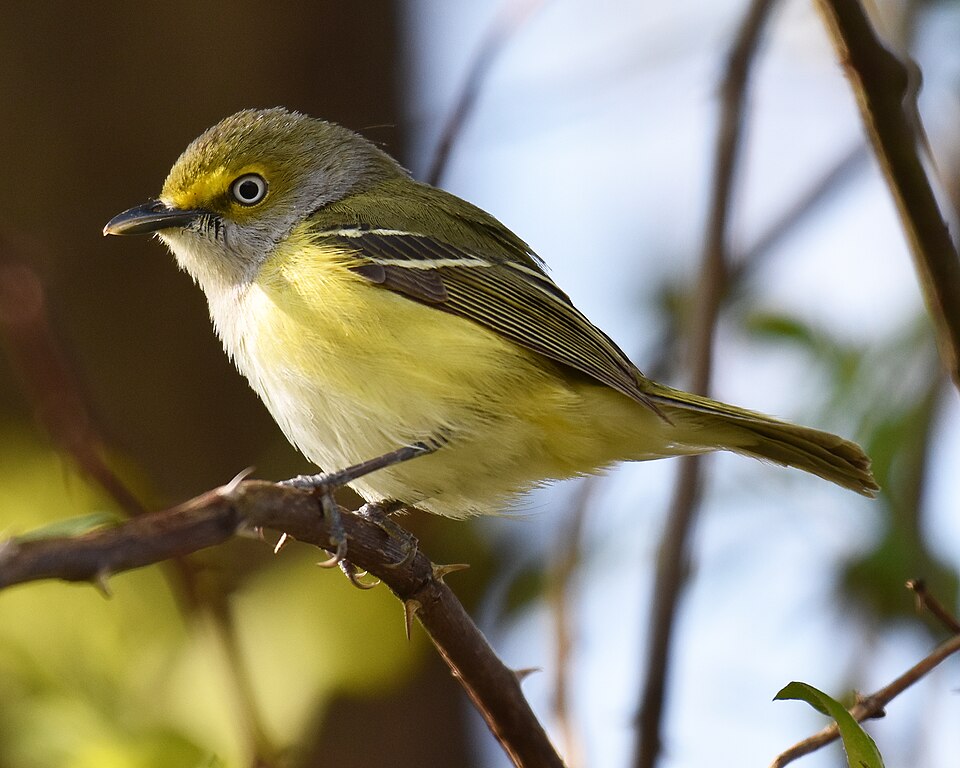

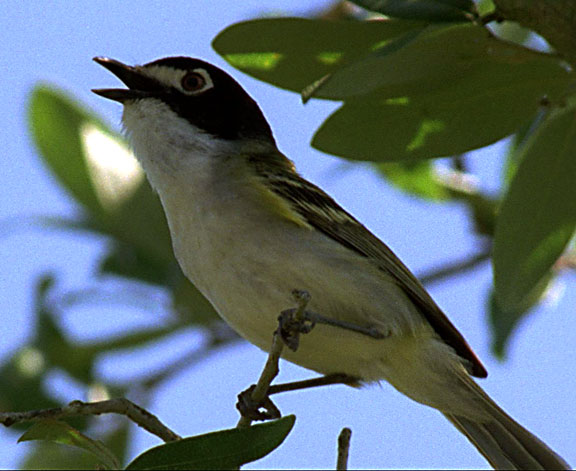

Birds Similar to the Yellow-browed Shrike-Vireo
These species are often confused with the Yellow-browed Shrike-Vireo due to similar appearance or overlapping range.

