Yellow-green Greenlet
Hylophilus viridiflavus
Order: Passeriformes / Family: Vireonidae

Wikimedia Commons
About the Yellow-green Greenlet
The Yellow-green Greenlet, Hylophilus viridiflavus, is a small but vibrant member of the Vireonidae family. It inhabits the rich and diverse ecosystems of South America, primarily within the Amazon Basin, including regions of Brazil, Bolivia, Peru, and Colombia. This bird plays a significant role in its ecosystem, acting as both a consumer of insects and a disperser of seeds, thus contributing to the maintenance of forest biodiversity. Its presence is most prominent in lowland subtropical and tropical moist forests, where it thrives amidst the dense foliage.
The Yellow-green Greenlet is a vital component of its habitat, engaging in mutualistic relationships with various plant species. By feeding on insects and small arthropods that inhabit leaves and branches, it helps control pest populations. This activity is especially important during the breeding season when the demand for protein-rich food increases to sustain the energy needs of growing chicks. Furthermore, the bird's diet includes berries and small fruits, and as it moves through the forest, it aids in seed dispersal, promoting forest regeneration.
Seasonally, the Yellow-green Greenlet exhibits certain behavioral shifts, particularly in response to food availability. During wetter months, when insect populations surge, its diet primarily comprises various insects. Conversely, in drier seasons, it relies more heavily on available fruit. The adaptability of Hylophilus viridiflavus to these seasonal changes underscores its resilience and the dynamic nature of its ecological niche. As a bird often heard before seen, its presence enriches the auditory landscape of its native forests, adding to the complex soundscape of the Amazonian canopy.
The Yellow-green Greenlet belongs to the family Vireonidae, within the order Passeriformes. These birds typically live average 4-6 years with a max recorded of 8 years..
How to Identify a Yellow-green Greenlet
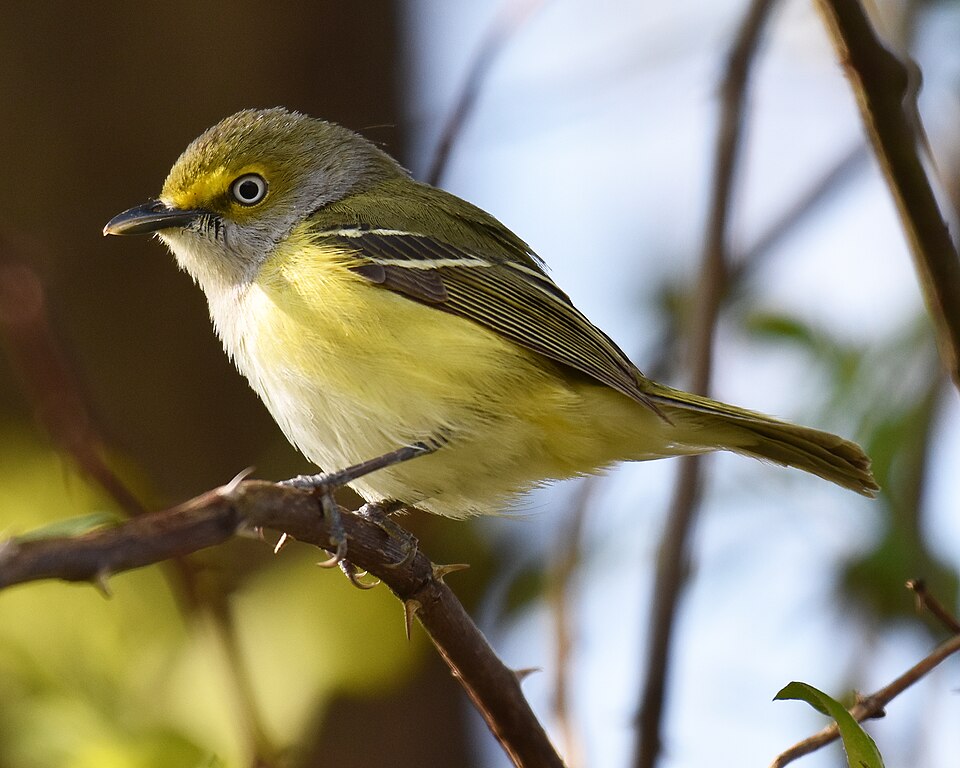
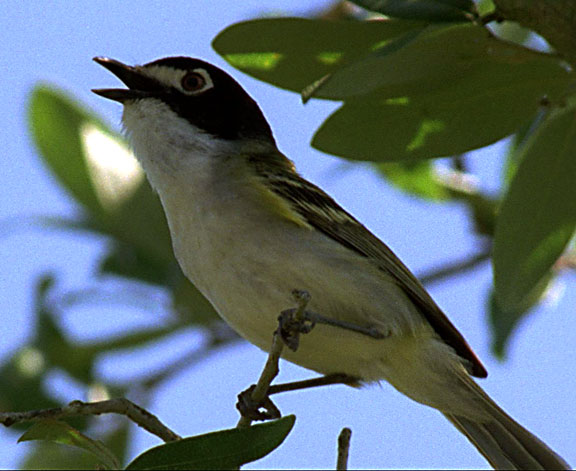
Adult Yellow-green Greenlets are primarily characterized by their bright olive-green upperparts and yellowish underparts, making them particularly well-camouflaged in their leafy environment. Their heads display a subtle contrast, with a grayish wash on the crown and a faint eye ring that can assist in distinguishing them from similar species. The bill is short and stout, typical of vireos, aiding in their insectivorous diet.
Juvenile birds resemble adults but may exhibit slightly duller plumage, lacking the full vibrancy of mature individuals. Both sexes appear similar, with no significant sexual dimorphism, making field identification based on gender challenging without behavioral cues such as nesting or courtship.
In flight, the Yellow-green Greenlet exhibits a rapid and somewhat erratic pattern, often moving in short bursts from branch to branch. While perched, they maintain an upright posture, frequently tilting their heads as they search for prey. They can be confused with other greenlets and small vireos, but their specific color combination and habitat preferences often provide clear distinctions.
Having trouble telling birds apart? Upload a photo to our bird identification tool for an instant species match.
Yellow-green Greenlet Habitat and Range
Preferred Habitat
The Yellow-green Greenlet predominantly inhabits lowland tropical and subtropical moist forests, where the dense canopy provides ample cover and foraging opportunities. These forests are typically found at elevations ranging from sea level up to about 900 meters, though they may occasionally venture into higher altitudes in montane forests.
Within these habitats, the species favors the mid to upper levels of the forest canopy, where it can easily forage among the leaves and branches. During the wet season, when food sources are abundant, they may be observed in a wider range of forested areas, including secondary growth and edges.
While generally absent from urban environments, the Yellow-green Greenlet can sometimes be found in rural areas where forest fragments persist. Its preference for intact forest ecosystems underscores its reliance on unspoiled habitats for survival.
Geographic Range
The Yellow-green Greenlet's range is primarily concentrated in the northern and central regions of South America. It breeds across a broad area that includes Brazil, Bolivia, Peru, and Colombia, with confirmed sightings in Venezuela and Ecuador as well. This distribution reflects a preference for the extensive Amazon Basin and the tropical lowland forests that dominate the region.
While primarily a resident species, some altitudinal movement may occur in response to seasonal changes in food availability. However, these movements are generally local rather than long-distance migrations. Within its range, population densities tend to be highest in regions with abundant, undisturbed forest cover, such as the central Amazonian expanses.
The lack of extensive migration corridors suggests a highly localized lifestyle, with populations remaining relatively stationary year-round. This stability within their preferred habitats underscores the importance of preserving these critical ecosystems.
Want to know which birds visit your area? Browse our backyard birds by location guides for region-specific species lists.
What Does the Yellow-green Greenlet Eat?
The diet of the Yellow-green Greenlet is predominantly insectivorous, with a strong emphasis on consuming caterpillars, beetles, and other small arthropods. This bird employs a variety of foraging techniques, often gleaning insects from the undersides of leaves or catching them mid-flight.
During the rainy season, when insect populations are at their peak, the Yellow-green Greenlet's diet is supplemented with an increased intake of insects, providing essential nutrients for breeding and chick-rearing. As the seasons shift and fruit becomes more prevalent, the bird incorporates berries and small fruits into its diet, demonstrating its adaptability to changing food resources.
Foraging activity generally occurs throughout the day, with peaks in the early morning and late afternoon when temperatures are cooler. The bird's agile movements and keen eyesight aid in efficiently locating and capturing prey, allowing it to thrive in the competitive environment of the tropical forest.
Yellow-green Greenlet Behavior and Social Structure
The Yellow-green Greenlet exhibits a dynamic social structure, often observed in small family groups or mixed-species flocks. This social behavior facilitates increased foraging efficiency and protection against predators, as multiple pairs of eyes are on the lookout for threats.
Territoriality is a notable aspect of their behavior during the breeding season. Males sing to establish and defend their territories, using a series of sharp, repetitive notes to communicate with rivals and potential mates. Courtship displays may involve both vocalizations and physical displays, with males showcasing their plumage to attract females.
In response to predators, the Yellow-green Greenlet employs evasive flight tactics, darting into dense foliage to avoid capture. Its daily activity patterns include periods of intense foraging interspersed with rest and preening, often during the hottest parts of the day when activity levels decrease.
Flocking patterns change seasonally, with larger groups forming during non-breeding periods, allowing for increased social interaction and shared vigilance against predators.
Yellow-green Greenlet Nesting and Reproduction
The Yellow-green Greenlet constructs its nest in the mid to upper canopy of the forest, preferring locations that offer concealment and protection from predators. The nest is typically a small, cup-shaped structure, intricately woven from plant fibers, leaves, and spider silk, providing a secure environment for the developing eggs and chicks.
Clutch sizes generally consist of two to three eggs, with both parents participating in incubation duties, which last approximately 14 to 16 days. This cooperative approach extends to feeding and caring for the young, with both male and female taking turns bringing food to the nest.
Once hatched, the chicks remain in the nest for about 10 to 14 days before fledging. During this period, they rely heavily on their parents for nourishment and protection. The Yellow-green Greenlet may raise one or two broods per year, depending on environmental conditions and food availability, allowing for population maintenance and growth within its range.
Yellow-green Greenlet Sounds and Vocalizations
The primary song of the Yellow-green Greenlet is a series of sharp, repeated notes, often described as resembling a high-pitched 'chee-chee-chee' that echoes through the forest canopy. This song serves as both a territorial marker and a means of attracting mates during the breeding season.
In addition to their song, these birds emit various call notes, including softer chirps used for communication between mates and alarm calls to alert others to the presence of predators. Their vocalizations contribute significantly to the auditory tapestry of their tropical forest environment.
The dawn chorus sees the Yellow-green Greenlet actively participating, with their persistent calls adding to the early morning commotion. Their distinct vocal patterns help differentiate them from other vireos and greenlets inhabiting the same regions.
Interesting Facts About the Yellow-green Greenlet
- 1The Yellow-green Greenlet, despite its small size, can consume a substantial amount of insects daily, contributing significantly to insect population control in its habitat.
- 2Unlike many bird species, the Yellow-green Greenlet shows no significant sexual dimorphism, making male and female birds nearly indistinguishable by appearance alone.
- 3During the breeding season, the Yellow-green Greenlet's vocal activity increases dramatically, making it one of the most vocal birds in its habitat.
- 4Yellow-green Greenlets are known to join mixed-species flocks, which can include up to 20 different bird species, enhancing foraging efficiency and predator vigilance.
- 5The nest of the Yellow-green Greenlet, despite being small and inconspicuous, is a marvel of construction, using materials like spider silk to bind and secure its structure.
- 6The adaptability of the Yellow-green Greenlet's diet allows it to thrive in environments where food availability fluctuates seasonally.
- 7The Yellow-green Greenlet is integral to seed dispersal in its ecosystem, aiding in the propagation of various plant species within the Amazon Basin.
Yellow-green Greenlet Conservation Status
Currently, the Yellow-green Greenlet is listed as Least Concern by the IUCN due to its relatively wide distribution and stable population numbers. However, ongoing threats such as deforestation and habitat degradation pose potential risks to their habitats and populations. Conservation efforts aimed at preserving the Amazon Basin's vast forested regions are crucial in ensuring the continued survival of this species. These efforts include protected area designations, sustainable land-use practices, and community-based initiatives that promote biodiversity conservation. Historically, the Yellow-green Greenlet has maintained stable numbers, but monitoring is necessary to detect any future changes in population dynamics. The species' resilience depends largely on the preservation of its forest habitat, highlighting the critical need for comprehensive conservation strategies.