
Hutton's Vireo
Vireo huttoni
Order: Passeriformes / Family: Vireonidae

Wikimedia Commons
About the Hutton's Vireo
Hutton's Vireo (Vireo huttoni) is a small songbird found predominantly in the western regions of North America, particularly in the United States and Mexico. This bird plays a vital role in its ecosystem by controlling insect populations. It inhabits diverse woodland environments, including oak woodlands, mixed coniferous forests, and chaparral, where it thrives on a diet of insects and spiders. Hutton's Vireo is a year-round resident in most of its range, which includes coastal California, the Sierra Nevada, and the interior mountains of Arizona and New Mexico. Its adaptability to different forest types allows it to maintain populations across various elevations, typically from sea level to about 2000 meters. During the breeding season, which extends from March through July, Hutton's Vireo demonstrates territorial behavior, often engaging in vocal displays to establish dominance and attract mates. The bird's incessant singing and distinctive calls play a significant role in maintaining its territory and facilitating mating. While the Hutton's Vireo is not as migratory as some of its relatives, it may exhibit slight altitudinal movements in response to food availability, particularly in winter when insects are less abundant. Its ability to persist in a range of habitats makes it a resilient species, though it faces challenges from habitat fragmentation and urban development. Conservation efforts focus on preserving its natural habitats to ensure this species continues to thrive.
The Hutton's Vireo belongs to the family Vireonidae, within the order Passeriformes. These birds typically live average lifespan of 5 years with a maximum recorded at 9 years..
How to Identify a Hutton's Vireo
Adult Hutton's Vireos display a predominantly olive-green plumage, which serves as excellent camouflage among foliage. The bird measures about 12 to 13 centimeters in length and weighs between 10 and 14 grams. Its wings and tail are darker, with two distinct white wing bars that aid in identification. The short, thick bill and sturdy posture often distinguish it from similar species. Juveniles resemble adults but have a duller plumage with less defined wing bars. Male and female Hutton's Vireos look similar, making visual sex differentiation challenging in the field. One commonly confused species is the Ruby-crowned Kinglet, which shares similar habitat and size. However, the kinglet's more energetic movements and ruby crown (visible only when displayed) can help differentiate it. In flight, the Hutton's Vireo shows a rapid wingbeat and a somewhat fluttery flight pattern. When perched, it maintains a poised and steady posture, often remaining motionless as it scans for prey.
Having trouble telling birds apart? Upload a photo to our bird identification tool for an instant species match.
Hutton's Vireo Habitat and Range
Preferred Habitat
Hutton's Vireo prefers oak woodlands and mixed deciduous forests, often found in areas with significant canopy cover. It thrives at elevations ranging from sea level to approximately 2000 meters. In California, it frequently occupies coastal live oak forests, while in Arizona, it is found in pinyon-juniper woodlands. Its adaptability allows it to inhabit urban parks and gardens, provided there is sufficient tree cover. During winter, the bird may move to lower elevations or slightly different habitats where food is more accessible. While it is not dependent on urban environments, it can occasionally be seen in suburban areas.
Geographic Range
The breeding range of Hutton's Vireo includes coastal and interior regions of the western United States, from southern Oregon through California and into Baja California, Mexico. In the United States, it is particularly abundant in the Sierra Nevada and the coastal ranges. Its range extends as far south as the mountains of central Mexico. The bird is a year-round resident in most of its range, though it may exhibit minor altitudinal shifts in response to seasonal changes. Its population density is highest in areas with extensive oak woodlands and mixed forests, where food resources are plentiful.
Want to know which birds visit your area? Browse our backyard birds by location guides for region-specific species lists.
What Does the Hutton's Vireo Eat?
Hutton's Vireo primarily consumes insects and spiders, making it an insectivore. Its diet consists of small caterpillars, beetles, and other arthropods, which it gleans from foliage and branches. During the breeding season, the bird's feeding activity increases to provide nourishment for its young. In winter, when insects become scarce, it may supplement its diet with small fruits and seeds. The bird forages methodically, often hanging upside down to reach hidden prey. Its feeding schedule is diurnal, with peak activity in the early morning and late afternoon.
Hutton's Vireo Behavior and Social Structure
Hutton's Vireo exhibits solitary or small group behavior, particularly during the non-breeding season. It is territorial, especially during breeding, where it defends its area through persistent singing. Courtship involves simple displays and mutual feeding between pairs. The bird responds to predators with alarm calls and may mob intruders if necessary. Its daily activity peaks during dawn and dusk, aligning with its feeding schedule. Outside the breeding season, it may join mixed-species flocks, benefiting from increased foraging success.
Hutton's Vireo Nesting and Reproduction
The Hutton's Vireo constructs a cup-shaped nest, intricately woven with spider silk, plant fibers, and lichens, providing excellent camouflage. Nests are typically placed in the fork of a tree branch, often at heights of 2 to 10 meters. Clutch size ranges from 3 to 5 eggs, with an incubation period of about 14 days. Both parents share incubation duties and subsequent feeding of the fledglings. The young fledge approximately 14 to 16 days after hatching. The species typically raises one to two broods per year, depending on environmental conditions.
Hutton's Vireo Sounds and Vocalizations
The primary song of Hutton's Vireo is a monotonous series of clear, whistled notes, often repeated in quick succession. Its rhythm is steady, and the pitch remains consistent, making it a reliable identifier in dense foliage. The bird's call notes include a harsh 'chee' sound, used in communication with mates and signaling alarm. During the dawn chorus, Hutton's Vireo's song blends into the symphony of woodland birds, yet its persistent, repetitive nature helps distinguish it from others.
Interesting Facts About the Hutton's Vireo
- 1Hutton's Vireo is named after William Hutton, a 19th-century naturalist who contributed to early ornithological studies.
- 2Despite its similar appearance to the Ruby-crowned Kinglet, the Hutton's Vireo's more deliberate movements set it apart.
- 3Hutton's Vireo can be quite vocal, singing persistently throughout the day, especially during the breeding season.
- 4This species is known for its meticulous nest-building skills, using spider silk and lichens to camouflage its nest.
- 5In mixed-species flocks, Hutton's Vireo often takes advantage of the vigilance of other birds to forage more efficiently.
Hutton's Vireo Conservation Status
Hutton's Vireo is currently listed as Least Concern by the IUCN, with a stable population trend. Habitat loss and fragmentation pose the primary threats to this species, as urbanization and deforestation reduce suitable habitats. Conservation efforts focus on protecting forested areas and promoting sustainable land-use practices. Historically, the population has remained stable, though localized declines may occur in heavily developed regions.
Other Vireonidae Species
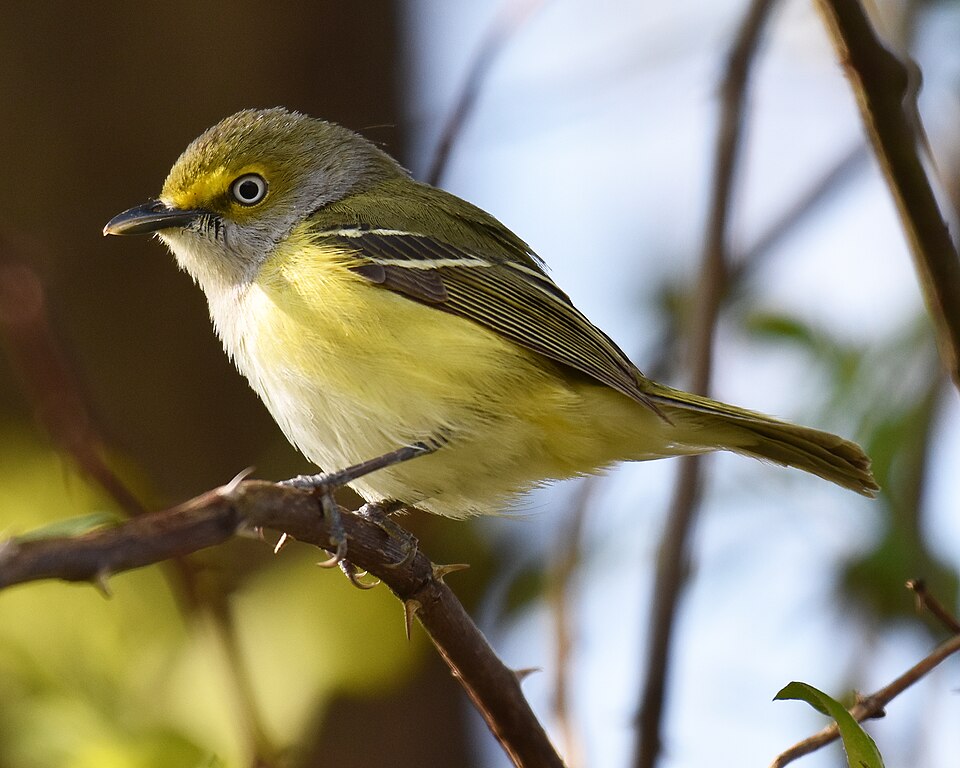

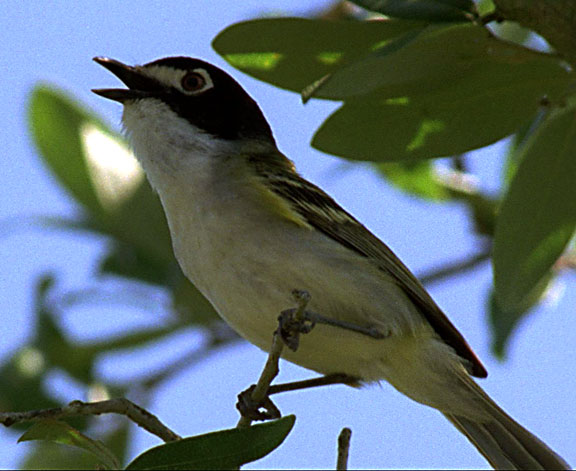

Birds Similar to the Hutton's Vireo
These species are often confused with the Hutton's Vireo due to similar appearance or overlapping range.


