
Warbling Vireo
Vireo gilvus
Order: Passeriformes / Family: Vireonidae

Wikimedia Commons
About the Warbling Vireo
The Warbling Vireo, known scientifically as Vireo gilvus, is a small, unassuming songbird that has captured the admiration of birdwatchers with its persistent and melodious song. This bird is predominantly found across North America, favoring deciduous and mixed woodlands, particularly during the breeding season. In terms of geographic distribution, the Warbling Vireo breeds extensively across Canada and the United States, stretching from the Atlantic to the Pacific coasts. It is notably absent from the southeastern U.S. during the breeding months. The species is a long-distance migrant, relocating to Central and South America during the non-breeding season, primarily occupying regions from southern Mexico to northern South America. This migratory behavior is crucial for its survival, allowing it to exploit different ecological niches throughout the year.
Ecologically, the Warbling Vireo plays a vital role as an insectivore, helping control populations of caterpillars, beetles, and other arthropods, which comprise the bulk of its diet. This feeding behavior naturally influences the health and composition of the ecosystems in which it resides. The Warbling Vireo is also a significant player in the avian soundscape of the woodlands it inhabits. Its song is a complex, rapid series of melodious phrases that can often be heard throughout the day, especially during the breeding season.
The Warbling Vireo exhibits intriguing seasonal behaviors. During the spring and summer months, males establish territories and sing vigorously to attract mates and ward off rivals. As the breeding season progresses into late summer, the bird's vocal activity tends to decrease. By late August or early September, Warbling Vireos commence their migration southward. Their predictable migratory patterns make them an important species for monitoring environmental changes, as alterations in their timing and routes can indicate broader ecological shifts.
The Warbling Vireo belongs to the family Vireonidae, within the order Passeriformes. These birds typically live average lifespan is 5 years, with a maximum recorded of 13 years..
How to Identify a Warbling Vireo
The Warbling Vireo is a small songbird, measuring about 12-13 cm in length with a wingspan of 22-23 cm. Its plumage is generally subdued, with a grayish-olive back, pale underparts, and a faintly yellow-washed belly. One of its most distinctive field marks is its lack of prominent facial markings, unlike many other vireos. It shows a slight white supercilium, but overall facial contrast is minimal, giving it a plain appearance.
Juvenile Warbling Vireos resemble adults but may appear slightly duller and lack the subtle yellow wash found in adults. There is little sexual dimorphism in this species, with males and females looking largely similar in plumage. However, males are often slightly larger and more vocal, particularly during the breeding season.
When observing the Warbling Vireo in flight, its silhouette is compact with a round head and short tail, characteristics typical of the Vireonidae family. Perching posture is usually upright, often in the mid to upper canopy where it forages. Similar species, such as the Philadelphia Vireo, can be confused with the Warbling Vireo; however, the latter lacks the prominent yellow underparts and has a less distinct facial pattern.
Having trouble telling birds apart? Upload a photo to our bird identification tool for an instant species match.
Warbling Vireo Habitat and Range
Preferred Habitat
Warbling Vireos primarily inhabit deciduous and mixed forests, thriving in areas with ample tree cover and a dense canopy. They are commonly found at elevations ranging from sea level to approximately 3,000 meters, with a preference for riparian woodlands, orchards, and suburban parks. During the breeding season, they favor mature woodlands with abundant foliage suitable for nesting and foraging.
In urban settings, Warbling Vireos are often seen in large city parks and wooded green spaces, where they can find suitable nesting sites and food resources. Throughout their range, they demonstrate a preference for habitats that offer a mix of open space and dense foliage, which supports their insectivorous diet and nesting needs.
Seasonal habitat shifts occur as they migrate to their wintering grounds in Central and South America, where they occupy similar forested habitats. In these regions, they adapt to subtropical and tropical environments, utilizing both natural and anthropogenic landscapes that provide adequate food and shelter.
Geographic Range
The breeding range of the Warbling Vireo spans a vast area across North America, from southern Canada through the northern and central United States. It is notably absent from the southeastern United States during the breeding season. The western populations are found from British Columbia to California, while eastern populations extend from the northeastern U.S. to the Great Lakes region.
During migration, Warbling Vireos travel through the central and eastern United States, often using riparian corridors and wooded areas as stopover sites. Their migratory routes are relatively direct, minimizing time spent in transit to reach their wintering grounds as efficiently as possible.
In winter, the Warbling Vireo can be found from southern Mexico through Central America to northern South America, including countries such as Colombia and Venezuela. Within these regions, they are often observed in a variety of forested habitats, indicating their adaptability to different environmental conditions. Population density tends to be higher in regions with abundant forest cover and minimal human disturbance, highlighting the importance of conservation efforts in these areas.
Want to know which birds visit your area? Browse our backyard birds by location guides for region-specific species lists.
What Does the Warbling Vireo Eat?
The diet of the Warbling Vireo primarily consists of insects and other arthropods, making it an essential insectivore within its ecosystem. During the breeding season, it actively forages for caterpillars, beetles, and various insects in the canopies of deciduous and mixed forests. This preference for arboreal prey often dictates its foraging behavior, as it moves methodically through foliage, gleaning insects from leaves and branches.
Throughout the year, the Warbling Vireo's diet remains largely consistent, though it may occasionally consume small fruits and berries, particularly during migration and in winter when insect abundance decreases. This opportunistic feeding behavior allows it to adapt to seasonal variations in food availability.
Warbling Vireos typically forage alone or in pairs during the breeding season, but they may join mixed-species flocks during migration and winter. Their feeding schedule is diurnal, with peak activity occurring in the early morning and late afternoon when insect activity is high. Prey size is usually small to medium, fitting comfortably within the bird's small bill.
Warbling Vireo Behavior and Social Structure
The Warbling Vireo exhibits a variety of behaviors that reflect its social structure and ecological role. During the breeding season, males are highly territorial, vigorously defending their chosen nesting area from rivals. They engage in persistent singing to both attract mates and deter other males, reinforcing their presence within a given territory.
Courtship displays are subtle and involve mutual singing and physical closeness between the pair. Once paired, Warbling Vireos generally remain monogamous for the breeding season, working together to build nests and rear young. These birds are typically solitary or found in pairs during breeding but may join mixed-species flocks during migration and winter.
In terms of daily activity patterns, Warbling Vireos are most active during the morning and late afternoon, coinciding with peak insect activity. They exhibit a characteristic foraging behavior, moving deliberately through the canopy as they search for prey. When threatened by predators, Warbling Vireos rely on their inconspicuous plumage and evasive flight to avoid detection, often retreating to dense foliage for cover.
Warbling Vireo Nesting and Reproduction
Warbling Vireos construct cup-shaped nests from grass, bark strips, and spider silk, which they strategically place in the forks of tree branches, typically 2 to 12 meters above ground. These nests provide safety from ground predators and are often well-hidden by foliage.
A typical clutch consists of 3 to 5 eggs, which both parents incubate for about 12 to 14 days. After hatching, the young are altricial, requiring intensive parental care. Both parents participate in feeding the nestlings, which fledge approximately 12 to 16 days after hatching.
Warbling Vireos generally produce one brood per year, though in some southern parts of their range, they may attempt a second brood if conditions permit. Parental roles are shared equally, with males contributing significantly to both incubation and feeding, thus enhancing the survival chances of their offspring.
Warbling Vireo Sounds and Vocalizations
The Warbling Vireo's primary song is a series of musical phrases, each lasting about 2 to 4 seconds, delivered in a continuous, warbling manner. The rhythm is steady, with a clear, sweet quality that distinguishes it from many other woodland birds. This song is most commonly heard during the breeding season when males sing persistently to establish and defend territories.
In addition to its song, the Warbling Vireo produces a variety of call notes, including a sharp, scolding chip used in alarm situations. These calls help communicate with mates and warn of potential predators. During the dawn chorus, the Warbling Vireo's song is a prominent feature, adding to the rich tapestry of sounds within its habitat.
Interesting Facts About the Warbling Vireo
- 1The Warbling Vireo can sing nearly 3,000 song phrases in a single day, making it one of the most persistent singers in its habitat.
- 2Despite its drab appearance, the Warbling Vireo's song has been described as sweet and melodious, earning it a place in the hearts of many bird enthusiasts.
- 3Warbling Vireos are known to follow army ant swarms during migration, taking advantage of insects flushed by the ants.
- 4The Warbling Vireo's nest-building material often includes spider silk, which gives the nest flexibility and strength.
- 5During migration, Warbling Vireos can travel over 3,000 kilometers from their breeding grounds to their wintering areas.
- 6Warbling Vireos have been observed to adapt rapidly to urban environments, often nesting in city parks and green spaces.
- 7The Warbling Vireo's song can vary geographically, with subtle differences noted between eastern and western populations.
Warbling Vireo Conservation Status
Currently, the Warbling Vireo is classified as Least Concern by the IUCN, with a stable population trend across most of its range. However, habitat loss due to deforestation and urban development poses ongoing threats. Conservation efforts focus on preserving and restoring forested habitats, particularly in areas crucial for breeding and migration. Historically, Warbling Vireo populations have fluctuated with changes in land use, but they have shown resilience in adapting to secondary growth forests and urban green spaces. Continued monitoring and habitat conservation will be essential to ensure their long-term survival, particularly as climate change impacts migration patterns and habitat availability.
Other Vireonidae Species
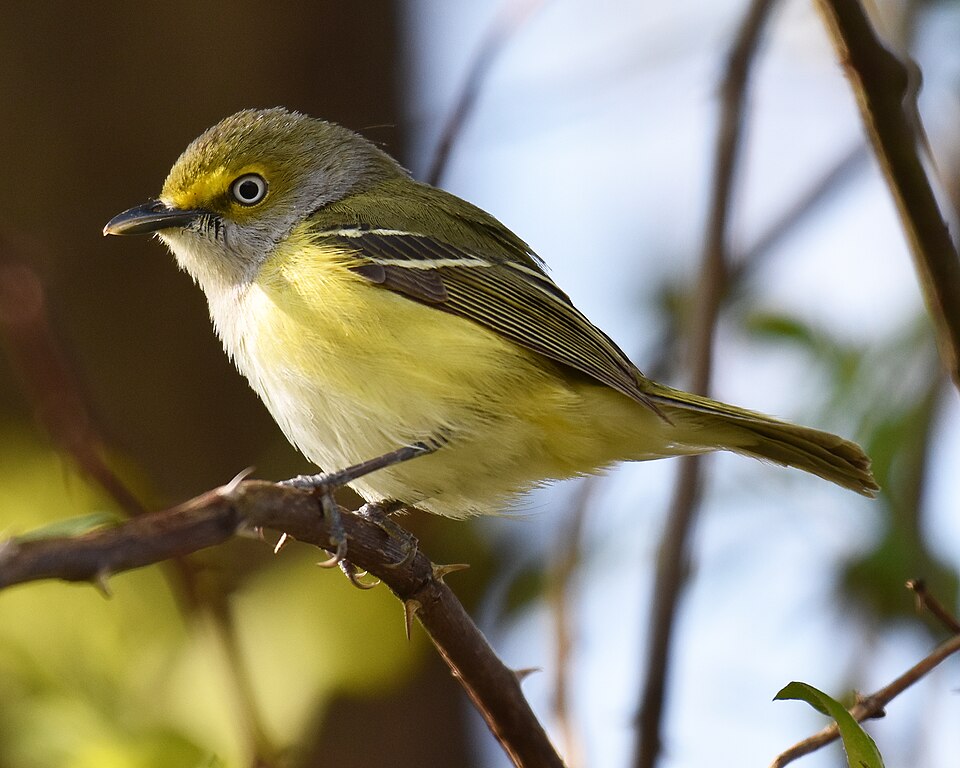

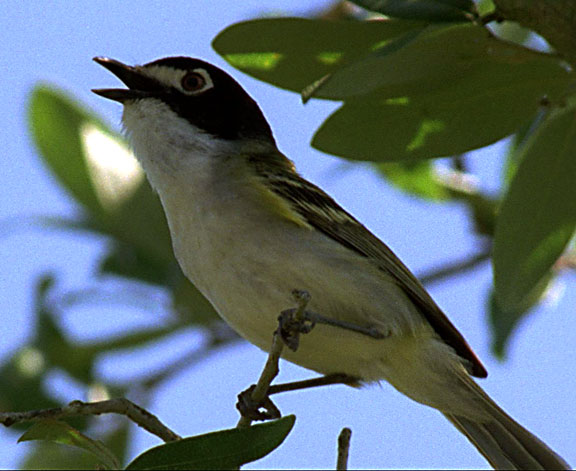

Birds Similar to the Warbling Vireo
These species are often confused with the Warbling Vireo due to similar appearance or overlapping range.

