
Red-eyed Vireo
Vireo olivaceus
Order: Passeriformes / Family: Vireonidae

Wikimedia Commons
About the Red-eyed Vireo
The Red-eyed Vireo (Vireo olivaceus) is a small songbird known for its striking red eyes and incessant, repetitive song. This bird thrives in deciduous and mixed woodlands across North America, playing a crucial role in the ecosystem as both a predator of insects and a prey species for larger birds. In the breeding season, it is predominantly found in the dense forests of the eastern and central United States, extending into southern Canada. Its presence is significant in these regions as it contributes to controlling insect populations, including caterpillars and other tree pests. During the winter months, the Red-eyed Vireo migrates to South America, with substantial populations wintering in the Amazon Basin in countries like Brazil, Colombia, and Venezuela. This long-distance migration highlights the ecological interconnectedness between North and South America, as the bird relies on diverse habitats throughout its life cycle. The Red-eyed Vireo's ability to adapt to various forest types, including second-growth and edge habitats, demonstrates its resilience and ecological flexibility. Its song, often described as a series of short, melodic phrases, is a hallmark of North American summer woodlands. The vireo's persistent vocalizations serve not only as a means of communication but also as an indicator of healthy forest ecosystems. Observers often note the bird's tendency to remain hidden within dense foliage, making it more often heard than seen. However, its distinctive red eyes, contrasting against its olive-green and white plumage, provide a unique identification feature for those who catch a glimpse. The bird's ecological role extends beyond pest control, as it also aids in seed dispersal, particularly in tropical wintering grounds, where it consumes a more varied diet including fruits. The Red-eyed Vireo's adaptability to different climatic and vegetative conditions underscores its importance in both temperate and tropical environments.
The Red-eyed Vireo belongs to the family Vireonidae, within the order Passeriformes. These birds typically live average lifespan is about 6 years, with a maximum recorded of 10 years..
How to Identify a Red-eyed Vireo
Adult Red-eyed Vireos exhibit a combination of olive-green upperparts and white underparts. The most defining feature is their striking red eyes, which contrast sharply with the white 'eyebrow' stripe that runs above a dark line through the eyes. Juveniles, however, display brown eyes until they mature, which can lead to some identification challenges. Both sexes appear similar, making the distinction between male and female difficult based solely on appearance. In flight, the Red-eyed Vireo presents a compact silhouette with relatively short, rounded wings and a medium-length tail. Its perching posture is somewhat upright, often seen foraging in the mid to upper canopy of trees. Confusion may arise with the Philadelphia Vireo, which lacks the vivid red eyes and has a more yellowish underbody, or the Warbling Vireo, which has more subdued facial markings. The Red-eyed Vireo's song and habitat preference are often more reliable indicators than its subtle plumage differences.
Having trouble telling birds apart? Upload a photo to our bird identification tool for an instant species match.
Red-eyed Vireo Habitat and Range
Preferred Habitat
The Red-eyed Vireo favors deciduous and mixed forests, with a particular affinity for broadleaf woodlands during the breeding season. It thrives in habitats ranging from mature forests to secondary growth, often at elevations up to 1,500 meters. In North America, the species is prevalent in forested landscapes of the eastern and central United States, extending into southern Canada. During migration and winter, it occupies a wider range of habitats, including tropical forests and wooded savannas in South America. While less common in urban settings, it can occasionally be found in parks or large gardens with adequate tree cover. Seasonal shifts in habitat are primarily driven by its need for abundant food resources and suitable nesting sites.
Geographic Range
The Red-eyed Vireo's breeding range spans across the eastern and central United States up to southern Canada, with dense populations in the Great Lakes region and the northeastern states. During the non-breeding season, it migrates to South America, primarily wintering in the Amazon Basin, including countries such as Brazil, Venezuela, and Colombia. Migration corridors include the eastern United States and Central America, where the bird can be seen traveling in large numbers during spring and fall. While widespread, its density varies, with higher concentrations found in regions with extensive woodland cover during the breeding season.
Want to know which birds visit your area? Browse our backyard birds by location guides for region-specific species lists.
What Does the Red-eyed Vireo Eat?
The Red-eyed Vireo primarily feeds on insects, making it a vital player in controlling forest pest populations. Its diet consists mainly of caterpillars, beetles, and other arthropods, which it gleans from foliage while foraging methodically through the canopy. During the winter months in South America, its diet diversifies to include fruits and berries, reflecting the seasonal availability of food resources. This adaptability in diet allows the species to thrive across different habitats and regions. The vireo typically forages alone or in small groups, often joining mixed-species flocks in its wintering grounds.
Red-eyed Vireo Behavior and Social Structure
Red-eyed Vireos are generally solitary or found in pairs during the breeding season, exhibiting strong territorial behavior. Males sing persistently from high perches to establish and defend their territories, engaging in physical confrontations if necessary. Courtship displays are subtle, involving song exchanges and mutual foraging excursions. Outside the breeding season, Red-eyed Vireos become more social, joining mixed-species flocks during migration and in their wintering habitats. They are diurnal, with peak activity during morning and late afternoon, and exhibit a characteristic deliberate foraging style, moving methodically through trees.
Red-eyed Vireo Nesting and Reproduction
The Red-eyed Vireo constructs a cup-shaped nest suspended from a fork in a tree branch, typically 1-5 meters above the ground. The nest is woven from grass, bark strips, and plant fibers, lined with fine materials for added insulation. A typical clutch consists of 3-5 eggs, which are white with fine brown speckles. Both sexes participate in the construction of the nest, but the female primarily incubates the eggs over a period of 12-14 days. After hatching, both parents share in feeding the chicks, which fledge approximately 10-12 days post-hatching. The species generally produces one brood per year, although two may occur in favorable conditions.
Red-eyed Vireo Sounds and Vocalizations
The Red-eyed Vireo's song is a series of short, repetitive phrases that can be likened to a conversation, with a rhythm and pitch reminiscent of a question-and-answer pattern. Its song is often described as "Here I am, where are you?" repeated endlessly throughout the day. The bird also emits call notes that are simple and harsh, used primarily for contact between mates or as alarm calls when predators are nearby. During the dawn chorus, the Red-eyed Vireo's persistent singing contributes to the symphony of woodland sounds, often one of the last to quiet as night falls.
Interesting Facts About the Red-eyed Vireo
- 1The Red-eyed Vireo can sing over 20,000 songs in a single day, making it one of the most persistent singers in the bird world.
- 2Unlike many songbirds, the Red-eyed Vireo has been known to sing on its wintering grounds in South America, an unusual behavior for migratory species.
- 3The Red-eyed Vireo's eye color changes from brown to red as it matures, providing a visual cue of its age.
- 4During migration, the Red-eyed Vireo can cover up to 150 miles in a single night, showcasing its impressive endurance.
- 5The species was first described by the famous American ornithologist John James Audubon in the early 19th century.
- 6Red-eyed Vireos are known to occasionally hybridize with Philadelphia Vireos, resulting in intermediate plumage characteristics.
- 7With a wingspan of approximately 9 inches, the Red-eyed Vireo is adept at maneuvering through dense forest canopies.
Red-eyed Vireo Conservation Status
Currently, the Red-eyed Vireo holds a status of Least Concern on the IUCN Red List, with stable population trends across its range. The primary threats to this species include habitat loss due to deforestation in both breeding and wintering grounds. Conservation efforts focus on protecting large tracts of contiguous forest and preserving critical migration stopover sites. Historically, the population has remained robust, thanks in part to its adaptability to secondary and edge habitats. Continued monitoring and habitat preservation are essential to maintain healthy population levels.
Other Vireonidae Species
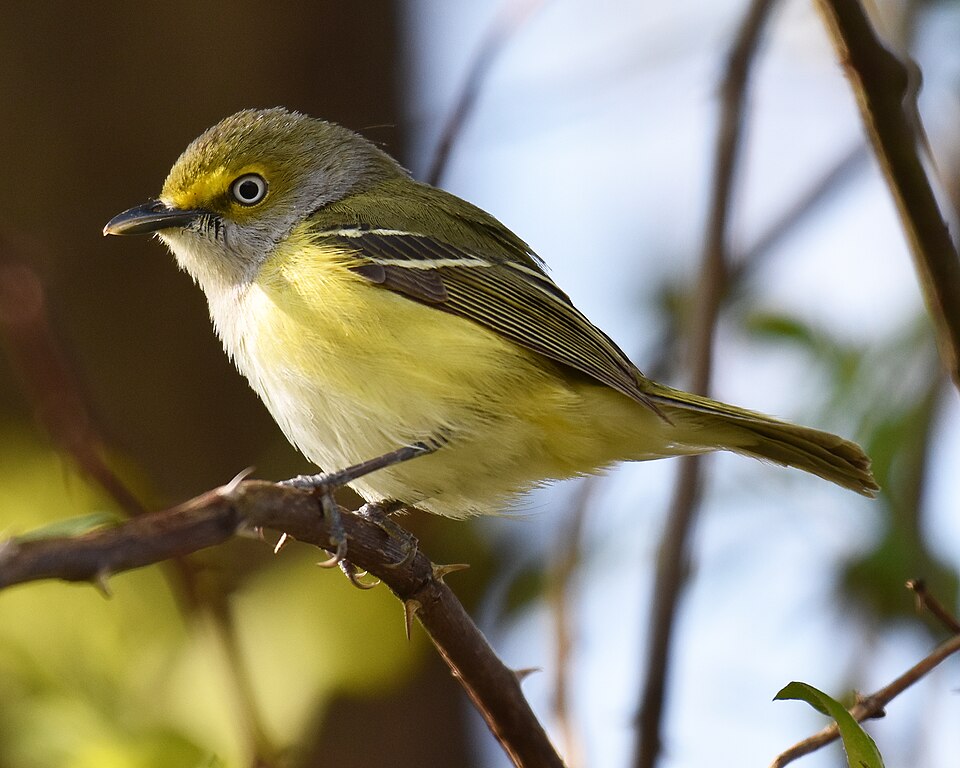

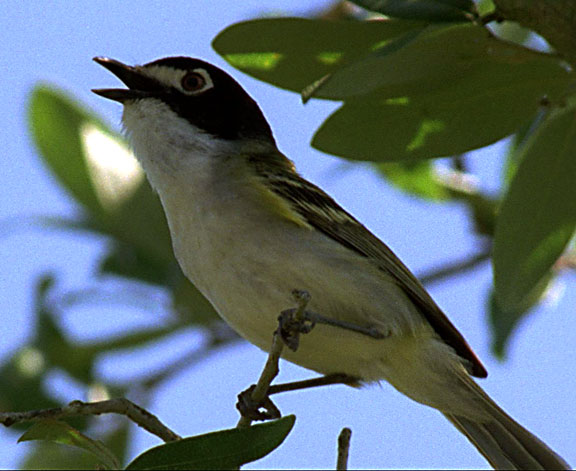

Birds Similar to the Red-eyed Vireo
These species are often confused with the Red-eyed Vireo due to similar appearance or overlapping range.


