Black-faced Cotinga
Conioptilon mcilhennyi
Order: Passeriformes / Family: Cotingidae

Wikimedia Commons
About the Black-faced Cotinga
The Black-faced Cotinga, scientifically known as Conioptilon mcilhennyi, is a captivating bird of the Amazon rainforest, particularly in Peru and Brazil. This species, belonging to the family Cotingidae, epitomizes the diversity and ecological richness of South American tropical forests. With its unique appearance and specialized habitat preferences, the Black-faced Cotinga contributes significantly to the biodiversity of its ecosystem. Its presence is often linked to undisturbed forest areas, making it an indicator of environmental health and integrity. The Black-faced Cotinga inhabits the lower to middle canopy layers of terra firme forests, where it engages in a variety of behaviors crucial for forest ecology, such as seed dispersal and insect population control. Typically, the Black-faced Cotinga remains elusive, its presence more often identified by its distinctive calls than by visual observation. This bird's role in its ecosystem extends beyond mere aesthetic appeal; it participates actively in maintaining the ecological balance by contributing to seed dispersal through its varied diet. During the breeding season, which coincides with the rainy season in its habitat, the Black-faced Cotinga becomes more vocal and visible as it engages in courtship behaviors and territorial displays. These activities are vital for the continuation of its species, ensuring that the Black-faced Cotinga remains a vibrant part of the Amazonian avian community. The ecological role of the Black-faced Cotinga underscores the importance of conservation efforts aimed at preserving its natural habitat. As deforestation and habitat fragmentation continue to threaten the Amazon rainforest, the survival of species like the Black-faced Cotinga hangs in the balance. Protecting these birds and their habitat offers not only a chance to preserve a unique species but also an opportunity to maintain the health of the entire ecosystem. By maintaining the integrity of the forests where the Black-faced Cotinga lives, we ensure that these areas continue to support a wide array of wildlife, contributing to the global ecological fabric.
The Black-faced Cotinga belongs to the family Cotingidae, within the order Passeriformes. These birds typically live 5-7 years, with a max recorded of 10 years.
How to Identify a Black-faced Cotinga
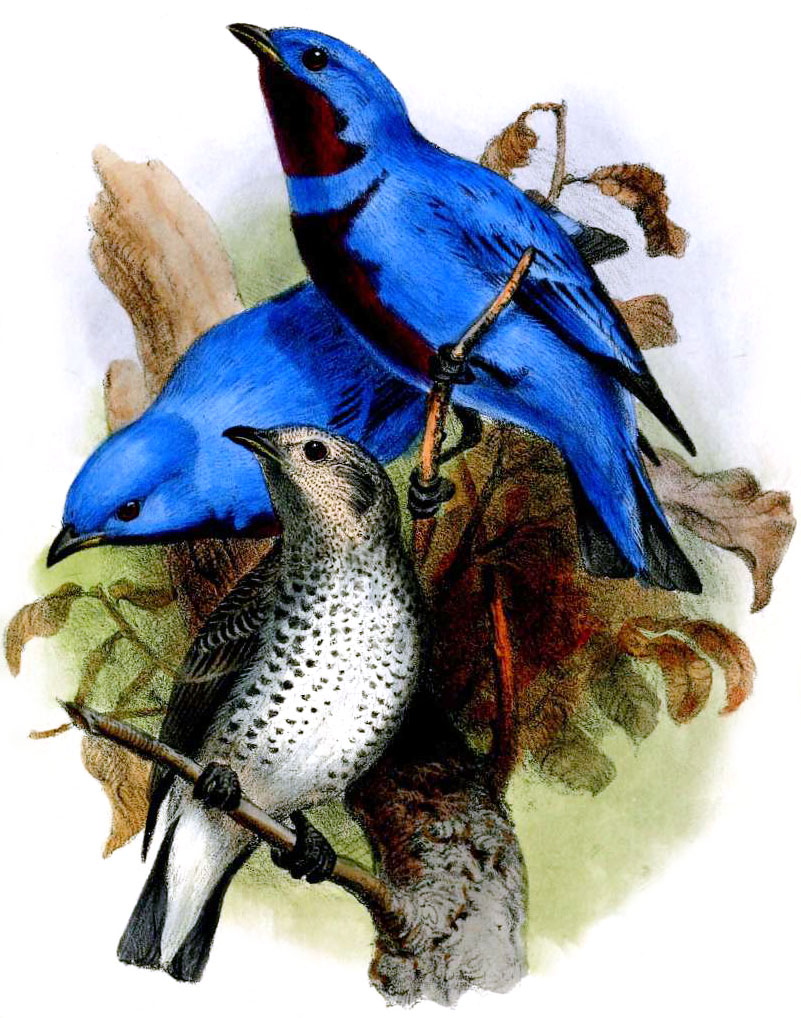
The Black-faced Cotinga is distinct with its vibrant blue plumage contrasted by a prominent black face and throat. This color combination makes it unique among its cotinga relatives. The adult male's plumage is slightly more vivid compared to the female, whose colors appear somewhat muted, aiding in camouflage during nesting. Juveniles resemble females but with even duller plumage, lacking the full intensity of adult coloration. The Black-faced Cotinga's robust body and short tail provide a characteristic silhouette that differs from other bird species within its range. When perched, it often adopts an upright posture, which, combined with its striking facial markings, makes it identifiable to the keen observer. In flight, the Black-faced Cotinga shows a rapid wingbeat and direct flight path, helping differentiate it from similar species like the Spangled Cotinga, which displays a more gliding flight pattern. The contrast of its black face against its blue body makes it less likely to be confused with other similarly sized forest birds.
Having trouble telling birds apart? Upload a photo to our bird identification tool for an instant species match.
Black-faced Cotinga Habitat and Range
Preferred Habitat
The Black-faced Cotinga thrives in the Amazonian tropical forests, particularly favoring terra firme forests that do not flood seasonally. This habitat provides a stable environment with abundant food resources and nesting sites in the lower to mid-canopy levels. Found primarily at elevations below 600 meters, this cotinga avoids higher altitudes, preferring the humid, warm conditions of the Amazon basin. Although predominantly a resident of remote forest interiors, the Black-faced Cotinga may occasionally venture into secondary forests, especially if primary forests are disturbed. However, it is not typically found in urban or heavily altered landscapes, emphasizing the need for intact forest habitats for its survival.
Geographic Range
The range of the Black-faced Cotinga is largely confined to the western Amazon basin, spanning parts of southeastern Peru and western Brazil. Within these regions, it occupies areas like the Madre de Dios and Acre states, where dense, undisturbed forests prevail. Unlike many other bird species, the Black-faced Cotinga does not undertake long migrations, maintaining a relatively stable presence year-round in its preferred habitat. Some local movement may occur in response to food availability or breeding needs, but these shifts are minor compared to true migratory species. Population density tends to be highest in areas with minimal human impact, emphasizing the importance of protected areas for its continued existence.
Want to know which birds visit your area? Browse our backyard birds by location guides for region-specific species lists.
What Does the Black-faced Cotinga Eat?
The Black-faced Cotinga primarily consumes a diet of fruits and insects, playing a dual role as both a frugivore and an insectivore. Its foraging strategy involves gleaning from leaves and branches, often targeting small fruits like berries and figs, which are abundant in its forest habitat. Insects, particularly caterpillars and beetles, provide protein, especially during the breeding season when energy demands increase. Seasonal variations in food availability can lead to shifts in diet, with a higher reliance on insects during wetter months when fruit becomes scarcer. The cotinga's feeding schedule is largely diurnal, with peak activity during the cooler hours of the morning and late afternoon.
Black-faced Cotinga Behavior and Social Structure
The Black-faced Cotinga exhibits solitary to loosely social behavior, often seen alone or in pairs rather than large flocks. During the breeding season, males become more territorial, engaging in vocal displays and aerial chases to assert dominance and attract mates. Courtship involves elaborate displays, where males showcase their plumage and vocal abilities to win over females. Outside the breeding season, the cotinga's territorial behavior diminishes, allowing for more flexible social interactions, sometimes joining mixed-species foraging flocks. In response to predators, the Black-faced Cotinga relies on its cryptic plumage and evasive flight to escape threats. Diurnal by nature, it is most active during daylight, resting in the canopy during the hottest parts of the day.
Black-faced Cotinga Nesting and Reproduction
Black-faced Cotingas construct open cup nests primarily from sticks and leaves, preferring to place them on sturdy horizontal branches in the mid-canopy. This positioning offers some protection from ground predators while remaining hidden from aerial threats. The typical clutch consists of two eggs, which the female incubates for about 18 to 20 days. Both parents contribute to feeding the chicks, although the female often takes on a more prominent role in brooding. Fledging occurs approximately 25 days after hatching, with young remaining dependent on parental care for several weeks post-fledging. Typically, the Black-faced Cotinga breeds once a year, coinciding with the rainy season to ensure ample food supply for the growing young.
Black-faced Cotinga Sounds and Vocalizations
The song of the Black-faced Cotinga is a series of clear, melodious whistles that rise and fall in pitch, often described as flute-like in quality. These vocalizations serve as both territorial calls and mate attraction signals. In addition to its song, the cotinga produces short, sharp call notes used in alarm situations, alerting others to potential threats. During the dawn chorus, the Black-faced Cotinga is one of the more prominent contributors, its voice carrying through the forest canopy. This bird's vocalizations are easily distinguished from the harsher calls of sympatric species, making it a key species for acoustic monitoring in its habitat.
Interesting Facts About the Black-faced Cotinga
- 1The Black-faced Cotinga was first described to science in 1965, making it a relatively recent discovery.
- 2Despite its vibrant colors, the Black-faced Cotinga can remain remarkably elusive, often heard before seen.
- 3This species is endemic to the Amazon basin, highlighting its specialized ecological niche.
- 4The Black-faced Cotinga's diet of fruits and insects makes it an important seed disperser in its ecosystem.
- 5Unlike many cotingas, the Black-faced Cotinga does not migrate, staying within its home range year-round.
Black-faced Cotinga Conservation Status
The Black-faced Cotinga is currently listed as Least Concern by the IUCN, but its population trend shows signs of decline due to habitat loss. Deforestation for agriculture and logging in the Amazon basin poses significant threats to its habitat. Conservation efforts focus on preserving large tracts of rainforest and establishing protected areas. Historical data suggests that while the population remains relatively stable, ongoing habitat destruction could lead to more severe declines. Continued monitoring and habitat preservation are critical to ensuring the long-term survival of the Black-faced Cotinga.
Other Cotingidae Species



Birds Similar to the Black-faced Cotinga
These species are often confused with the Black-faced Cotinga due to similar appearance or overlapping range.