
Lovely Cotinga
Cotinga amabilis
Order: Passeriformes / Family: Cotingidae
Wikimedia Commons
About the Lovely Cotinga
The Lovely Cotinga, scientifically known as Cotinga amabilis, is a visually stunning bird that graces the tropical forests of Central America. Renowned for its vibrant blue feathers, this species stands as a symbol of the rich biodiversity found in these regions. The Lovely Cotinga plays a vital role in its ecosystem as both a seed disperser and an indicator of forest health. The bird's presence is often considered a testament to the well-being of the habitat, as it thrives in undisturbed forest environments. Found mainly in the canopies of lowland rainforests, the Lovely Cotinga contributes to the ecological balance by feeding on a variety of fruits, thus aiding in seed dispersal across the forest floor. This activity helps in maintaining the genetic diversity and regeneration of the forest ecosystem. The Lovely Cotinga is distributed throughout countries such as Mexico, Belize, Guatemala, and Honduras, where it inhabits the dense, humid rainforests. Its preference for high canopies makes it a challenge to observe, adding to its allure among birdwatchers. The bird's striking appearance and elusive nature make it a sought-after species for ornithologists and naturalists visiting Central America. The Lovely Cotinga exhibits seasonal behaviors that correspond with fruiting cycles in its habitat. During periods of abundant fruit, these birds become more active and conspicuous, sometimes forming loose aggregations where food sources are plentiful. Their seasonal movements are mostly altitudinal, typically remaining within the same geographic range but adjusting their elevation to follow the availability of food. The Lovely Cotinga's dependence on intact forest environments highlights its vulnerability to deforestation and habitat destruction. Conservation efforts are crucial to ensure the survival of this species, as its presence is indicative of healthy, undisturbed forest ecosystems.
The Lovely Cotinga belongs to the family Cotingidae, within the order Passeriformes. These birds typically live 7-9 years, with a max recorded of 12 years.
How to Identify a Lovely Cotinga
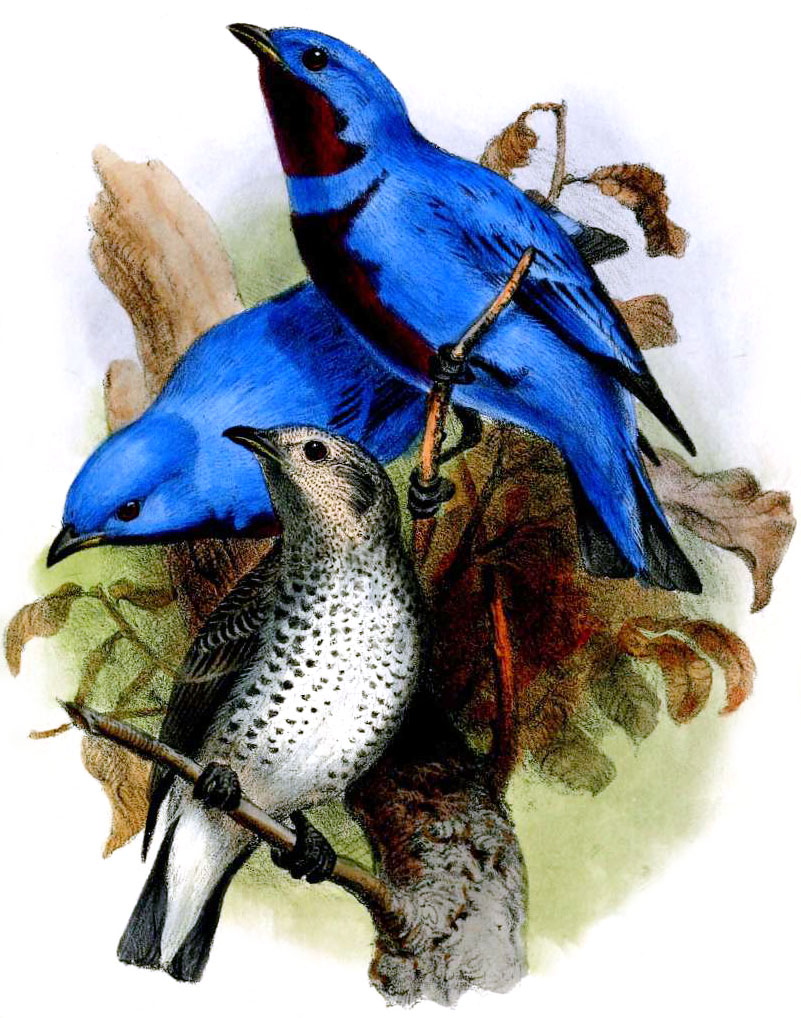
The Lovely Cotinga is a medium-sized bird with a length of about 20 cm. Adult males are unmistakable with their vivid turquoise blue plumage, featuring a contrasting dark blue throat and a short tail. Females, while less colorful, have a more cryptic appearance with olive-brown upperparts and lighter underparts speckled with brown. Juvenile birds resemble females but tend to have a duller coloration. The sexual dimorphism in this species is striking, making male Lovely Cotingas easier to identify. In flight, the Lovely Cotinga displays broad, rounded wings and a distinctive silhouette characterized by its short tail and robust body. When perched, it often sits motionless, blending into the foliage despite its vibrant color. The Lovely Cotinga can be confused with other cotingas, such as the Turquoise Cotinga, but the latter has a more uniform blue body with no dark throat patch. Observers should note the Lovely Cotinga's unique color pattern and behavior when identifying it in the field.
Having trouble telling birds apart? Upload a photo to our bird identification tool for an instant species match.
Lovely Cotinga Habitat and Range
Preferred Habitat
The Lovely Cotinga inhabits tropical and subtropical moist lowland forests, primarily residing in the canopy layers. It prefers undisturbed primary forests but can occasionally be found in secondary growth areas if these offer sufficient canopy cover. The species typically occupies elevations ranging from sea level to 1,200 meters, demonstrating some flexibility in habitat choice. In areas like the Caribbean slopes of Honduras, the Lovely Cotinga can be found at slightly higher elevations, especially during periods when food sources are more abundant. Seasonal shifts in habitat use are minimal, as the bird's movements are more closely related to the availability of fruiting trees rather than drastic changes in elevation.
Geographic Range
The Lovely Cotinga's range spans Central America, with a distribution primarily focused in countries such as southern Mexico, Belize, Guatemala, and Honduras. It inhabits the Caribbean slopes and lowland areas, with breeding populations concentrated in well-preserved forest habitats. The species is non-migratory, although it exhibits local movements to track food availability. While it remains within its general geographic range year-round, the Lovely Cotinga may adjust its location slightly, favoring areas with ripe fruit. Population densities can vary, with certain hotspots occurring where forest conditions are optimal. In regions like the Petén Basin in Guatemala, birders may find higher concentrations due to the abundance of fruiting trees and minimal human disturbance.
Want to know which birds visit your area? Browse our backyard birds by location guides for region-specific species lists.
What Does the Lovely Cotinga Eat?
The Lovely Cotinga primarily feeds on a diet of fruits, making it a frugivore. Its broad, short bill is well-adapted for consuming a variety of berries and small fruits, typically plucked directly from the canopy. The bird's diet focuses heavily on fig species and other tropical fruits, which provide essential nutrients and hydration. During times of fruit scarcity, the Lovely Cotinga may supplement its diet with insects, although this forms a minor part of its overall food intake. Foraging often occurs in the early morning and late afternoon, when the bird is most active. The Lovely Cotinga's feeding strategy involves short flights from perch to perch within the canopy, minimizing energy expenditure while maximizing fruit intake.
Lovely Cotinga Behavior and Social Structure
The Lovely Cotinga exhibits a solitary or loosely social behavior, often seen alone or in small groups. It is territorial to an extent, defending favored feeding sites from other individuals. During the breeding season, males engage in display flights and vocalizations to attract females, showcasing their vivid plumage. The courtship display involves short, fluttering flights and vocal bursts. While generally quiet, the Lovely Cotinga uses a series of low, resonant calls to communicate, particularly during mating season. It shows a strong preference for remaining high in the canopy, where it can evade predators and maintain a safe distance from ground-level disturbances. Its daily activities revolve around foraging and resting, with peak activity occurring during cooler parts of the day.
Lovely Cotinga Nesting and Reproduction
The Lovely Cotinga builds its nest high in the forest canopy, usually in a fork of a tree branch. The nest is a flimsy, cup-shaped structure composed of twigs, vines, and leaves. The female typically lays 1 to 2 eggs per clutch, with the incubation period lasting around 18 to 20 days. Both parents participate in feeding the chicks, although the female primarily handles incubation. The fledglings leave the nest approximately 3 weeks after hatching. The Lovely Cotinga may raise one or two broods per year, depending on food availability and environmental conditions. Nesting success is closely linked to the presence of intact forest, as disturbed habitats can lead to increased predation and reduced food resources.
Lovely Cotinga Sounds and Vocalizations
The Lovely Cotinga's song is a series of soft, flute-like notes that resonate throughout its forest habitat. The rhythm is slow and deliberate, with a mellow, melodic quality. The bird's calls include low, throaty sounds used for communication between individuals. Alarm calls are rarely heard, as the Lovely Cotinga relies more on camouflage than vocal alerts to avoid predators. At dawn, males may participate in a subdued chorus, their songs blending into the ambient sounds of the forest. The Lovely Cotinga's vocalizations, while not as prominent as those of some other bird species, play a crucial role in courtship and territorial displays.
Interesting Facts About the Lovely Cotinga
- 1The Lovely Cotinga's vibrant blue plumage is a result of structural coloration, which means the blue is created by microscopic structures rather than pigments.
- 2Unlike many birds, the Lovely Cotinga is often silent, making its visual appearance more crucial for communication and attracting mates.
- 3The Lovely Cotinga's diet consists mostly of fruits, yet it plays an essential role in pest control by eating small insects during fruit shortages.
- 4The Lovely Cotinga's presence in an area indicates a healthy, biodiverse forest, as it prefers undisturbed habitats with ample fruit-bearing trees.
- 5Spotting a Lovely Cotinga in the wild is considered a rare treat for birdwatchers due to its elusive nature and preference for high canopies.
- 6Native cultures in Central America often regarded the Lovely Cotinga as a symbol of beauty and mystery, owing to its striking appearance.
- 7Although not migratory, the Lovely Cotinga may undertake local altitudinal movements to access food sources, demonstrating adaptability within its range.
Lovely Cotinga Conservation Status
The Lovely Cotinga is currently listed as Least Concern by the IUCN, but its population trend is decreasing due to habitat loss and fragmentation. Deforestation for agriculture and urban development poses the primary threat to its survival, as it relies on intact forest canopies. Conservation efforts focus on preserving critical habitats and promoting sustainable land-use practices. Historical records suggest stable populations in the past, but recent pressures highlight the need for ongoing conservation initiatives. Protected areas in Central America, such as reserves and national parks, offer some refuge for the Lovely Cotinga, but increased awareness and habitat restoration are vital for its long-term survival.
Other Cotingidae Species



Birds Similar to the Lovely Cotinga
These species are often confused with the Lovely Cotinga due to similar appearance or overlapping range.

