
Brown-capped Vireo
Vireo leucophrys
Order: Passeriformes / Family: Vireonidae

Wikimedia Commons
About the Brown-capped Vireo
The Brown-capped Vireo, Vireo leucophrys, is a small, stocky songbird belonging to the Vireonidae family, renowned for its distinct brown cap that contrasts sharply with its olive-green back and white underparts. Found primarily in the montane and subtropical forests of Central and South America, this species exhibits remarkable adaptability to a range of habitats from the cloud forests of Costa Rica to the humid Andean slopes of Colombia and Venezuela. The Brown-capped Vireo is significant for its role in the ecological network as an insectivore, controlling pest populations and contributing to the health of its ecosystem. During the breeding season, these birds are most active in dense forest canopies, where they can be heard delivering their complex, melodious songs, often described as a rapid series of whistles and trills that carry through the forest understory. Come winter, they may descend to lower elevations, seeking out warmer, more temperate environments. The seasonal behaviors of the Brown-capped Vireo include shifts in diet and elevation, highlighting its adaptability and resilience. This bird's presence in diverse forested regions underlines its importance as an indicator of forest health and biodiversity. As a member of mixed-species foraging flocks, the Brown-capped Vireo plays a crucial role in facilitating interspecies interactions, contributing to the dynamic and interconnected nature of tropical ecosystems. Conservation of its habitats is vital not only for the survival of this species but also for the myriad of other flora and fauna that share its environment.
The Brown-capped Vireo belongs to the family Vireonidae, within the order Passeriformes. These birds typically live 4-6 years with a maximum recorded lifespan of 8 years.
How to Identify a Brown-capped Vireo
Adult Brown-capped Vireos are easily recognizable by their brown crown, which sets them apart from other vireos. Their upperparts are predominantly olive-green, blending seamlessly with their natural habitat, while their underparts are a contrasting white. The eye is surrounded by a broken white eye-ring, a feature that aids in quick identification. Juvenile vireos lack the distinct brown cap, often presenting a more uniform olive coloration on the head, which can lead to confusion with other vireo species. Males and females are similar in plumage, making gender differentiation challenging without behavioral observations during the breeding season. In flight, the Brown-capped Vireo displays a short, stout silhouette with rounded wings and a slightly notched tail. When perched, they often adopt an upright posture, flicking their wings intermittently, which can be a helpful identification cue. Birders should be wary of confusing this species with the similar Warbling Vireo (Vireo gilvus); however, the latter lacks the distinctive brown cap and typically inhabits different ecological niches.
Having trouble telling birds apart? Upload a photo to our bird identification tool for an instant species match.
Brown-capped Vireo Habitat and Range
Preferred Habitat
The Brown-capped Vireo thrives in montane and subtropical forests, often found at elevations ranging from 800 to 2,500 meters. It is particularly prevalent in cloud forests, where the dense canopy and abundant insect life provide ideal living conditions. In Costa Rica, the bird is commonly observed in the highland regions, such as Monteverde. Seasonal habitat shifts occur as the vireo descends to lower elevations during cooler months, often settling in mixed forests and coffee plantations, demonstrating its adaptability to altered landscapes. The species is less commonly found in urban areas, preferring the seclusion and resources of rich forested environments.
Geographic Range
The Brown-capped Vireo's range extends across Central and South America, primarily in countries like Costa Rica, Panama, Colombia, and Venezuela. During the breeding season, they predominantly occupy montane forests, particularly along the Andean slopes. In winter, some populations may migrate to lower elevations within the same countries, although many individuals remain in their breeding territories year-round. While not long-distance migrants, these seasonal movements are crucial for their survival, as they seek out optimal feeding and breeding conditions. Population density is highest in areas with intact cloud forests and minimal human disturbance.
Want to know which birds visit your area? Browse our backyard birds by location guides for region-specific species lists.
What Does the Brown-capped Vireo Eat?
Primarily insectivorous, the Brown-capped Vireo consumes a diet rich in caterpillars, beetles, and other small arthropods. During the breeding season, their dietary needs intensify, driving them to forage actively in the forest canopy. They employ a variety of foraging techniques, including gleaning and hover-gleaning, to capture prey from leaves and branches. In the non-breeding season, the vireo’s diet becomes more varied. They may supplement their insect diet with small fruits and berries, particularly when insect numbers dwindle. This dietary flexibility aids in their survival across different habitats and seasons.
Brown-capped Vireo Behavior and Social Structure
The Brown-capped Vireo is a largely solitary bird, especially during the breeding season when it becomes highly territorial. Males are known for their persistent singing, a behavior aimed at both attracting mates and deterring rivals. Courtship displays are subtle, often involving the male presenting food to the female. Outside the breeding season, these vireos may join mixed-species flocks, a social structure that enhances foraging efficiency and predator detection. When faced with predators, the vireo employs alarm calls to alert conspecifics and other species within the vicinity. Their daily activity peaks during the early morning and late afternoon, coinciding with optimal foraging conditions.
Brown-capped Vireo Nesting and Reproduction
The Brown-capped Vireo constructs a cup-shaped nest, typically located in the fork of a tree branch, well-concealed by foliage. The nest materials include fine grasses, mosses, and spider webs, providing both strength and camouflage. Clutch size ranges from two to four eggs, with the female primarily responsible for incubation, which lasts approximately 12 to 14 days. Upon hatching, both parents participate in feeding the chicks, which fledge about 14 days post-hatching. The species typically produces one to two broods per year, depending on environmental conditions and resource availability.
Brown-capped Vireo Sounds and Vocalizations
The song of the Brown-capped Vireo is a melodious series of whistles and trills, often described as sweet and complex. This vocalization plays a crucial role in territory defense and mate attraction. Calls are sharp, quick notes used for communication between individuals, particularly within mixed-species flocks. Alarm calls are more abrupt and harsh, serving as a warning signal against predators. During the dawn chorus, their song is most prominent, filling the forest with their distinctive notes.
Interesting Facts About the Brown-capped Vireo
- 1Despite its small size, the Brown-capped Vireo's song can be heard over long distances in dense forests.
- 2This vireo often participates in mixed-species flocks, which can include up to 20 different bird species.
- 3The Brown-capped Vireo’s nest is intricately woven with spider silk, enhancing its strength and flexibility.
- 4Adults feed their young a diet rich in insects, which are crucial for chick development during the first weeks of life.
- 5Unlike many birds, the Brown-capped Vireo can adjust its diet to include more fruits during times of insect scarcity.
Brown-capped Vireo Conservation Status
Currently, the Brown-capped Vireo is not listed as threatened, with a stable population trend observed across much of its range. However, habitat destruction due to deforestation poses a potential threat, particularly in regions with high rates of agricultural expansion and logging. Conservation efforts focus on preserving native forest habitats and promoting sustainable land-use practices. Monitoring of population trends continues to be essential to ensure this species remains common and widespread across its range.
Other Vireonidae Species
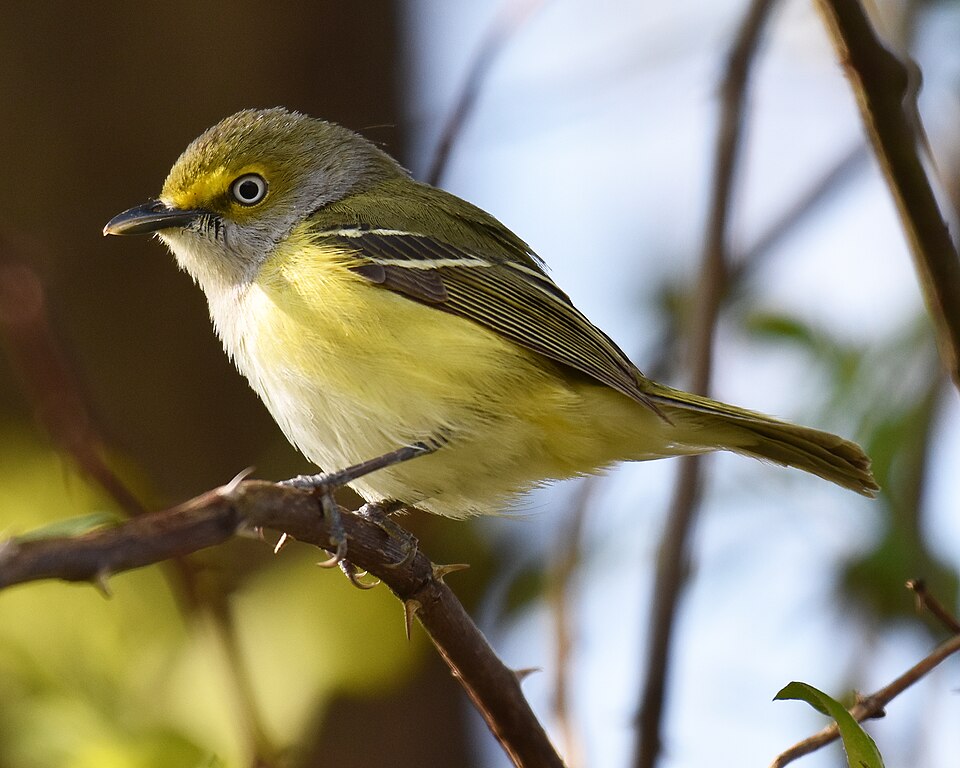

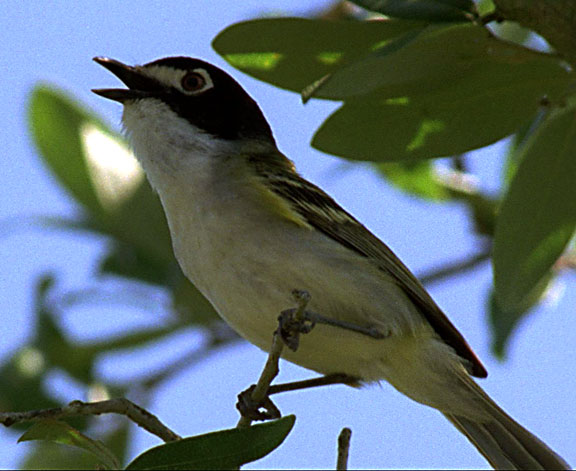

Birds Similar to the Brown-capped Vireo
These species are often confused with the Brown-capped Vireo due to similar appearance or overlapping range.
