
Choco Vireo
Vireo masteri
Order: Passeriformes / Family: Vireonidae

Wikimedia Commons
About the Choco Vireo
The Choco Vireo, Vireo masteri, is a small passerine bird belonging to the Vireonidae family. This species holds a unique place among birdwatchers and ornithologists due to its limited range and striking appearance. The bird is endemic to the biodiverse Choco region of western Colombia and northwestern Ecuador, an area renowned for its high levels of endemism and rich avian diversity. The Choco Vireo inhabits subtropical and tropical moist lowland and montane forests, thriving within elevations ranging from 100 to 1,600 meters. The species prefers dense canopy layers where it can forage and nest, often in remote and undisturbed forest sections. The Choco Vireo plays a crucial ecological role as both a seed disperser and an insect controller. By feeding on various insects, the bird helps maintain the balance of its delicate ecosystem, controlling pest populations and benefiting the plant life that relies on these insects for pollination. Furthermore, the Choco Vireo contributes to the forest's seed dispersion, aiding in plant regeneration and forest health. The bird exhibits some seasonal behaviors, primarily influenced by food availability and breeding cycles. During the wet season, when insect populations are abundant, the Choco Vireo remains highly active, taking advantage of the plentiful food supply to build energy reserves and support breeding efforts. Conversely, in the drier months, the vireo may exhibit reduced activity, conserving energy and focusing on survival amidst more challenging conditions. The significance of the Choco Vireo extends beyond its ecological contributions. The bird is a vital component of the avian biodiversity that draws researchers and eco-tourists to the Choco region. Its presence, along with numerous other endemic species, highlights the urgent need to protect these critical habitats from ongoing threats such as deforestation, climate change, and habitat fragmentation. Conservation efforts in the region focus not only on preserving the Choco Vireo's habitat but also on fostering sustainable practices among local communities.
The Choco Vireo belongs to the family Vireonidae, within the order Passeriformes. These birds typically live estimated 5-7 years with limited data.
How to Identify a Choco Vireo
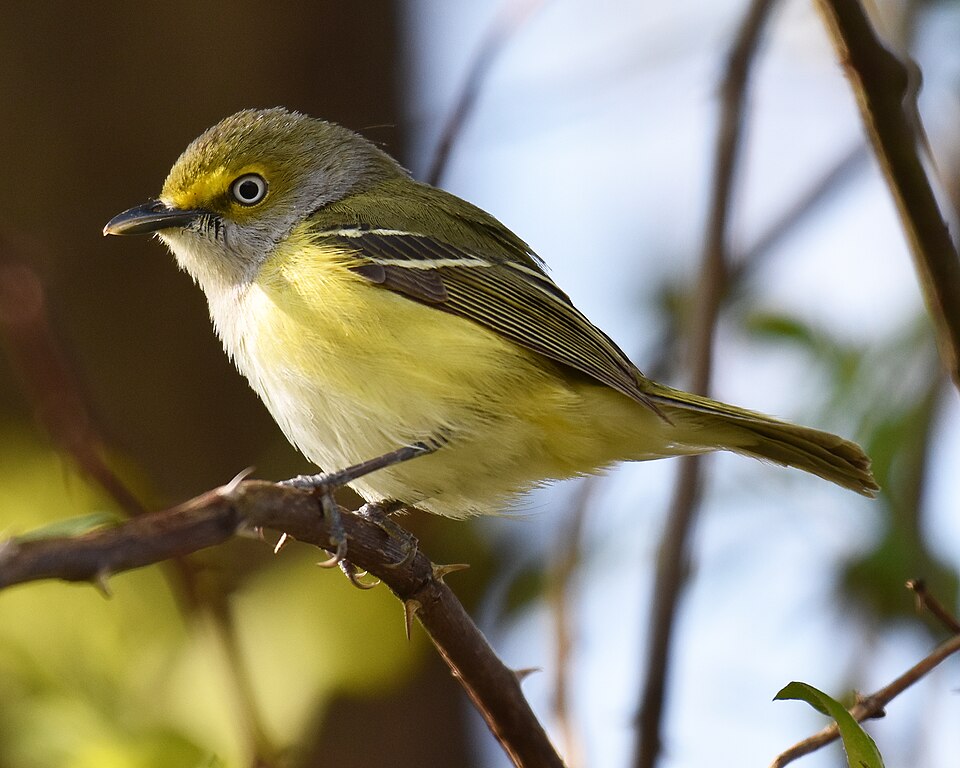
The Choco Vireo is a small bird, measuring approximately 12 to 13 centimeters in length. It showcases a distinctive yellow-green plumage that makes it relatively easy to identify. The upperparts are a vibrant olive-green, while the underparts are a brighter yellow, providing a striking contrast. These colors help the bird blend into its forested environment, offering camouflage against predators. The Choco Vireo's face features a subtle grayish hue with a faint white eye-ring, which can be a helpful field mark for identification. Sexes are similar, though females may be slightly duller in coloration. Juveniles resemble adults but might display more muted tones. In terms of flight, the Choco Vireo has a rapid, agile flight pattern characterized by swift wingbeats and short glides. When perched, it often assumes a horizontal posture, with a slight dip to its tail, which can aid in identification. The Choco Vireo might be confused with other vireo species, particularly those within its range like the Red-eyed Vireo. However, its unique coloration and the absence of the distinctive eye stripe found in some other vireos help differentiate it. Observers should note these subtle differences to avoid misidentification.
Having trouble telling birds apart? Upload a photo to our bird identification tool for an instant species match.
Choco Vireo Habitat and Range
Preferred Habitat
The Choco Vireo inhabits subtropical and tropical moist lowland and montane forests, primarily within the Choco biogeographic region. This area spans the western slopes of the Andes in Colombia and northwestern Ecuador. The bird thrives in elevations ranging from 100 to 1,600 meters, with a preference for the middle and upper canopy layers. It favors areas with dense foliage, which provide ample foraging opportunities and nesting sites. The Choco Vireo relies heavily on mature, undisturbed forests, where the structural complexity supports its insectivorous diet and nesting habits. While the bird is not typically found in urban areas, it may occasionally venture into forest edges or secondary growth forests, especially when these areas are adjacent to extensive primary forest. Seasonal habitat shifts are minimal, but the bird's activity levels and foraging strategies may change in response to seasonal variations in food availability.
Geographic Range
The Choco Vireo's range is confined to the Choco biogeographic region, spanning western Colombia and northwestern Ecuador. This region is known for its high levels of biodiversity and endemism. The bird's breeding range covers dense, humid forests within this area, particularly those on the Andean slopes. The Choco Vireo does not undertake long-distance migrations, maintaining a relatively stable presence within its range year-round. However, it may exhibit minor altitudinal movements in response to food availability or weather conditions. Within its range, population density hotspots include well-preserved forest areas where human impact is minimal. These locations provide the necessary resources for feeding, breeding, and shelter. Despite its limited range, the Choco Vireo plays a significant role in the ecological dynamics of these forests.
Want to know which birds visit your area? Browse our backyard birds by location guides for region-specific species lists.
What Does the Choco Vireo Eat?
The Choco Vireo primarily feeds on insects, making it an important insectivore within its ecosystem. Its diet consists of a variety of arthropods, including caterpillars, beetles, and spiders. The bird employs a gleaning foraging technique, meticulously searching leaves and branches for prey. It also occasionally employs a hover-gleaning method, hovering momentarily to snatch insects from foliage. During the wet season, when insect populations peak, the Choco Vireo takes advantage of the abundance to build reserves and support its breeding cycle. In the drier months, it may supplement its diet with small fruits and berries, which provide essential nutrients and hydration when insect availability decreases. The bird typically forages throughout the day, with peak activity in the early morning and late afternoon when temperatures are more favorable and prey is more active. The Choco Vireo's feeding strategies contribute significantly to pest control within its habitat, benefiting plants and other wildlife.
Choco Vireo Behavior and Social Structure
The Choco Vireo exhibits a predominantly solitary lifestyle, often seen foraging alone or in pairs. It is a territorial bird, vigorously defending its feeding and breeding grounds from intruders. During the breeding season, males engage in elaborate courtship displays, showcasing their vocal abilities and plumage to attract females. These displays often include singing from prominent perches and brief, fluttering flights to demonstrate agility and fitness. In terms of social structure, the Choco Vireo may occasionally join mixed-species foraging flocks, particularly during the non-breeding season. This behavior allows it to exploit food resources more efficiently and provides additional protection from predators through increased vigilance within the group. The bird's response to predators includes alarm calls and evasive flight maneuvers. It relies on its agility and familiarity with its forest habitat to escape potential threats. The Choco Vireo is diurnal, with most of its activity concentrated in the early morning and late afternoon. This schedule helps it avoid the midday heat and take advantage of the most active periods of prey availability.
Choco Vireo Nesting and Reproduction
The Choco Vireo constructs a compact cup-shaped nest, typically situated in the fork of a tree branch high in the canopy. The nest is made from a variety of materials, including grasses, moss, and spider silk, which help bind the structure together and provide camouflage. Nest placement generally occurs at heights of 5 to 15 meters, offering protection from ground-based predators and disturbances. The clutch size typically consists of 2 to 4 eggs, which are pale with subtle spotting. Both parents participate in incubation, which lasts approximately 12 to 14 days. After hatching, the chicks remain in the nest for another 12 to 15 days before fledging. During this period, both parents take turns feeding the chicks, providing a diet rich in insects to ensure rapid growth and development. The Choco Vireo typically raises one brood per year, though favorable conditions may occasionally allow for a second.
Choco Vireo Sounds and Vocalizations
The Choco Vireo's primary song is a series of melodious phrases, characterized by a clear, sweet whistle with varying pitch and rhythm. These phrases often consist of 4 to 6 notes, delivered in a deliberate, repetitive pattern that serves both to attract mates and to establish territorial boundaries. In addition to its song, the Choco Vireo produces call notes that are short and sharp, used for communication between mates or as alarm signals when potential threats are nearby. During the dawn chorus, the Choco Vireo becomes particularly vocal, joining other forest inhabitants in a symphony that greets the new day. Its song, while distinct, may remind listeners of the Red-eyed Vireo's, though it lacks the latter's complex and varied repertoire.
Interesting Facts About the Choco Vireo
- 1The Choco Vireo was first described only in 1991, making it one of the more recently recognized vireo species.
- 2Despite its small size, the Choco Vireo plays a substantial role in its ecosystem by controlling insect populations.
- 3The Choco Vireo's vibrant plumage helps it blend into the lush canopy, a crucial adaptation for avoiding predators.
- 4This species is highly vocal, with songs that can be heard year-round, contributing to the rich soundscape of its habitat.
- 5The Choco region, home to the Choco Vireo, is one of the most biodiverse areas in the world, hosting numerous endemic species.
- 6The bird’s restricted range makes it a key indicator species for the health of the Choco's unique ecosystems.
- 7The Choco Vireo often joins mixed-species flocks, benefiting from the collective vigilance against predators.
Choco Vireo Conservation Status
The Choco Vireo is currently listed as Vulnerable on the IUCN Red List, primarily due to habitat loss and degradation. Its population trend is considered decreasing, with primary threats including deforestation for agriculture, logging, and infrastructure development. Conservation efforts focus on preserving remaining forest habitats and promoting sustainable land-use practices within the Choco region. Protected areas and reserves play a crucial role in safeguarding the Choco Vireo's habitat, though enforcement and expansion of these areas remain challenges. Historically, the bird has faced pressure from human expansion, but increased awareness and eco-tourism interest offer hope for its future. Continued research and monitoring are essential to understand population dynamics and inform conservation strategies.
Other Vireonidae Species


Birds Similar to the Choco Vireo
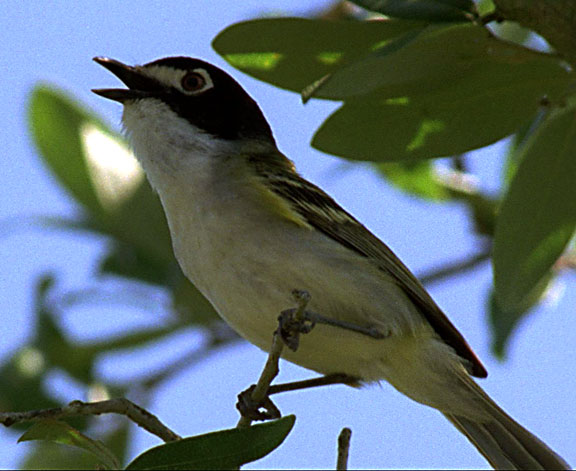
These species are often confused with the Choco Vireo due to similar appearance or overlapping range.
