
Correndera Pipit
Anthus correndera
Order: Passeriformes / Family: Motacillidae

Wikimedia Commons
About the Correndera Pipit
The Correndera Pipit, scientifically named Anthus correndera, thrives in the expansive grasslands of South America. This small passerine bird plays a crucial role in its ecosystem as both predator and prey. Its presence in countries like Argentina, Uruguay, and Chile marks it as a species well adapted to temperate and subtropical grassland habitats. The Correndera Pipit exhibits a remarkable resilience to the seasonal changes that sweep across its range. During the breeding season, which aligns with the Southern Hemisphere's spring and early summer, the pipit becomes more conspicuous as males perform elaborate song flights to establish territories and attract mates. As a ground-nesting bird, the Correndera Pipit is an integral part of its habitat's ecological tapestry, contributing to the control of insect populations while also providing a food source for a variety of predators.
The ecological significance of the Correndera Pipit extends beyond its immediate environment. As a member of the Motacillidae family, it shares a lineage with other pipits and wagtails, a group known for their adaptability to open landscapes. This adaptability allows the Correndera Pipit to exploit a range of habitats within its geographic distribution, from lowland pampas to the fringes of the Andes. By maintaining their presence across these diverse terrains, Correndera Pipits help maintain the health of grassland ecosystems, promoting biodiversity through their roles as seed dispersers and insect predators.
The Correndera Pipit's survival, amidst the challenges posed by agricultural expansion and habitat fragmentation, underscores its resilience. However, this adaptability should not obscure the pressures faced by grassland birds globally. Conservation efforts focused on preserving native grasslands will benefit not only the Correndera Pipit but also a myriad of other species that rely on these critical habitats. Through ornithological studies, researchers continue to monitor the population trends of the Correndera Pipit, ensuring that this species remains a vibrant part of South America's avian community.
The Correndera Pipit belongs to the family Motacillidae, within the order Passeriformes. These birds typically live typically 4-6 years, with a maximum recorded lifespan of 9 years..
How to Identify a Correndera Pipit
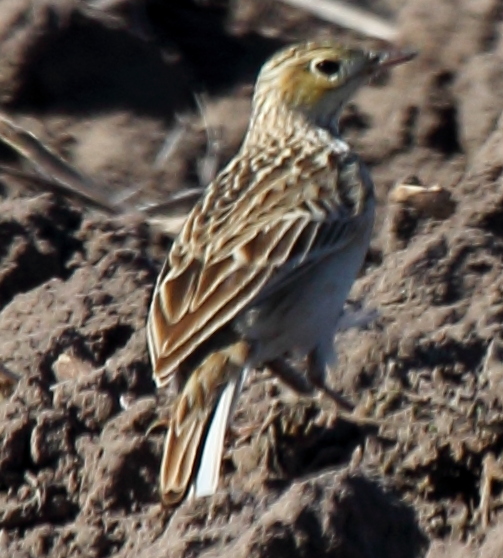
The Correndera Pipit is a small songbird, approximately 15 to 16 cm in length. It is characterized by its brown, streaked plumage that provides excellent camouflage against the grasslands it inhabits. The upperparts are a mix of brown and buff streaks, while the underparts are paler with subtle streaking on the breast. During field identification, the Correndera Pipit's long legs and a relatively slender bill are notable features. In breeding plumage, males may show slightly more vibrant hues compared to females, though both sexes appear similar at a glance.
Juveniles resemble adults but typically display a more pronounced streaking pattern on the chest and flanks, which fades as they mature. In flight, the Correndera Pipit's silhouette is distinct due to its streamlined body and rapid, undulating flight pattern. While perched, it often adopts a characteristic upright posture, accentuating its long-legged appearance.
Confusion with other pipit species can occur, particularly with the Yellowish Pipit (Anthus lutescens). However, the Correndera Pipit can be distinguished by its more muted coloration and the lack of bright yellow hues present in the Yellowish Pipit. Observing the bird's behavior, such as its unique song flight, can also aid in accurate identification.
Having trouble telling birds apart? Upload a photo to our bird identification tool for an instant species match.
Correndera Pipit Habitat and Range
Preferred Habitat
The Correndera Pipit inhabits a variety of grassland environments across South America, favoring open areas with short vegetation. It thrives in the pampas of Argentina, the campos of Uruguay, and the high-altitude grasslands of the Andes in Chile. The species is typically found at elevations ranging from sea level to approximately 3,000 meters in the Andean foothills.
Throughout the year, the Correndera Pipit may shift habitats slightly in response to seasonal changes. During the breeding season, it prefers areas with ample ground cover to conceal its nest. Outside of the breeding season, it may venture into agricultural fields and pastures, though it remains primarily associated with natural grasslands.
Urban presence is limited, as the Correndera Pipit favors rural landscapes where it can forage and breed with minimal disturbance. Its reliance on grasslands underscores the importance of conserving these habitats, which face threats from agricultural expansion and urbanization.
Geographic Range
The Correndera Pipit's range spans several South American countries, with its core populations concentrated in Argentina, Uruguay, and Chile. In Argentina, it is found from the central pampas to the northern regions, while in Uruguay, it is prevalent throughout the country, thriving in the campos. In Chile, its distribution extends from the central valleys to the Andean foothills.
During the breeding season, the Correndera Pipit establishes territories in open grasslands, but some populations may exhibit limited altitudinal migration, moving to lower elevations in winter. Unlike some migratory pipits, the Correndera Pipit generally remains within the same geographic region year-round, although local movements are not uncommon.
Population density is highest in the expansive pampas of Argentina, where suitable habitat is abundant. Monitoring efforts focus on these areas to understand population trends and to implement conservation measures effectively.
Want to know which birds visit your area? Browse our backyard birds by location guides for region-specific species lists.
What Does the Correndera Pipit Eat?
The Correndera Pipit's diet primarily consists of insects and other small invertebrates, making it an effective insectivore. Grasshoppers, beetles, and ants form the bulk of its nutritional intake, supplemented by spiders and small larvae. During the breeding season, when energy demands are high, the pipit increases its foraging activity to support its offspring.
In addition to its primary insect diet, the Correndera Pipit occasionally consumes seeds and small plant matter, especially during the non-breeding season when insects may be less abundant. This dietary flexibility allows it to adapt to seasonal fluctuations in food availability.
The Correndera Pipit employs a characteristic foraging technique, walking briskly across the ground while scanning for movement. It can also be observed performing short flights to catch prey on the wing. The combination of ground foraging and aerial insect hawking enables it to exploit a variety of food sources effectively.
Correndera Pipit Behavior and Social Structure
The Correndera Pipit displays a range of behaviors adapted to its grassland habitat. It is primarily solitary or found in pairs during the breeding season, with males establishing territories through song and flight displays. These displays involve ascending in a spiraling flight while delivering a melodious song, then parachuting back to the ground, a behavior that serves both as a territorial declaration and a courtship display.
Outside of the breeding season, the Correndera Pipit may form loose flocks, especially in areas where food resources are abundant. Flocking provides safety in numbers, allowing individuals to better detect and escape from predators such as raptors and ground predators.
Daily activity patterns of the Correndera Pipit include active foraging during early morning and late afternoon, with periods of rest during the hottest parts of the day. The bird maintains a vigilant posture, often pausing to scan its surroundings for potential threats.
Correndera Pipit Nesting and Reproduction
The Correndera Pipit constructs a well-hidden nest on the ground, typically using grasses and plant material to create a cup-shaped structure. Nest placement is strategic, often situated in a tuft of grass or among low shrubs to provide camouflage from predators.
The female primarily undertakes nest construction and lays a clutch of 3 to 5 eggs. Incubation lasts about 12 to 14 days, with both parents participating in feeding the young once hatched. The fledging period is approximately 12 to 15 days, during which time the chicks remain well-concealed to avoid detection.
The Correndera Pipit may raise two broods per year, depending on environmental conditions and food availability. Parental care is intensive, with both males and females involved in feeding and protecting the young until they are independent.
Correndera Pipit Sounds and Vocalizations
The song of the Correndera Pipit is a melodious series of sweet, cascading notes delivered during its characteristic flight display. The song is rhythmic and can be described as cheerful and fluid, often lasting several seconds. In addition to its primary song, the Correndera Pipit produces a variety of call notes used for communication with mates and signaling alarm.
Alarm calls are sharp and urgent, serving to alert other pipits of potential threats. During the dawn chorus, the Correndera Pipit's song is more pronounced, contributing to the vibrant soundscape of the grasslands. The song is somewhat reminiscent of other pipit species but distinguished by its unique combination of pitch and rhythm.
Interesting Facts About the Correndera Pipit
- 1The Correndera Pipit is capable of mimicking the calls of other bird species, showcasing its vocal versatility.
- 2During its aerial song display, the Correndera Pipit can ascend to heights of over 30 meters before parachuting down.
- 3Despite being a ground-nester, the Correndera Pipit's eggs are well-camouflaged, resembling small pebbles or soil clumps.
- 4The Correndera Pipit can adjust its song frequency to overcome background noise, ensuring its calls are heard.
- 5The species name 'correndera' is derived from the Spanish word 'correr,' meaning 'to run,' reflecting its ground-dwelling habits.
- 6In the wild, the Correndera Pipit can live up to 6 years, a testament to its adaptability and survival skills.
- 7The Correndera Pipit has a unique foraging strategy that includes both ground hunting and aerial insect hawking.
Correndera Pipit Conservation Status
Currently, the Correndera Pipit is classified as Least Concern by the IUCN, with a stable population trend. However, ongoing threats include habitat loss due to agricultural expansion and grassland degradation. Conservation efforts focus on preserving native grasslands and promoting sustainable agricultural practices to mitigate habitat destruction. Historically, the Correndera Pipit has experienced fluctuations in population numbers, but its adaptability to changing environments has aided its resilience. Continued monitoring and habitat protection are essential to ensure this species remains a common and widespread presence in its native range.
Other Motacillidae Species



Birds Similar to the Correndera Pipit
These species are often confused with the Correndera Pipit due to similar appearance or overlapping range.

