
Peruvian Pipit
Anthus peruvianus
Order: Passeriformes / Family: Motacillidae

Wikimedia Commons
About the Peruvian Pipit
The Peruvian Pipit (Anthus peruvianus) is a small, inconspicuous bird inhabiting the diverse landscapes of South America. This species belongs to the Motacillidae family, sharing its lineage with wagtails and other pipits. The Peruvian Pipit is primarily found in the arid and semi-arid regions of Peru, with a significant presence in the coastal areas and Andean foothills. Its adaptability to these varied environments makes it a species of interest for ornithologists studying ecological roles and adaptations. The Peruvian Pipit plays a crucial role in its ecosystem as both a predator and prey. It feeds on insects and small invertebrates, thereby controlling pest populations. Additionally, it serves as a food source for larger predators, contributing to the complex food web of its habitat. During different seasons, the Peruvian Pipit exhibits changes in behavior and movement. In the breeding season, it becomes more territorial, often seen defending its chosen patch of land from intruders. As the seasons change, the pipit may migrate short distances in search of food and nesting sites, though it generally remains within a relatively confined geographical area compared to long-distance migratory birds. This species' presence in various habitats highlights its ecological significance and adaptability.
The Peruvian Pipit belongs to the family Motacillidae, within the order Passeriformes. These birds typically live average 2-3 years with a max recorded of 6 years..
How to Identify a Peruvian Pipit
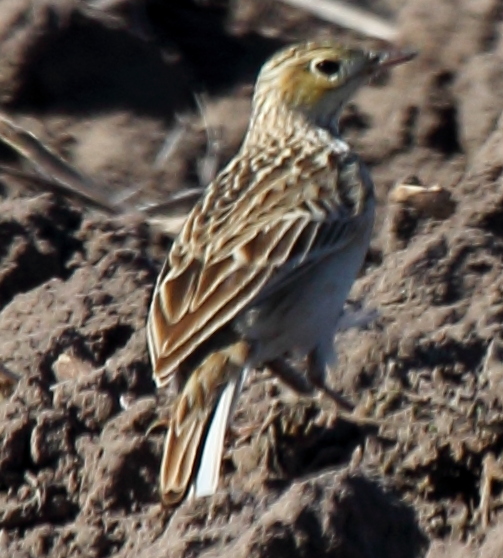
The Peruvian Pipit can be identified by its streaked brown and white plumage, which provides excellent camouflage in its natural habitat. Adults exhibit a subtle pattern of streaks on the back and breast, allowing them to blend seamlessly into the grassy and scrubby landscapes they frequent. Juveniles resemble adults but often have less defined streaking and a slightly fluffier appearance. There are no significant differences in plumage between male and female Peruvian Pipits, which can make gender identification in the field challenging. The bird's overall size is small, with a length typically ranging from 14 to 16 centimeters. Its slender build and long legs are characteristic of the pipit family. In flight, the Peruvian Pipit displays a distinctive undulating flight pattern, interspersed with brief periods of gliding. When perched, it often adopts an upright posture, scanning its surroundings for insects and other small prey. The Peruvian Pipit may be confused with similar species such as the Tawny Pipit, but careful observation of its specific streak pattern and habitat preferences can aid in accurate identification.
Having trouble telling birds apart? Upload a photo to our bird identification tool for an instant species match.
Peruvian Pipit Habitat and Range
Preferred Habitat
The Peruvian Pipit thrives in a variety of habitats, predominantly favoring arid and semi-arid regions. It is commonly found in coastal scrublands, open grasslands, and the lower slopes of the Andes. This bird has a particular affinity for dry, open areas with sparse vegetation, which provide ample foraging opportunities. The elevation range of the Peruvian Pipit typically spans from sea level to about 2,500 meters, although it is more frequently observed at lower elevations. Seasonal habitat shifts are minimal, as the pipit tends to remain in regions where its environmental needs are consistently met. Unlike some other pipits, the Peruvian Pipit is not commonly found in heavily urbanized areas, preferring the quieter, more natural landscapes of rural environments.
Geographic Range
The Peruvian Pipit is primarily found in Peru, with its range extending slightly into neighboring countries such as Ecuador and Chile. It is a resident species, meaning it does not undertake long migratory journeys like some of its relatives. Within Peru, the pipit is widely distributed along the coastal regions and the Andean foothills. The bird's range is generally concentrated in areas where conditions are favorable for its survival, such as regions with abundant insect life and suitable nesting sites. Population density hotspots include the coastal desert regions and lower Andean elevations, where the pipit can exploit a diverse range of food resources. Despite its limited geographical range, the Peruvian Pipit remains a resilient and adaptable species.
Want to know which birds visit your area? Browse our backyard birds by location guides for region-specific species lists.
What Does the Peruvian Pipit Eat?
The diet of the Peruvian Pipit consists mainly of insects and other small invertebrates. During the breeding season, the bird's diet is rich in protein to support the increased energy demands of reproduction. It often forages on the ground, using its keen eyesight to detect movement among the grasses and scrub. The pipit employs a methodical foraging technique, walking or running with quick, jerky movements to flush out prey. Common food items include beetles, ants, and caterpillars, which are abundant in its preferred habitats. In the non-breeding season, the diet may expand to include seeds and small berries, providing a more varied nutritional intake when insect availability diminishes. The Peruvian Pipit typically feeds throughout the day, with peak foraging activity occurring in the early morning and late afternoon.
Peruvian Pipit Behavior and Social Structure
The Peruvian Pipit exhibits a range of behaviors that reflect its adaptability and survival strategies. It is generally a solitary bird, although pairs may be observed during the breeding season. Territorial behavior is pronounced, with males actively defending their chosen territories through song and display flights. Courtship displays involve a combination of song and physical posturing, aimed at attracting a mate and deterring rivals. In response to predators, the Peruvian Pipit relies on its cryptic plumage for camouflage, often freezing or crouching low to avoid detection. Daily activity patterns include periods of active foraging interspersed with rest and preening. The bird is diurnal, with activity peaking during the cooler parts of the day when prey is more active and temperatures are moderate.
Peruvian Pipit Nesting and Reproduction
Peruvian Pipits build nests on the ground, typically in a sheltered location such as under a tuft of grass or a small bush. The nest is a shallow cup constructed from grass, twigs, and other plant materials, lined with finer grasses and hair for insulation. The clutch size usually ranges from 2 to 4 eggs, which are incubated by the female for approximately 12 to 14 days. After hatching, both parents participate in feeding and caring for the chicks. The young fledge within two weeks, leaving the nest but remaining close by under parental supervision. The Peruvian Pipit may produce one or two broods per year, depending on environmental conditions and food availability.
Peruvian Pipit Sounds and Vocalizations
The Peruvian Pipit's song is a series of high-pitched, musical notes delivered in rapid succession. The rhythm is lively, with a clear, tinkling quality that carries well across open landscapes. Aside from its primary song, the pipit uses a variety of call notes, including a short, sharp 'chip' used as an alarm call. These vocalizations play a crucial role in communication, especially during the breeding season when establishing and defending territory is paramount. The dawn chorus of the Peruvian Pipit is particularly notable, as it joins the symphony of other bird species in its habitat, contributing to the rich auditory tapestry of the morning.
Interesting Facts About the Peruvian Pipit
- 1The Peruvian Pipit is one of the few pipit species that does not migrate long distances, opting instead for local movements.
- 2Despite its small size, the Peruvian Pipit can consume a surprisingly large number of insects daily, aiding in pest control.
- 3The Peruvian Pipit has a unique adaptation in its plumage that provides excellent camouflage in arid environments.
- 4This bird's song is considered one of the most melodious among pipits, often mistaken for that of more colorful songbirds.
- 5The Peruvian Pipit's adaptability allows it to thrive in some of the harshest and driest regions of Peru.
- 6Both male and female Peruvian Pipits participate in caring for their young, sharing feeding duties equally.
- 7The cryptic behavior and plumage of the Peruvian Pipit make it a challenging species to spot in the wild.
Peruvian Pipit Conservation Status
The Peruvian Pipit is currently listed as Least Concern by the IUCN, reflecting its stable population trend. While not immediately threatened, the bird faces potential risks from habitat destruction and climate change, which may alter its preferred environments. Conservation efforts focus on habitat preservation and monitoring population dynamics to ensure its continued survival. Historically, the Peruvian Pipit has maintained a relatively stable population, benefiting from its adaptability to a range of habitats and environmental conditions.
Other Motacillidae Species



Birds Similar to the Peruvian Pipit
These species are often confused with the Peruvian Pipit due to similar appearance or overlapping range.
