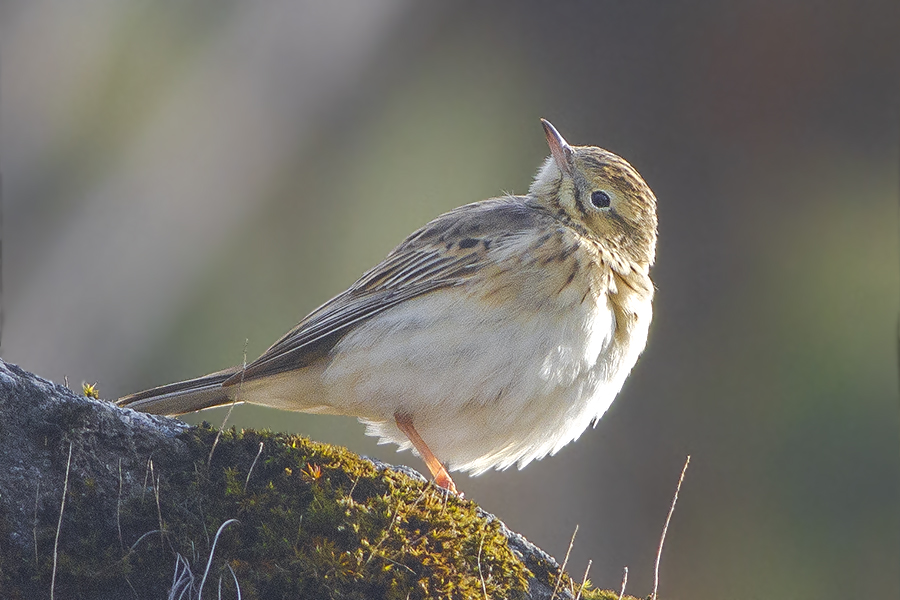
Richard's Pipit
Anthus richardi
Order: Passeriformes / Family: Motacillidae

Wikimedia Commons
About the Richard's Pipit
The Richard's Pipit, Anthus richardi, is a fascinating member of the family Motacillidae. This bird is a medium-sized passerine, measuring around 18 centimeters in length, which makes it one of the larger pipits. It has a significant ecological role in the open grasslands and agricultural areas where it primarily resides. This species is widespread across Asia, with a breeding range extending from Eastern Siberia through Mongolia into the northern parts of China. It is a long-distance migrant, wintering in South Asia, including India, Nepal, and parts of Southeast Asia.
Richard's Pipit is characterized by its adaptability to various grassland habitats, making it a vital species for the maintenance of these ecosystems. The bird's presence indicates healthy insect populations, as it primarily feeds on small invertebrates. Its behavior and movements contribute to the control of insect populations, showcasing its ecological significance.
During the breeding season, which primarily occurs from May to July, Richard's Pipit inhabits upland steppes and meadows. Its choice of nesting sites reflects its preference for open landscapes where its camouflage provides an advantage against predators. As the seasons change, this species migrates to lower altitudes and more temperate regions, adjusting its habitat preferences according to climate and food availability.
Richard's Pipit serves as a bioindicator for grassland health. Its migratory patterns are studied to understand broader ecological changes across its range. The species exhibits remarkable adaptability in the face of changing environments, moving efficiently between breeding and wintering grounds. Its role within grassland ecosystems cannot be overstated, as it helps maintain the balance of these habitats through its feeding and nesting behaviors.
The Richard's Pipit belongs to the family Motacillidae, within the order Passeriformes. These birds typically live typically around 3 years, though some may live longer..
How to Identify a Richard's Pipit
Richard's Pipit can be identified by its buff-brown plumage, which provides excellent camouflage in its preferred grassy habitats. The adult plumage is uniform with a subtle streaking on the breast. Both males and females share similar plumage, making them difficult to distinguish in the field. Juveniles are slightly paler and exhibit more pronounced streaking, particularly on the back and wings.
One of the key identification features is its long tail, often seen flicking up and down as the bird walks or runs along the ground. In flight, Richard's Pipit displays a distinctive silhouette with a strong, bounding flight pattern typical of pipits. The wings are long and pointed, aiding in its long migratory journeys. Its flight call, a sharp 'psip' or 'pseep', is another useful identification marker, echoing over open fields.
Similar species, such as the Tawny Pipit, can cause confusion. However, Richard's Pipit is generally larger and more robust. Its strong bill and longer hind claw are distinguishing characteristics that help set it apart from other pipit species. Observing its typical upright posture and gait can also aid in correct identification.
Having trouble telling birds apart? Upload a photo to our bird identification tool for an instant species match.
Richard's Pipit Habitat and Range
Preferred Habitat
Richard's Pipit thrives in open grasslands, agricultural fields, and steppes. It is commonly found in areas with short to medium-height grasses, where it can forage efficiently. This species prefers lowland to mid-elevation environments during the breeding season, often occupying upland meadows and pasturelands. As a migratory bird, it shifts to lower altitudes and more temperate climates in winter.
In urban areas, Richard's Pipit may occasionally be observed in parks and on the fringes of towns where suitable open spaces are available. However, it is less common in heavily forested or urbanized environments, preferring rural expanses that offer abundant insect prey. Its adaptability to various open environments makes it a resilient species across its extensive range.
Geographic Range
Richard's Pipit has a broad breeding range across the Palearctic region. It breeds in Eastern Siberia, Mongolia, and parts of northern China. During migration, it traverses extensive distances, moving southwards through Central Asia. In winter, it primarily inhabits South Asia, including India, Nepal, Bangladesh, and parts of Southeast Asia, such as Thailand and Myanmar.
Migration corridors are essential for Richard's Pipit, with major flyways crossing through Central and South Asia. Specific population density hotspots include the Gangetic Plains and the Terai region, where vast grasslands provide ample feeding grounds during winter. The presence of Richard's Pipit in these regions indicates the health of migratory routes and the availability of suitable habitats across its range.
Want to know which birds visit your area? Browse our backyard birds by location guides for region-specific species lists.
What Does the Richard's Pipit Eat?
The diet of Richard's Pipit primarily consists of insects and other small invertebrates. It forages on the ground, using its long legs to move swiftly through grasses. The bird's diet varies seasonally, with a focus on ants, beetles, and caterpillars during the breeding season. In winter, it may supplement its diet with seeds and small grains, particularly in agricultural fields.
Foraging behavior is characterized by a combination of walking, running, and short flights. Richard's Pipit uses its keen eyesight to spot prey, often pausing briefly to peck at the ground. Prey size is generally small, allowing the bird to consume it quickly and efficiently. Feeding occurs throughout the day, with peak activity in the early morning and late afternoon when insect activity is highest.
Richard's Pipit Behavior and Social Structure
Richard's Pipit exhibits solitary to loosely social behaviors, often seen alone or in small groups outside the breeding season. During the breeding period, males establish territories through song and display flights. They perform aerial displays, ascending rapidly before parachuting down with wings and tail spread, a behavior designed to attract mates and deter rivals.
This species displays strong territoriality, particularly during the breeding season. Males sing from prominent perches to defend their territory. Flocking behavior is more common during migration and winter, where small groups may forage together, taking advantage of abundant food resources in agricultural fields.
Richard's Pipit responds to predators with alertness and rapid escape flights. It remains active throughout the day, adapting its activities to the availability of food and the presence of threats. Dawn and dusk are periods of increased activity, aligning with the behavior of many insect prey species.
Richard's Pipit Nesting and Reproduction
Richard's Pipit builds a cup-shaped nest on the ground, typically concealed within a tuft of grass or low vegetation. The nest is constructed from dry grasses and fine roots, with a lining of softer materials such as animal hair or feathers. This camouflage is crucial for protection against predators.
The female lays a clutch of 3-5 eggs, which she incubates for about 12-14 days. Both parents partake in feeding the chicks, which fledge approximately 12-14 days after hatching. The young remain dependent on the parents for a short period post-fledging, learning essential foraging skills.
Richard's Pipit typically raises one or two broods per year, depending on environmental conditions and food availability. The choice of nesting sites near abundant food sources ensures the successful rearing of chicks.
Richard's Pipit Sounds and Vocalizations
The primary song of Richard's Pipit is a series of high-pitched, tinkling notes, delivered in a continuous stream. This song, often heard during display flights, carries across grasslands and is a distinctive sound of its breeding habitats. The call notes include a sharp 'psip', used in flight and as an alarm call.
During the dawn chorus, Richard's Pipit contributes a melodic and rhythmic addition to the symphony of grassland birds. Its vocalizations play an essential role in maintaining territorial boundaries and attracting mates. Compared to other pipits, its song is more persistent and can be a useful identification feature when observing from a distance.
Interesting Facts About the Richard's Pipit
- 1Richard's Pipit is named after the French naturalist Charles Richard, who first described the species in the early 1800s.
- 2This species can travel over 3000 kilometers during migration, showcasing its remarkable endurance and navigational skills.
- 3Unlike many birds, the Richard's Pipit often walks rather than hops, owing to its long legs that facilitate efficient ground movement.
- 4During its breeding display, a male Richard's Pipit can reach heights of up to 50 meters before descending in a parachuting flight.
- 5The species is an important indicator of grassland health, as it relies on diverse insect populations for food.
- 6Richard's Pipit has been recorded at elevations up to 3000 meters in the Himalayas, demonstrating its adaptability to high-altitude environments.
- 7The species exhibits a unique behavior where it frequently flicks its tail up and down, a characteristic trait of the Motacillidae family.
Richard's Pipit Conservation Status
Richard's Pipit is currently listed as Least Concern by the IUCN, with a stable population trend. Its wide distribution and adaptability to various open habitats contribute to its resilience. However, agricultural intensification and habitat loss pose potential threats to specific populations. Conservation efforts focus on preserving grassland habitats and ensuring the sustainability of agricultural practices that support biodiversity. Monitoring programs track population changes, particularly in areas experiencing rapid environmental change. Historically, Richard's Pipit has maintained stable populations, but continued vigilance is essential to address emerging threats.
Other Motacillidae Species

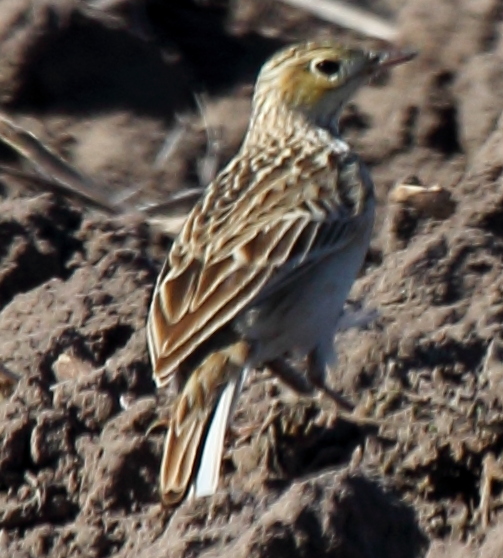


Birds Similar to the Richard's Pipit
These species are often confused with the Richard's Pipit due to similar appearance or overlapping range.