
Short-billed Pipit
Anthus furcatus
Order: Passeriformes / Family: Motacillidae
Wikimedia Commons
About the Short-billed Pipit
The Short-billed Pipit, scientifically known as Anthus furcatus, is a small passerine bird belonging to the family Motacillidae. This bird is predominantly found across the grasslands of South America, notably in countries such as Argentina, Uruguay, and parts of southern Brazil. Its presence is most pronounced in open fields and pastures where its cryptic plumage provides excellent camouflage against the earthy tones of its surroundings. As a member of the Motacillidae family, the Short-billed Pipit plays a crucial role in the ecosystem as both a consumer and prey, contributing to the balance of insect populations while also providing sustenance to various predators. The bird's ecological role extends beyond its immediate environment; its presence often indicates the health of grassland ecosystems, as it relies on these areas remaining undisturbed and with adequate insect populations. Seasonally, Short-billed Pipits are known to exhibit some migratory behavior, although they are largely resident within their range. During the breeding season, typically from September to December, they become more conspicuous, as males engage in aerial displays to attract mates. Outside of the breeding period, these pipits may form small flocks, though they generally remain inconspicuous. The Short-billed Pipit is not only a fascinating subject for ornithologists but also serves as a vital indicator species for conservationists monitoring the health of South American grasslands.
The Short-billed Pipit belongs to the family Motacillidae, within the order Passeriformes. These birds typically live typically 3-5 years, with a maximum recorded lifespan of 7 years..
How to Identify a Short-billed Pipit
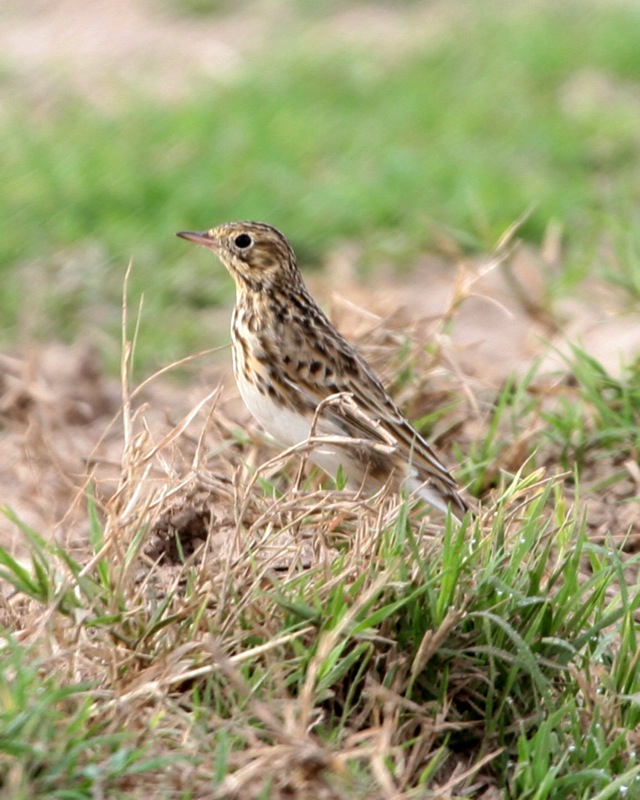
Identifying the Short-billed Pipit involves noting its subtle yet distinctive features. Adult Short-billed Pipits display a predominantly brown plumage, which serves as effective camouflage in their grassland habitats. The streaked breast and pale underparts are key characteristics that help differentiate them from similar species. Juvenile pipits tend to have more pronounced streaking, which gradually fades as they mature. Both male and female pipits have similar plumage, making sex differentiation in the field challenging without behavioral cues. In flight, the Short-billed Pipit can be recognized by its undulating flight pattern, a common trait among pipits, and its relatively short bill. When perched, they often adopt an upright posture, providing a clear view of their streaked breast and pale belly. This species is sometimes confused with the Yellowish Pipit, but the latter has a more pronounced yellow wash on its underparts, especially during the breeding season. Observers should also be mindful of the Short-billed Pipit's environment, as its preference for open grasslands can assist in distinguishing it from other pipits that may inhabit different ecological niches.
Having trouble telling birds apart? Upload a photo to our bird identification tool for an instant species match.
Short-billed Pipit Habitat and Range
Preferred Habitat
The primary habitat of the Short-billed Pipit is open grasslands, which include natural grasslands, pastures, and occasionally the edges of agricultural fields. These habitats offer the bird ample feeding opportunities and nesting sites. The species is generally found at low to moderate elevations, typically not exceeding 1500 meters above sea level. During the breeding season, the Short-billed Pipit favors areas with dense grass cover, which provides necessary concealment for its nests. Although generally associated with rural landscapes, the Short-billed Pipit can sometimes be observed in semi-urban environments, particularly in less disturbed peripheral areas. Seasonal habitat shifts are minimal, as these pipits tend to be non-migratory in nature, remaining within their established territories throughout the year. However, some individuals may move short distances in response to changes in food availability or environmental conditions.
Geographic Range
The Short-billed Pipit predominantly inhabits South America, with a range that includes Argentina, Uruguay, and parts of southern Brazil. Within these countries, it is most commonly found in open grasslands and rural areas, where its camouflage and foraging habits are well-suited. During the breeding season, the bird's distribution becomes more localized, with individuals establishing territories within their preferred grassland habitats. While largely sedentary, some Short-billed Pipits may undertake limited movements outside the breeding season, potentially expanding their range slightly northward within Brazil or southward in Argentina, following seasonal insect abundance. Population density varies across its range, with higher concentrations typically observed in regions where pristine grassland habitats remain intact. Notable hotspots for observing Short-billed Pipits include the Pampas region of Argentina and the Campos grasslands of Uruguay, where they are often seen in open fields.
Want to know which birds visit your area? Browse our backyard birds by location guides for region-specific species lists.
What Does the Short-billed Pipit Eat?
The Short-billed Pipit primarily feeds on a variety of insects, which it gleans from the ground in its chosen grassland habitats. Its diet consists mainly of beetles, ants, and grasshoppers, which are abundant in these areas. Seasonal changes in food availability lead to slight variations in diet, with the pipit consuming different insect species as they become more prevalent. During the breeding season, the demand for energy increases, and the pipit expands its diet to include other invertebrates such as spiders and worms. The foraging technique of the Short-billed Pipit involves a methodical walking pattern, during which it pauses frequently to pick insects off the ground with its short bill. This bird typically forages throughout the day, with peak feeding activity occurring during the cooler morning and late afternoon hours. The size of its prey varies, but it generally targets small to medium-sized insects that are easily manageable.
Short-billed Pipit Behavior and Social Structure
The Short-billed Pipit's behavior is characterized by its territoriality, especially during the breeding season. Males establish and defend territories through a combination of song and aerial displays, often rising into the air and then descending slowly with wings outstretched. This display serves both to attract females and deter rival males. Outside of the breeding season, Short-billed Pipits are less territorial and may associate with other pipits in small, loose flocks. Their social structure is relatively simple, with pairs forming primarily for breeding purposes. In response to predators, these birds rely on their cryptic plumage and often freeze or crouch low to the ground to avoid detection. Daily activity patterns include foraging during the cooler parts of the day and resting during the midday heat. The Short-billed Pipit is a diurnal bird, and its activities are largely governed by the availability of food and the presence of potential threats, such as birds of prey and other predators.
Short-billed Pipit Nesting and Reproduction
Nesting for the Short-billed Pipit involves constructing a well-concealed nest on the ground, typically in a depression hidden among dense grass. The nest is a simple structure, lined with fine grass and occasionally feathers, providing insulation and comfort for the eggs. Clutch size generally ranges from two to four eggs, with incubation lasting approximately 12 to 14 days. Both parents share in the duties of incubation and feeding the chicks, which fledge about 14 to 16 days after hatching. The young are altricial, meaning they hatch in a relatively undeveloped state and require significant parental care. Short-billed Pipits typically raise one to two broods per breeding season, with the timing of subsequent broods depending on environmental conditions and food availability. Parental roles are well-defined, with both the male and female participating in feeding and protecting the young from potential threats.
Short-billed Pipit Sounds and Vocalizations
The song of the Short-billed Pipit is a series of high-pitched, melodious chirps, delivered in rapid succession. This song, often given during aerial display flights, serves to establish territory and attract mates. Call notes are simpler, consisting of short 'tsip' sounds used for communication between pairs or within small flocks. Alarm calls are sharper and more insistent, alerting other pipits to the presence of predators. During the dawn chorus, the Short-billed Pipit's song contributes to the symphony of grassland sounds, often blending with those of other passerines. To human ears, the pipit's song might resemble the rhythmic chirping of a cricket, though with a more musical quality.
Interesting Facts About the Short-billed Pipit
- 1The Short-billed Pipit's aerial displays during courtship can involve flights up to 50 meters high, showcasing their agility.
- 2Despite its small size, the Short-billed Pipit can cover a surprising amount of ground when foraging, sometimes walking several kilometers in a day.
- 3The species is named for its notably short bill, which is an adaptation for its ground-foraging lifestyle.
- 4Short-billed Pipits are known to mimic the songs of other grassland birds, adding complexity to their own vocal repertoire.
- 5The cryptic plumage of the Short-billed Pipit makes it a challenging subject for photographers, as it blends seamlessly with its environment.
- 6In some regions, the Short-billed Pipit acts as a bioindicator, signaling the health of grassland ecosystems.
- 7Their nests are often so well-hidden that even experienced birders can walk by without noticing them.
Short-billed Pipit Conservation Status
The Short-billed Pipit is currently listed as Least Concern by the IUCN, indicating a stable global population. However, localized threats, such as habitat loss due to agricultural expansion and land conversion, pose potential risks to specific populations. Conservation efforts focus on preserving grassland habitats and maintaining ecological conditions that support the species' needs. Historically, populations have fluctuated in response to changes in land use, but dedicated conservation initiatives in some areas have helped stabilize numbers. Ongoing monitoring and habitat protection remain key elements of ensuring the continued survival of the Short-billed Pipit across its range.
Other Motacillidae Species



Birds Similar to the Short-billed Pipit
These species are often confused with the Short-billed Pipit due to similar appearance or overlapping range.

