
Streaked Laughingthrush
Trochalopteron lineatum
Order: Passeriformes / Family: Leiothrichidae

Wikimedia Commons
About the Streaked Laughingthrush
The Streaked Laughingthrush (Trochalopteron lineatum) is a medium-sized bird found predominantly in the Himalayan regions. This species is a member of the Leiothrichidae family, which includes a variety of laughingthrushes known for their sociable nature and distinctive vocalizations. The Streaked Laughingthrush is especially prevalent in the temperate forests and scrublands stretching across countries such as India, Nepal, Bhutan, and parts of China. These birds thrive in the undergrowth and are often seen in pairs or small family groups.
In terms of ecological importance, the Streaked Laughingthrush plays a notable role in seed dispersal and insect control. By feeding on a varied diet that includes insects, small invertebrates, fruits, and seeds, they help maintain the ecological balance within their habitat. Their presence is a good indicator of a healthy ecosystem, showcasing the biodiversity of the regions they inhabit.
Seasonally, the Streaked Laughingthrush is quite adaptable, though it prefers to remain within its range rather than migrate. During the breeding season, which spans from March to August, these birds become more territorial and vocal. Their vibrant calls fill the air as they establish territories and attract mates. In the non-breeding season, they might form larger foraging groups, remaining active during the day and roosting in dense foliage at night. The bird's adaptability to various altitudes and climates within its range demonstrates its resilience and ecological versatility.
The Streaked Laughingthrush belongs to the family Leiothrichidae, within the order Passeriformes. These birds typically live approximately 5-7 years with a maximum recorded of 10 years..
How to Identify a Streaked Laughingthrush
The Streaked Laughingthrush is easily recognized by its combination of brown plumage streaked with darker lines, particularly on the head and back. This streaking gives it a camouflaged appearance, which is beneficial in its dense habitat. Adult birds display a warm brown color with prominent streaks that run along the crown and mantle. The underparts are generally lighter, with a subtle buff tone that adds to its distinct look.
Juvenile Streaked Laughingthrushes resemble adults but have slightly less pronounced streaking, giving them a more uniform appearance. Males and females are similar in appearance, making sex differentiation in the field challenging without close observation. When comparing with similar species, such as the Scaly Laughingthrush, note that the Streaked Laughingthrush lacks the prominent scaling on the underparts that its relative exhibits.
In flight, these birds show a rounded wing silhouette and a slightly longer tail, which aids in their agile maneuvering through dense vegetation. When perched, they maintain an upright posture, often seen flitting energetically from branch to branch as they forage.
Having trouble telling birds apart? Upload a photo to our bird identification tool for an instant species match.
Streaked Laughingthrush Habitat and Range
Preferred Habitat
The Streaked Laughingthrush primarily inhabits temperate forests and scrublands within the Himalayan foothills. These birds favor elevations ranging from 1,500 to 3,500 meters, often frequenting areas with thick undergrowth and ample shrubbery. They are commonly found in deciduous forests, where their plumage blends seamlessly with the environment.
During certain seasons, especially outside the breeding period, they might venture into adjacent agricultural lands or orchards, where they can find additional food resources. Urban presence is minimal, as they avoid heavily populated areas, preferring the tranquility and cover of rural landscapes. Seasonal habitat shifts are generally minimal, with these birds exhibiting a preference for consistent environments year-round.
Geographic Range
The Streaked Laughingthrush's range is concentrated in the Himalayas, stretching through northern India, Nepal, Bhutan, and into southwestern China. Its breeding range aligns closely with these areas, as the bird is largely non-migratory. In India, they are particularly common in the states of Uttarakhand, Himachal Pradesh, and Sikkim.
In Nepal, they are found throughout the mid-hills and are particularly numerous in regions with robust forest cover. Bhutan's rich biodiversity supports a healthy population of these birds, where they are a common sight in protected areas and national parks. While these birds do not undertake long migratory journeys, local altitudinal movements may occur in response to harsh weather conditions, moving to slightly lower elevations in winter months. Population densities are higher in undisturbed forest areas, with hotspots in well-forested valleys and slopes.
Want to know which birds visit your area? Browse our backyard birds by location guides for region-specific species lists.
What Does the Streaked Laughingthrush Eat?
The diet of the Streaked Laughingthrush is diverse, primarily consisting of insects and small invertebrates. During the spring and summer months, when insect populations are at their peak, these birds actively forage for caterpillars, beetles, and other arthropods, which provide essential protein for breeding and feeding young.
In autumn and winter, the diet shifts more towards fruits and seeds, taking advantage of the seasonal abundance of berries and other plant material. This dietary versatility allows the Streaked Laughingthrush to thrive across different habitats and seasons. They employ a foraging technique that involves agile movements through the underbrush, picking insects off leaves and branches, and occasionally gleaning from the ground. Prey size is generally small, suitable for quick consumption. Feeding typically occurs during daylight hours, with the birds being most active in the early morning and late afternoon.
Streaked Laughingthrush Behavior and Social Structure
Streaked Laughingthrushes exhibit a complex social structure, often seen in pairs or small family groups. These birds are highly territorial during the breeding season, with males engaging in vocal displays to ward off intruders and attract mates. Their territorial behavior is marked by frequent singing and physical displays, including wing flapping and tail fanning.
Courtship displays are subtle, often involving mutual preening and feeding between potential mates. Outside the breeding season, Streaked Laughingthrushes may form loose flocks, enhancing their foraging efficiency and predator vigilance. They exhibit a strong response to predators, issuing alarm calls and retreating into dense cover when threatened.
Daily activity patterns include foraging during the cooler parts of the day, with mid-day rest periods often spent in shaded, secluded areas. These birds are predominantly diurnal, becoming active shortly after dawn and winding down before dusk.
Streaked Laughingthrush Nesting and Reproduction
The nesting habits of the Streaked Laughingthrush are consistent with its preference for dense habitats. They construct cup-shaped nests, using materials such as twigs, leaves, and grass, often lined with softer materials like moss or feathers for added insulation. These nests are typically situated low in shrubs or small trees, providing concealment from predators.
The typical clutch size ranges from 2 to 4 eggs, which are pale blue or greenish-blue, sometimes speckled. The incubation period lasts approximately 14 to 16 days, with both parents sharing responsibilities for incubating the eggs and feeding the chicks once hatched. Fledging occurs around 12 to 14 days after hatching, although young birds may remain dependent on their parents for some weeks thereafter. Streaked Laughingthrushes typically have one to two broods per year, depending on environmental conditions and food availability.
Streaked Laughingthrush Sounds and Vocalizations
The primary song of the Streaked Laughingthrush is a series of melodious, fluting phrases repeated with variations. This song, which can last several seconds, features a rhythm that is both lively and rich, making it a prominent feature of the bird's habitat. Call notes are shorter and sharper, often used for communication between individuals or signaling alarm.
Alarm calls tend to be harsher and more urgent, serving as a warning to other birds of potential predators. During the dawn chorus, the Streaked Laughingthrush's song is particularly resonant, contributing to the vibrant soundscape of the Himalayan forests. Their vocalizations are an integral part of their behavior, facilitating social interactions and territorial defense.
Interesting Facts About the Streaked Laughingthrush
- 1Streaked Laughingthrushes are known for their sociable behavior, often forming bonds that last beyond the breeding season.
- 2Despite their vibrant vocalization, Streaked Laughingthrushes are adept at remaining hidden, thanks to their streaked plumage.
- 3These birds are part of the Leiothrichidae family, which includes some of the most vocal of the passerines.
- 4The Streaked Laughingthrush's diet shifts from insect-heavy in summer to more fruits and seeds in the colder months.
- 5In traditional folklore, the Streaked Laughingthrush's song is believed to herald the onset of spring in parts of the Himalayas.
- 6Their nests are often so well hidden that finding one is considered a lucky event for birdwatchers.
- 7Streaked Laughingthrushes maintain a wide range but prefer undisturbed areas, making them indicators of habitat health.
Streaked Laughingthrush Conservation Status
The IUCN currently lists the Streaked Laughingthrush as a species of Least Concern, with a stable population trend. However, habitat loss due to deforestation and agricultural expansion poses potential threats to local populations. Conservation efforts focus on habitat preservation and the establishment of protected areas in key regions across its range. Historically, the population of the Streaked Laughingthrush has remained relatively stable, largely due to its adaptability and the extent of its range. Continued monitoring is essential to ensure that potential threats do not escalate, and initiatives that support forest conservation will benefit this and many other species within the Himalayan ecosystem.
Other Leiothrichidae Species

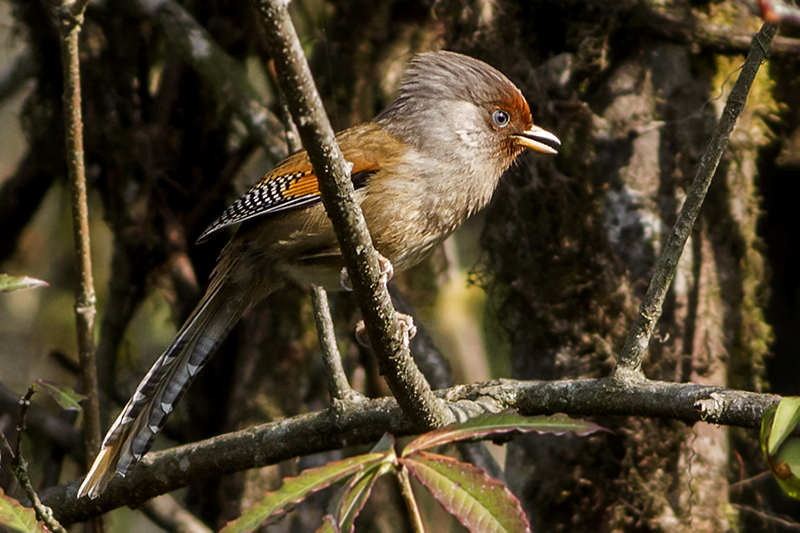

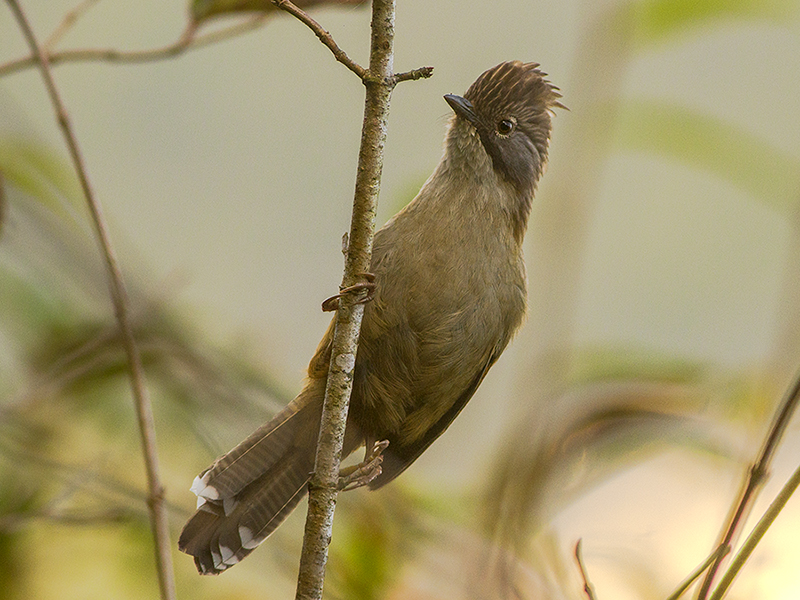
Birds Similar to the Streaked Laughingthrush
These species are often confused with the Streaked Laughingthrush due to similar appearance or overlapping range.

