
Thick-billed Vireo
Vireo crassirostris
Order: Passeriformes / Family: Vireonidae

Wikimedia Commons
About the Thick-billed Vireo
The Thick-billed Vireo (Vireo crassirostris) is a small, robust bird recognized for its characteristic thick bill. This species primarily inhabits the Caribbean, including the Bahamas and the Turks and Caicos Islands. Preferring dense shrublands and coastal thickets, the Thick-billed Vireo thrives in environments that offer abundant cover and foraging opportunities. Its ecological role is significant, as it helps control insect populations and disperses seeds, thereby contributing to the health of its habitat. The Thick-billed Vireo's adaptability to different environments, from semi-arid scrub to humid coastal forests, underscores its ecological importance. Seasonally, these birds are known to exhibit shifts in behavior. During the breeding season, they become highly vocal and territorial, defending their nesting sites vigorously. In contrast, during non-breeding periods, they may form loose associations with mixed-species flocks. Their presence in such flocks aids in foraging efficiency and predator avoidance, showcasing their intelligent adaptation to seasonal challenges. The Thick-billed Vireo's ability to thrive in both disturbed and undisturbed habitats highlights its resilience. Its preference for coastal regions often brings it into contact with human developments, making it a subject of interest for urban ecology studies. Despite this, the species remains widespread and common within its range, indicating a stable population. The Thick-billed Vireo's role in its ecosystem extends beyond pest control and seed dispersal. By maintaining a balance in the local food web, it indirectly supports the growth of native plant species, which in turn provides habitat for other wildlife. Its adaptability to varying environmental conditions makes it a valuable indicator of ecosystem health. Researchers and bird enthusiasts alike find the Thick-billed Vireo to be a fascinating subject, not only due to its ecological contributions but also because of its distinct appearance and behavior. The bird's adaptability and resilience highlight the interconnectedness of species and their environments, emphasizing the importance of conserving diverse habitats.
The Thick-billed Vireo belongs to the family Vireonidae, within the order Passeriformes. These birds typically live average of 5 years, with a maximum recorded of 10 years..
How to Identify a Thick-billed Vireo
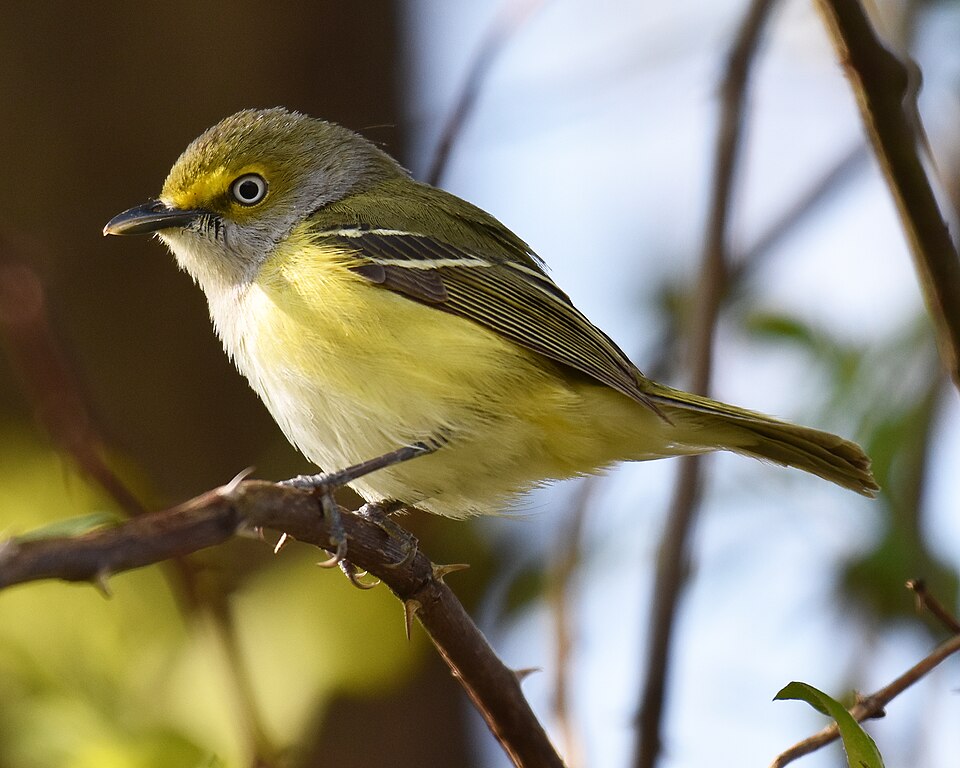
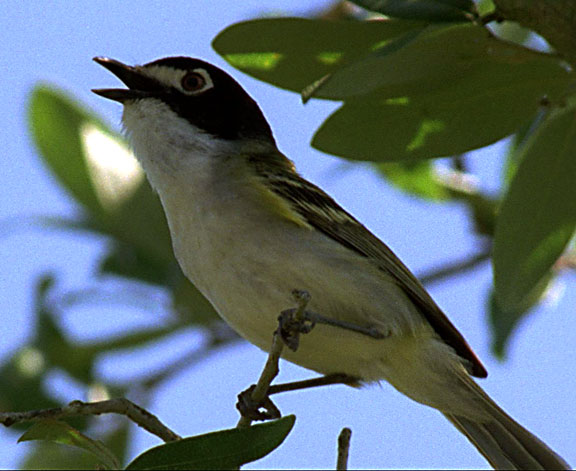
The Thick-billed Vireo is easily identified by its stout, thick bill, which sets it apart from other vireos. Adults display olive-green upperparts and whitish underparts, with a distinctive white eye ring and a faint white supercilium. Juveniles resemble adults but often show slightly duller plumage, lacking the crispness of mature birds. Males and females look similar, making sex differentiation in the field challenging without behavioral cues. The species can sometimes be confused with the White-eyed Vireo, but the Thick-billed Vireo's larger bill and less contrasting head patterns are key differentiators. In flight, the bird reveals a compact silhouette with broad wings and a slightly rounded tail. When perched, the Thick-billed Vireo maintains a somewhat upright posture, often flicking its tail and wings, a behavior typical of many vireo species. These visual cues, combined with their vocalizations, assist birders in distinguishing them from other similar species.
Having trouble telling birds apart? Upload a photo to our bird identification tool for an instant species match.
Thick-billed Vireo Habitat and Range
Preferred Habitat
The Thick-billed Vireo primarily inhabits dense shrublands, coastal thickets, and forest edges. It shows a preference for areas that provide ample cover and food resources, such as mangroves and secondary growth forests. Typically found at elevations ranging from sea level up to 500 meters, this vireo is adaptable to various landscapes. In urban settings, it occasionally visits gardens and parks, though it predominantly remains in more natural habitats. Seasonal habitat shifts are minimal, as the species is non-migratory and tends to stay within its established territories year-round. Its ability to thrive in disturbed habitats like scrub and regenerating forests has allowed it to maintain stable populations despite habitat changes.
Geographic Range
The Thick-billed Vireo is primarily found in the Caribbean, with its range covering the Bahamas, the Turks and Caicos Islands, and parts of Cuba. Its breeding range is largely overlapping with its year-round habitat, as this species does not undertake long-distance migrations. Instead, it remains within its tropical range throughout the year. Within these regions, population densities are highest in areas with abundant vegetation and food resources, such as coastal thickets and mangrove forests. Although it is a resident species, occasional dispersal events have been recorded, likely in search of new territories or resources. These movements contribute to its resilience and adaptability within its range.
Want to know which birds visit your area? Browse our backyard birds by location guides for region-specific species lists.
What Does the Thick-billed Vireo Eat?
The Thick-billed Vireo primarily feeds on insects and other small invertebrates, making it an important predator in controlling pest populations. It employs active foraging techniques, gleaning insects from foliage and occasionally hovering to capture prey from the underside of leaves. During the breeding season, its diet may expand to include small fruits and berries, providing additional nutrition. Prey items typically include caterpillars, beetles, and spiders, with size ranging from tiny aphids to larger moths. The vireo forages throughout the day, with peaks in activity during early morning and late afternoon when insects are most active. Its ability to adapt its diet based on seasonal availability demonstrates its ecological versatility.
Thick-billed Vireo Behavior and Social Structure
The Thick-billed Vireo exhibits a range of behaviors that reflect its adaptability and ecological role. Socially, it is primarily solitary or found in pairs, especially during the breeding season when it becomes highly territorial. Courtship displays involve singing and chasing, with males often engaging in vocal duets with females. Their territorial behavior is prominent, with both sexes defending nesting sites vigorously against intruders. Outside the breeding season, the Thick-billed Vireo may join mixed-species flocks, benefiting from collective foraging and predator vigilance. These flocks typically include other small insectivores, enhancing their foraging success. In response to predators, the vireo employs alarm calls and evasive maneuvers, often retreating to denser cover. Daily activity patterns involve periods of active foraging interspersed with rest and preening, maintaining its plumage in optimal condition for both thermoregulation and display.
Thick-billed Vireo Nesting and Reproduction
The Thick-billed Vireo constructs cup-shaped nests using grass, twigs, and spider silk, typically placed at forked branches in shrubs or small trees. Nest height ranges from 1 to 3 meters above ground, providing protection from ground predators. A typical clutch consists of 2 to 4 eggs, with incubation lasting approximately 12 to 14 days. Both parents share incubation duties and subsequent feeding of the hatchlings. The fledging period spans around 10 to 12 days post-hatching, during which both male and female continue to provide food and protection. The Thick-billed Vireo often raises two broods per year, depending on environmental conditions and food availability, showcasing its reproductive resilience.
Thick-billed Vireo Sounds and Vocalizations
The Thick-billed Vireo's primary song is characterized by a series of sharp, repetitive phrases, often described as harsh or raspy in quality. These vocalizations serve both territorial and mate-attracting purposes. In addition to its song, the vireo produces a variety of call notes, including sharp 'chip' and 'tzeet' sounds used for communication between mates and signaling alarm. During the dawn chorus, their vocal activity peaks, filling the air with their distinctive calls. The song remains consistent throughout the year, but its frequency increases during the breeding season as males assert their presence.
Interesting Facts About the Thick-billed Vireo
- 1Thick-billed Vireos have a remarkably stout bill, aiding in their insect-catching prowess.
- 2The species is non-migratory, staying within its Caribbean range year-round, unlike many vireos.
- 3Despite its small size, the Thick-billed Vireo is known for its loud and persistent singing.
- 4They build nests primarily from spider silk and grass, showcasing resourceful nest construction.
- 5The Thick-billed Vireo often joins mixed-species flocks, enhancing its foraging efficiency.
- 6Their diet includes both insects and small fruits, demonstrating dietary flexibility.
- 7Thick-billed Vireos have adapted well to both natural and disturbed habitats, showing resilience.
Thick-billed Vireo Conservation Status
Currently, the Thick-billed Vireo holds a status of Least Concern according to the IUCN, with stable population trends across its range. Primary threats include habitat loss due to development and potential impacts from hurricanes, which can cause significant environmental changes. Conservation efforts focus on habitat preservation, particularly in key areas like the Bahamas and the Turks and Caicos Islands. Historically, the species has shown resilience to natural fluctuations, maintaining viable populations despite occasional environmental challenges. Ongoing monitoring is essential to ensure its continued stability amidst changing climate conditions and human activities.
Other Vireonidae Species


Birds Similar to the Thick-billed Vireo
These species are often confused with the Thick-billed Vireo due to similar appearance or overlapping range.
