
Yellow-throated Vireo
Vireo flavifrons
Order: Passeriformes / Family: Vireonidae

Wikimedia Commons
About the Yellow-throated Vireo
The Yellow-throated Vireo, Vireo flavifrons, is a small songbird celebrated for its striking yellow throat and breast, offering a vibrant splash of color in the dense canopy of deciduous woodlands. This bird is a member of the Vireonidae family and thrives across parts of North America, particularly in the eastern regions. It plays an integral role in its ecosystem, acting as both a predator of insects and a prey species for larger avian predators. During the breeding season, primarily from late spring to early summer, this vireo takes residence in mature deciduous and mixed forests, where it can be found weaving its cup-shaped nests among the forked branches of trees, particularly favoring oak, maple, and hickory. In these forests, the Yellow-throated Vireo serves as a crucial pest controller, consuming a variety of insects that might otherwise damage foliage. Beyond its striking appearance, the Yellow-throated Vireo captures the attention of birdwatchers with its melodic song, a series of slow, burry phrases that can be heard echoing through the woodlands. As autumn approaches, it embarks on its migratory journey to Central America, where it spends the winter months in tropical and subtropical forests. This seasonal migration is crucial not only for the bird’s survival but also for the transfer of seeds and pollen across regions, aiding in forest regeneration and biodiversity. Understanding the ecological role of the Yellow-throated Vireo highlights the interconnectedness of forest ecosystems and the importance of conserving these habitats. Despite its robust population in some areas, habitat loss due to deforestation and urbanization poses a significant threat to the species, emphasizing the need for continued conservation efforts.
The Yellow-throated Vireo belongs to the family Vireonidae, within the order Passeriformes. These birds typically live average lifespan is around 5 years, with a maximum recorded of over 10 years..
How to Identify a Yellow-throated Vireo
The Yellow-throated Vireo is easily identified by its vibrant yellow throat and breast, which contrast sharply with its olive-green back and wings. Adults display two bold white wing bars and a white belly, distinguishing them from similar species. Juveniles appear duller, with a less pronounced yellow coloration but still maintain the characteristic wing bars. Males and females exhibit similar plumage, although males might show slightly more vivid coloration during the breeding season. Distinguishing the Yellow-throated Vireo from other vireos requires attention to its distinct coloration and song. The Warbling Vireo, for instance, lacks the yellow throat and instead shows a grayish overall appearance. When in flight, the Yellow-throated Vireo exhibits a compact silhouette with a short, stout bill, typical of the vireo family, and rounded wings that aid in its agile maneuvering through the forest canopy. While perching, it often adopts an upright posture, allowing its bright throat to catch the sunlight and alert other birds to its presence. Its slow, deliberate movements when foraging further aid in identification, as it meticulously inspects foliage for insects.
Having trouble telling birds apart? Upload a photo to our bird identification tool for an instant species match.
Yellow-throated Vireo Habitat and Range
Preferred Habitat
The Yellow-throated Vireo predominantly inhabits mature deciduous and mixed forests, particularly those with a rich understory. It is most commonly found at elevations ranging from sea level to about 1,500 meters, though it may venture higher in some mountainous regions. During migration, it may also be observed in more varied habitats, including parks, gardens, and edges of forests, indicating some adaptability. In the winter months, the Yellow-throated Vireo shifts to tropical and subtropical forests in Central America, favoring areas with ample tree cover to forage and roost. Despite its adaptability, it shows a preference for forested areas with a mix of tree species, which provide a diverse array of insects for feeding. Urban expansion poses a challenge for its habitat, but it occasionally visits suburban areas with mature trees, especially during migration. Its presence in both rural and urban settings underscores its role as a connector between different ecosystems.
Geographic Range
The Yellow-throated Vireo breeds across a wide swath of eastern North America, from southern Canada through the United States and into parts of the Midwest and Southeast. Notable breeding states include Minnesota, Michigan, and New York, extending southward to parts of Texas and Florida. During migration, this vireo travels through the central and eastern United States, utilizing well-established corridors along the Mississippi River and the Appalachian Mountains. In winter, it relocates to Central America, with significant populations found in countries such as Mexico, Belize, and Costa Rica. Within these regions, it prefers forested landscapes, avoiding the open plains. Population density tends to be higher in areas with ample mature forest cover, where they can find sufficient nesting sites and food resources. The bird's range highlights its status as a migratory species, dependent on multiple habitats across continents for its life cycle.
Want to know which birds visit your area? Browse our backyard birds by location guides for region-specific species lists.
What Does the Yellow-throated Vireo Eat?
The diet of the Yellow-throated Vireo primarily consists of insects and other small invertebrates, which it skilfully gleans from the leaves and branches of trees. This vireo shows a particular fondness for caterpillars, beetles, and spiders, which make up the bulk of its diet during the breeding season. As autumn approaches and insect availability decreases, the Yellow-throated Vireo broadens its diet to include small fruits and berries, such as those from dogwood and spicebush, providing essential energy for its migratory journey. Its foraging technique involves slow, deliberate movements, meticulously inspecting foliage for signs of prey. The vireo often employs a mix of gleaning and hawking, occasionally launching short flights to snatch insects mid-air. This adaptability in foraging methods allows it to exploit a range of food sources, which is crucial for survival during periods of scarcity. The Yellow-throated Vireo's feeding schedule aligns with the diurnal cycle, being most active in the early morning and late afternoon when insect activity peaks.
Yellow-throated Vireo Behavior and Social Structure
The Yellow-throated Vireo exhibits a territorial and solitary nature during the breeding season, often found singing persistently from the treetops to defend its territory and attract a mate. Its song, a series of clear, burry phrases, plays a crucial role in maintaining its presence within its chosen habitat. In courtship, the male may engage in a display flight, showcasing its agility and brightly colored plumage to entice a female. Once paired, the vireo remains monogamous for the season, with both partners participating in nest building and chick-rearing. Outside the breeding season, the Yellow-throated Vireo becomes less territorial, occasionally forming loose flocks with other small songbirds, particularly during migration, which offers protection from predators. This vireo shows a keen awareness of its surroundings and responds to threats with sharp, scolding calls, often accompanied by rapid, evasive flight. Like many songbirds, it follows a diurnal pattern, with increased activity during dawn and dusk, times when both foraging and social interactions are most frequent.
Yellow-throated Vireo Nesting and Reproduction
The Yellow-throated Vireo constructs an intricate, cup-shaped nest, carefully suspended from the fork of a tree branch, typically at a height of 2 to 10 meters. This nest is composed of grass, bark strips, and spider silk, creating a sturdy yet camouflaged structure. The female primarily handles nest construction, although the male may assist by gathering materials. Once completed, the female lays a clutch of 3 to 5 eggs, which she incubates for approximately 12 to 14 days. During this period, the male actively defends the territory, ensuring the safety of the nest and its future occupants. After hatching, both parents participate in feeding the chicks, providing a steady diet of insects to fuel their rapid growth. The young fledge about 13 to 15 days after hatching, though they often remain in the vicinity of the nest for several more weeks, receiving care and learning essential survival skills from their parents. Typically, the Yellow-throated Vireo raises one brood per year, although favorable conditions may result in a second brood.
Yellow-throated Vireo Sounds and Vocalizations
The Yellow-throated Vireo's song is a distinctive series of slow, burry phrases, often described as sounding like "three-eight" or "re-a-wee," with a deliberate, measured rhythm. This melody serves both territorial and courtship purposes, resonating through the forest canopy from early spring through midsummer. In addition to its primary song, the Yellow-throated Vireo produces a variety of call notes, including sharp scolding calls used to alert other birds to potential threats. During the dawn chorus, this vireo contributes its voice to the collective symphony of the forest, its song melding with the calls of other early risers. While its song may be confused with that of the Red-eyed Vireo, careful attention to the distinct phrasing and slower pace can aid in accurate identification.
Interesting Facts About the Yellow-throated Vireo
- 1The Yellow-throated Vireo's song is often mistaken for that of the Red-eyed Vireo, though it is slower and more deliberate.
- 2During migration, the Yellow-throated Vireo can cover distances of over 2,000 miles between its breeding and wintering grounds.
- 3The vireo's nest construction is a collaborative effort, with both males and females contributing materials.
- 4Their nests are often lined with spider silk, which provides flexibility and resilience against the elements.
- 5Yellow-throated Vireos are known to have a keen sense of territory, defending their space aggressively against intruders.
- 6In some regions, the vireo may raise two broods in a single season if conditions are right.
- 7Despite their vibrant coloration, these birds are adept at camouflage, blending into the leafy canopy where they reside.
Yellow-throated Vireo Conservation Status
The Yellow-throated Vireo is classified as Least Concern by the IUCN, reflecting a stable population trend across its range. However, localized declines due to habitat loss and fragmentation pose ongoing challenges. The primary threats to its habitat include deforestation and urban development, which result in the loss of mature forests needed for breeding. Conservation efforts focus on preserving and restoring woodland habitats, particularly in breeding areas. Historically, the Yellow-throated Vireo has benefitted from conservation initiatives aimed at protecting migratory corridors and forest ecosystems, contributing to its current status. Continued habitat preservation and monitoring are essential to ensure the species' long-term stability and prevent future declines.
Other Vireonidae Species
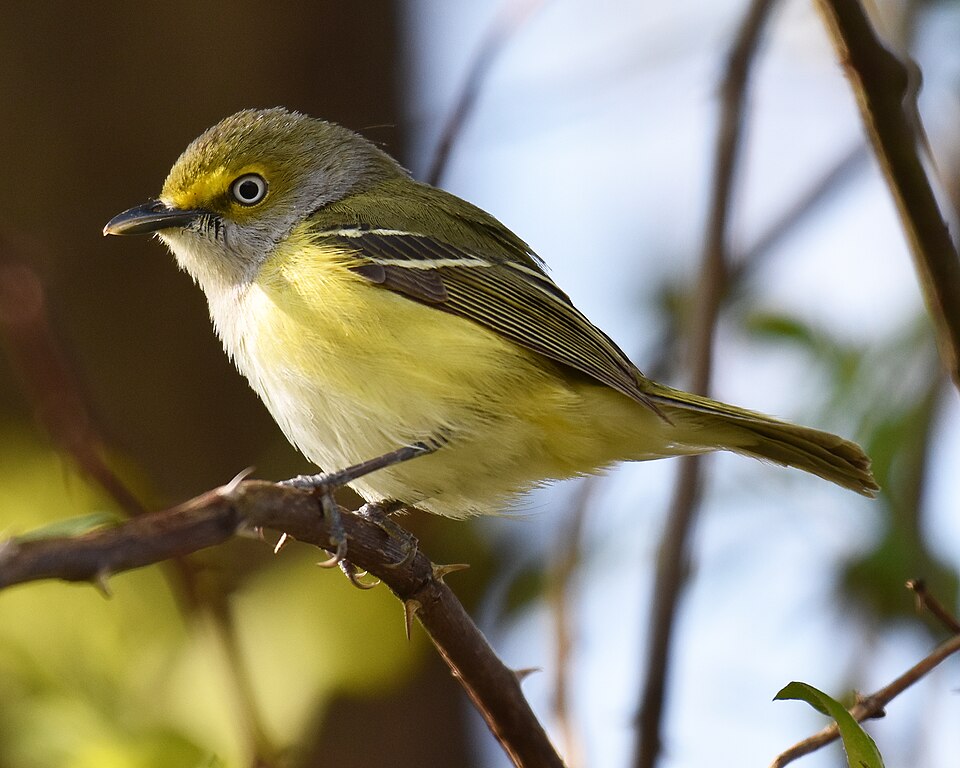

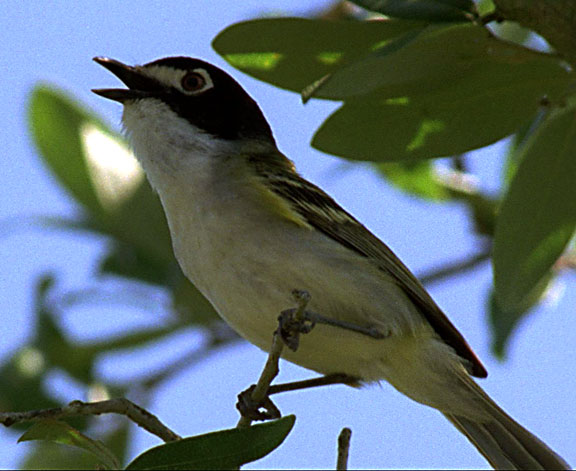

Birds Similar to the Yellow-throated Vireo
These species are often confused with the Yellow-throated Vireo due to similar appearance or overlapping range.


