
Yellow-tufted Pipit
Anthus crenatus
Order: Passeriformes / Family: Motacillidae

Wikimedia Commons
About the Yellow-tufted Pipit
The Yellow-tufted Pipit, scientifically known as Anthus crenatus, plays a vital ecological role in its native grassland environments. This bird is a member of the Motacillidae family, which includes wagtails and other pipits. It is predominantly found in southern Africa, particularly in South Africa, Lesotho, and Swaziland. The species thrives in high-altitude grasslands, typically above 1500 meters, where it contributes to the ecosystem by controlling insect populations.
The significance of the Yellow-tufted Pipit lies in its adaptation to its environment. It relies on open landscapes and short grass, avoiding areas with dense shrubs or trees. The bird's presence indicates healthy grassland ecosystems, as it feeds on a variety of insects and helps regulate their numbers. The Yellow-tufted Pipit is not only a key player in insect control but also serves as prey for larger birds of prey, thus maintaining the balance within its habitat.
Seasonally, the Yellow-tufted Pipit exhibits some altitudinal movement, particularly during harsh winters, when it may descend to lower elevations in search of milder climates and abundant food. However, it generally remains within its core range, displaying a level of site fidelity uncommon among many passerine birds. This behavior underscores the bird's strong connection to its habitat and its role in the local ecological community.
The Yellow-tufted Pipit belongs to the family Motacillidae, within the order Passeriformes. These birds typically live average 3-5 years, with a maximum recorded lifespan of 7 years..
How to Identify a Yellow-tufted Pipit
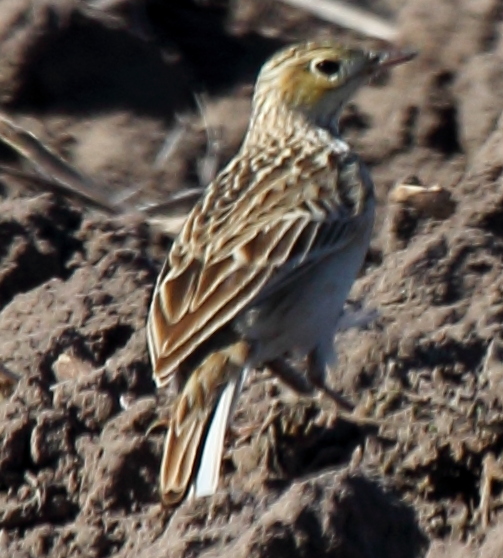
Adult Yellow-tufted Pipits are easily recognized by their bright yellow tufts located on either side of the head, a feature that distinguishes them from other pipits. Their plumage is predominantly light brown with darker streaks, providing excellent camouflage in their grassland habitat. The underparts are usually a paler yellow, becoming a more vibrant hue during the breeding season.
Juvenile Yellow-tufted Pipits lack the distinctive yellow tufts of adults and display a more muted brown coloration overall. Males and females appear similar, though males may exhibit slightly brighter yellow underparts, especially during breeding. This subtle sexual dimorphism can sometimes assist in field identification, though it requires careful observation.
In flight, the Yellow-tufted Pipit presents a slender silhouette with relatively long wings and a short tail. Its perching posture is typically upright, often observed on rocks or short vegetation, which enhances its visibility despite its otherwise cryptic plumage. Similar species like the African Pipit may confuse observers, but the yellow tufts of Anthus crenatus serve as a reliable differentiating characteristic.
Having trouble telling birds apart? Upload a photo to our bird identification tool for an instant species match.
Yellow-tufted Pipit Habitat and Range
Preferred Habitat
The Yellow-tufted Pipit predominantly inhabits montane grasslands, thriving in open areas with short vegetation. It prefers elevations ranging from 1500 to 2500 meters, where conditions are cooler and the grass is less dense. These grasslands provide the ideal environment for foraging and nesting.
In terms of seasonal shifts, the Yellow-tufted Pipit may move to slightly lower elevations during the colder months, taking advantage of milder temperatures and accessible food resources. It rarely ventures into urban areas, favoring instead the natural expanses of grassland and avoiding dense forests or bushy terrains.
In these habitats, the Yellow-tufted Pipit's presence is indicative of a healthy grassland ecosystem. Its preference for high-altitude locations means it is less affected by human encroachment than species occupying lower elevations, although habitat loss due to agriculture remains a concern.
Geographic Range
The Yellow-tufted Pipit has a relatively restricted range, confined to the southern African regions. Its core breeding range includes the Lesotho Highlands, the Drakensberg Mountains in South Africa, and parts of Swaziland. Within these areas, the bird occupies montane grasslands, where it finds suitable conditions for nesting and feeding.
During the winter months, the Yellow-tufted Pipit may exhibit some altitudinal migration, descending to lower elevations to escape harsher weather conditions. However, it remains within the southern African region, showing limited migratory behavior compared to other pipit species.
The population density of the Yellow-tufted Pipit is highest in the intact grasslands of the Drakensberg and Lesotho Highlands. These regions provide the ideal combination of altitude, climate, and vegetation structure to support stable populations of this species.
Want to know which birds visit your area? Browse our backyard birds by location guides for region-specific species lists.
What Does the Yellow-tufted Pipit Eat?
The Yellow-tufted Pipit primarily feeds on insects, making it an important predator of grassland invertebrates. Its diet includes a variety of beetles, grasshoppers, and caterpillars, as well as spiders when available. This insectivorous diet plays a crucial role in controlling pest populations in its habitat.
Seasonal changes can influence the diet of the Yellow-tufted Pipit. During the breeding season, when the demand for food is highest, the bird may also consume seeds and small fruits to supplement its diet, particularly when insect availability is low. Its foraging technique involves walking or running through open grasslands, pausing frequently to probe the ground or catch prey with swift, precise movements.
The Yellow-tufted Pipit generally forages throughout the day, with peak activity occurring in the morning and late afternoon when temperatures are cooler and insect activity is higher. Its foraging behavior is solitary, although it may be observed feeding in loose associations with other pipits or small passerines.
Yellow-tufted Pipit Behavior and Social Structure
The Yellow-tufted Pipit exhibits a range of behaviors that reflect its adaptation to grassland environments. It is generally solitary or found in pairs, especially during the breeding season, when territorial behavior becomes pronounced. Males establish territories through song displays, often performed from prominent perches to maximize visibility and audibility.
Courtship displays of the Yellow-tufted Pipit involve elaborate aerial maneuvers, where males rise into the air and descend slowly, singing continuously to attract females. These displays serve both as mate attraction and territorial advertisement, reinforcing the male's presence in the area.
Outside the breeding season, the Yellow-tufted Pipit may form loose flocks with other pipits, particularly in winter when resources are scarce. The bird is vigilant and responsive to predators, often taking flight upon detecting threats. Its daily activity pattern includes foraging during cooler parts of the day and resting during the hottest periods to conserve energy.
Yellow-tufted Pipit Nesting and Reproduction
The Yellow-tufted Pipit constructs its nest on the ground, usually hidden within a tuft of grass or a small depression. The nest is a cup-shaped structure made from grass stems and lined with finer materials such as hair or feathers to provide insulation for the eggs.
Clutch size typically ranges from two to four eggs, which are pale in color with speckled markings. The incubation period lasts about 12 to 14 days, with both parents sharing incubation duties. After hatching, the chicks fledge in approximately 15 to 18 days, during which time they are fed by both parents.
The Yellow-tufted Pipit may raise one or two broods per year, depending on environmental conditions and food availability. Nesting success is influenced by predation and weather, with ground nests particularly vulnerable to disturbance from grazing livestock or natural predators.
Yellow-tufted Pipit Sounds and Vocalizations
The primary song of the Yellow-tufted Pipit is a series of melodious trills and whistles, delivered with a clear, ringing quality. This song serves as both a territorial announcement and a mate attraction call, frequently performed from elevated perches or during flight displays.
Call notes are typically short and sharp, serving as communication between birds, especially during foraging or when alerting to danger. Alarm calls are more urgent and harsh, designed to warn of predators and rally defensive behavior among individuals.
The Yellow-tufted Pipit participates in a dawn chorus, particularly during the breeding season when song activity peaks. Its song is reminiscent of other pipits but can be distinguished by its distinctive rhythm and pitch.
Interesting Facts About the Yellow-tufted Pipit
- 1The Yellow-tufted Pipit, Anthus crenatus, is one of the few pipits with bright yellow head markings, making it easily identifiable.
- 2This species prefers high-altitude grasslands, with most populations found above 1500 meters across southern Africa.
- 3Despite its small range, the Yellow-tufted Pipit plays a key role in controlling insect populations in its grassland habitat.
- 4The bird's distinctive song can be heard over large distances, aiding in territory establishment and mate attraction.
- 5Yellow-tufted Pipits are known for their striking courtship flights, involving elaborate aerial displays and continuous singing.
- 6Their ground nests are carefully concealed within grass tufts, protecting them from predators and harsh weather conditions.
- 7Both male and female Yellow-tufted Pipits participate in raising young, showcasing cooperative breeding behavior.
Yellow-tufted Pipit Conservation Status
According to the IUCN, the Yellow-tufted Pipit is currently classified as Least Concern, with stable population trends. However, habitat degradation due to agriculture and livestock grazing poses potential threats to its preferred grassland habitats. Conservation efforts focus on protecting these critical grassland areas, particularly in regions like the Drakensberg and Lesotho Highlands. Maintaining these habitats not only benefits the Yellow-tufted Pipit but also other grassland-dependent species. Historically, the population of the Yellow-tufted Pipit has remained stable, thanks to the remote and less disturbed nature of its high-altitude habitat. Continued monitoring and habitat conservation are essential to ensure the long-term survival of this distinctive species.
Other Motacillidae Species



Birds Similar to the Yellow-tufted Pipit
These species are often confused with the Yellow-tufted Pipit due to similar appearance or overlapping range.
