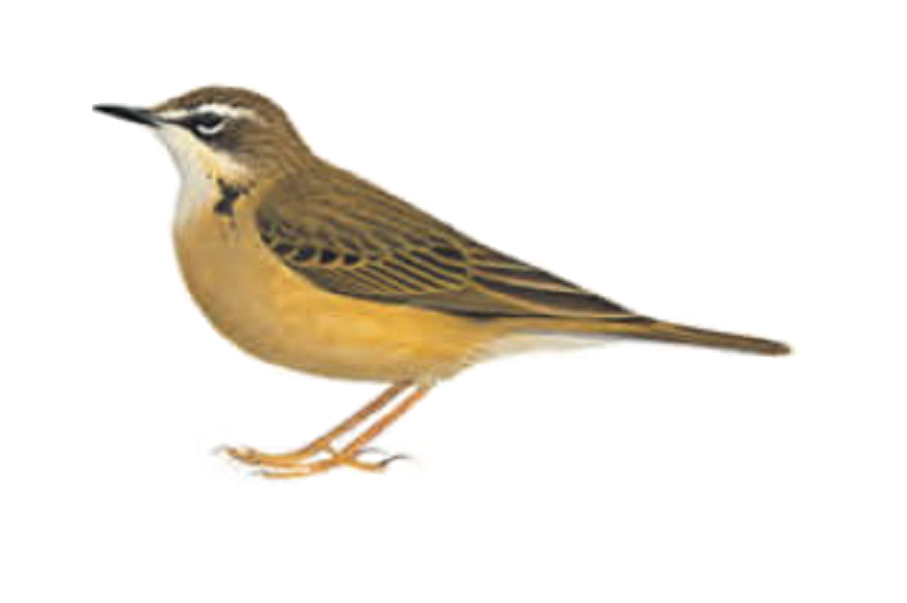
Mountain Pipit
Anthus hoeschi
Order: Passeriformes / Family: Motacillidae

Wikimedia Commons
About the Mountain Pipit
The Mountain Pipit, known scientifically as Anthus hoeschi, is a small passerine bird belonging to the family Motacillidae. This species is primarily found in the high-altitude grasslands and montane regions of southern Africa, showcasing a preference for environments that offer both open spaces and scattered shrubs or rocks. These birds play a crucial role in their ecosystems as insectivores, helping to control insect populations and contributing to the ecological balance. The Mountain Pipit is particularly significant as it inhabits regions that are often less impacted by human activities, making it an indicator species for the health of montane ecosystems. Found predominantly in countries such as Namibia, South Africa, and Botswana, the Mountain Pipit is adapted to life at elevations typically ranging from 1,500 to 3,000 meters. In these high-altitude areas, they are well-suited to the cooler temperatures and thinner atmosphere. The bird's seasonal behaviors are closely tied to the breeding and migratory patterns observed in the region. During the austral summer, Mountain Pipits engage in breeding activities, taking advantage of the abundant insect life that emerges with the warmer weather. As the seasons shift, these birds may migrate to slightly lower altitudes or different areas, but they generally remain within their characteristic montane habitats. This seasonal movement is less pronounced than in many other migratory species, as the Mountain Pipit's primary range does not extend beyond southern and eastern Africa. Instead, they exhibit altitudinal migration, adjusting their elevation preference in response to climatic changes. The Mountain Pipit's ecological role extends beyond mere insect control. They are also prey for larger birds of prey, thus contributing to the food web of their high-altitude homes. As they forage for insects and seeds, they inadvertently aid in seed dispersal, promoting plant diversity and growth in their habitats. The presence of Mountain Pipits is, therefore, a vital component of the biodiversity in the montane grasslands they inhabit.
The Mountain Pipit belongs to the family Motacillidae, within the order Passeriformes. These birds typically live average 4-6 years with a max recorded of 7 years..
How to Identify a Mountain Pipit
The Mountain Pipit is a small bird, measuring around 16-18 centimeters in length, with a wingspan of 23-27 centimeters. Its plumage is primarily streaked brown and buff, providing excellent camouflage against the grassy and rocky landscapes it inhabits. Adults have a distinctive pattern of dark streaks across their upperparts, with a paler underbelly that features lighter streaking. The head is marked by a subtle supercilium, or eyebrow stripe, that is paler than the surrounding feathers. The bill is slender and pointed, typical of insectivorous birds. Juveniles resemble adults but tend to have a more pronounced streaking pattern, particularly on the breast and flanks. There are no significant differences in plumage between males and females, making sex identification challenging in the field. However, during the breeding season, males may appear slightly more vibrant. In terms of flight, the Mountain Pipit exhibits a buoyant, undulating style, interspersing flapping with glides. When perched, they often adopt an upright posture, which, combined with their habitual tail bobbing, can aid in identification. The Mountain Pipit may be confused with other pipit species, such as the African Pipit (Anthus cinnamomeus). However, its preference for higher altitudes and slight variations in plumage coloration help distinguish it.
Having trouble telling birds apart? Upload a photo to our bird identification tool for an instant species match.
Mountain Pipit Habitat and Range
Preferred Habitat
Mountain Pipits inhabit open montane grasslands and heathlands, typically preferring areas with scattered shrubs or rocky outcrops that provide both feeding opportunities and protection from predators. They are commonly found at elevations ranging from 1,500 to 3,000 meters, where the temperature is cooler, and the air thinner. These birds adapt to seasonal habitat shifts by moving altitudinally, descending to lower elevations during harsher weather or when food becomes scarce. Unlike many bird species, Mountain Pipits are rarely found in urban or heavily forested areas, as they require open spaces for foraging. Their presence in an area often indicates a relatively undisturbed montane ecosystem, characterized by native grasses and minimal human impact.
Geographic Range
The Mountain Pipit is predominantly found in southern Africa, with its range extending across countries such as Namibia, South Africa, and Botswana. Within these regions, it occupies montane grasslands and high-altitude areas. The species is a resident breeder in these locations, though it may undertake some altitudinal migration to seek out optimal feeding and breeding conditions. During the breeding season, which aligns with the austral summer, Mountain Pipits are more likely to inhabit the higher elevations. In contrast, during the colder months, they may descend to slightly lower altitudes, where conditions are milder. While they do not undertake long-distance migrations typical of many other bird species, their altitudinal movements are essential for their survival and reproduction. In terms of population density, Mountain Pipits are more frequently encountered in regions that maintain expansive, undisturbed grasslands, often away from densely populated human areas.
Want to know which birds visit your area? Browse our backyard birds by location guides for region-specific species lists.
What Does the Mountain Pipit Eat?
The diet of the Mountain Pipit consists primarily of insects, making them important insectivores within their ecosystem. They feed on a variety of invertebrates, including beetles, caterpillars, and ants, which they meticulously pick from the ground or low vegetation. During the austral summer, when insect populations peak, Mountain Pipits take advantage of the abundance of food to support their breeding efforts. They also consume seeds, particularly during times when insects are less available, such as in the cooler months. The foraging technique of the Mountain Pipit is characterized by walking or running across open ground, often stopping abruptly to snatch up prey. This method allows them to cover significant ground efficiently. Prey size varies, but they typically target small to medium-sized insects that are easily managed with their slender bills. Feeding occurs throughout the day, with peaks in activity during the cooler morning and late afternoon hours. This schedule helps them avoid the intense midday heat often experienced in their open habitats.
Mountain Pipit Behavior and Social Structure
Mountain Pipits exhibit a range of behaviors that reflect their adaptation to high-altitude environments. They are generally solitary or found in small groups, particularly outside the breeding season. During the breeding season, males establish territories and engage in aerial displays to attract mates. These displays often involve a combination of song and flight, where the male ascends and descends rapidly, displaying his agility and fitness. Territorial disputes are common, with males defending their chosen areas vigorously against intruders. While primarily ground foragers, Mountain Pipits are also adept at spotting and avoiding predators from a distance, using their excellent eyesight to detect threats. When approached by predators, they employ a mix of distraction displays and direct flight to escape danger. Daily activity patterns of the Mountain Pipit are closely linked to temperature and light conditions. They are most active during the cooler parts of the day, avoiding the midday heat by seeking shelter among rocks or vegetation. As a species well-adapted to its environment, the Mountain Pipit demonstrates behaviors that enhance its survival in the challenging conditions of montane habitats.
Mountain Pipit Nesting and Reproduction
Mountain Pipits build their nests on the ground, often concealed within a clump of grass or under a small shrub to provide protection from predators and harsh weather. The nest is a cup-shaped structure constructed from grass, leaves, and other plant materials, lined with finer materials such as hair or feathers for insulation. The clutch size typically consists of 2 to 4 eggs, which are incubated by the female for about 14 days. During this period, the male plays a supportive role by providing food to the nesting female. Once the eggs hatch, both parents participate in feeding the chicks, which fledge approximately 14 to 16 days after hatching. The number of broods per year varies, but Mountain Pipits generally raise one or two broods during the breeding season, taking advantage of the peak insect availability in the austral summer.
Mountain Pipit Sounds and Vocalizations
The Mountain Pipit's primary song is a simple series of high-pitched, melodic notes delivered in a quick succession, often repeated in a rhythmic pattern. This song is most commonly heard during the breeding season, as males use it to establish territories and attract mates. Call notes are generally short and sharp, serving as communication between individuals or as an alert signal when predators are nearby. The alarm call is a more urgent, harsh note, designed to warn others of impending danger. At dawn, Mountain Pipits join the chorus of montane birds, their songs blending into the overall soundscape of their grassland habitats. Their vocalizations can be compared to the sweet, yet less complex, songs of other pipit species, making them distinctive yet familiar to those experienced with grassland bird calls.
Interesting Facts About the Mountain Pipit
- 1The Mountain Pipit can be found at elevations as high as 3,000 meters, where very few other bird species venture.
- 2Despite their name, Mountain Pipits do not live exclusively on mountains, but rather in high-altitude grasslands.
- 3Mountain Pipits are known for their distinctive tail-bobbing behavior, which helps in identifying them from a distance.
- 4This species contributes to seed dispersal in its habitat, inadvertently aiding plant diversity as it forages.
- 5Mountain Pipits' songs are less complex than those of many other pipit species, yet are crucial for their territorial and mating displays.
Mountain Pipit Conservation Status
The Mountain Pipit currently holds a status of Least Concern according to the IUCN Red List, with stable population trends. While the species is not currently threatened, it faces potential risks from habitat loss due to agricultural expansion and climate change, which could alter the montane grasslands they depend on. Conservation efforts focus on preserving these critical habitats by maintaining protected areas and promoting sustainable land use practices. Historically, the Mountain Pipit's population has remained stable, with no significant declines noted. However, ongoing monitoring is essential to ensure that any emerging threats are addressed promptly, safeguarding this unique species for future generations.
Other Motacillidae Species



Birds Similar to the Mountain Pipit
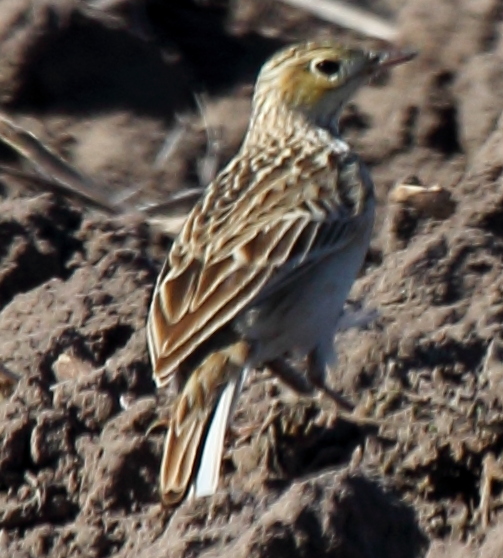
These species are often confused with the Mountain Pipit due to similar appearance or overlapping range.